
靶向黑色素瘤中的肿瘤相关巨噬细胞和癌相关成纤维细胞:肿瘤微环境治疗的新方法
Targeting TAMs & CAFs in melanoma: New approaches to tumor microenvironment therapy.
作者信息
Mayasin Yuriy, Osinnikova Maria, Osadchaya Daria, Dmitrienko Victoria, Gorodilova Anna, Kharisova Chulpan, Kitaeva Kristina, Filin Ivan, Solovyeva Valeria, Rizvanov Albert
机构信息
Institute of Fundamental Medicine and Biology, Kazan Federal University, Kazan, 420008, Russia.
Division of Medical and Biological Sciences, Tatarstan Academy of Sciences, Kazan, 420111, Russia.
出版信息
Oncol Res. 2025 Aug 28;33(9):2221-2242. doi: 10.32604/or.2025.064677. eCollection 2025.
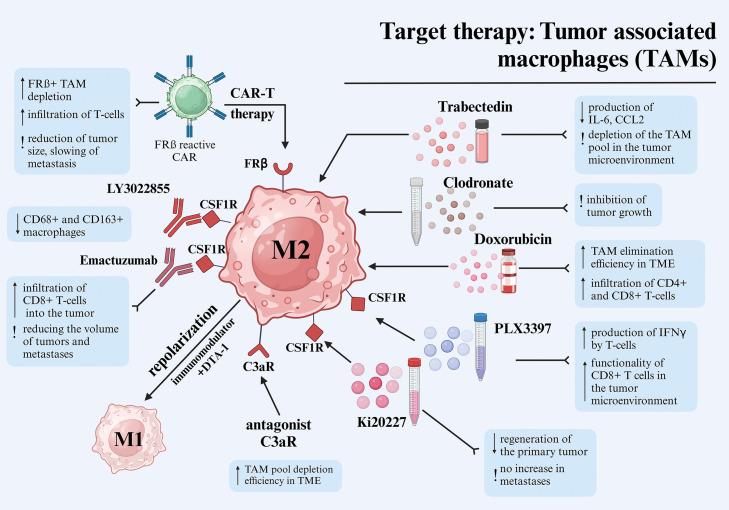
Melanoma is a malignant neoplasm with a high propensity to metastasize, arising from melanocytes and contributing significantly to global morbidity and mortality. Despite the demonstrated efficacy of many immunotherapy approaches, these methods rely on direct destruction of tumor cells with minimal impact on the aggregate of nearby non-tumor cells, the extracellular matrix, and blood vessels that form the tumor microenvironment (TME). The TME is known to be heterogeneous and dynamic, exerting both antitumor and pro-tumor effects depending on the specific features and stage of carcinogenesis. TME has been shown in several studies to promote malignancy, angiogenesis, and metastasis in tumors in general and melanoma in particular. Consequently, a significant number of studies in the field of melanoma therapy have been redirected to investigate the effects of individual TME constituents, their prognostic significance for patients, and the potential of therapeutic intervention to improve overall patient survival. This review highlights novel therapeutic approaches targeting two key resident cell types in the melanoma microenvironment: tumor-associated macrophages (TAMs) and cancer-associated fibroblasts (CAFs). The review discusses their role in disease progression and summarizes the results of preclinical and clinical trials of targeted therapies against these cell types in the melanoma TME.
黑色素瘤是一种具有高度转移倾向的恶性肿瘤,由黑素细胞产生,对全球发病率和死亡率有重大影响。尽管许多免疫疗法已显示出疗效,但这些方法依赖于直接破坏肿瘤细胞,对形成肿瘤微环境(TME)的附近非肿瘤细胞、细胞外基质和血管的总体影响最小。已知TME是异质性和动态的,根据致癌作用的具体特征和阶段发挥抗肿瘤和促肿瘤作用。多项研究表明,TME一般会促进肿瘤尤其是黑色素瘤的恶性、血管生成和转移。因此,黑色素瘤治疗领域的大量研究已转向研究TME各个成分的作用、它们对患者的预后意义以及治疗干预改善患者总体生存率的潜力。本综述重点介绍了针对黑色素瘤微环境中两种关键驻留细胞类型的新型治疗方法:肿瘤相关巨噬细胞(TAM)和癌症相关成纤维细胞(CAF)。该综述讨论了它们在疾病进展中的作用,并总结了针对黑色素瘤TME中这些细胞类型的靶向治疗的临床前和临床试验结果。

 Zotero 插件