
癌症与炎症性疾病中的铁死亡:机制与治疗意义
Ferroptosis in Cancer and Inflammatory Diseases: Mechanisms and Therapeutic Implications.
作者信息
Shen Guangyi, Liu Jiachen, Wang Yinhuai, Deng Zebin, Deng Fei
机构信息
Department of Urology The Second Xiangya Hospital Central South University Changsha Hunan China.
The Center of Systems Biology and Data Science School of Basic Medical Science Central South University Changsha Hunan China.
出版信息
MedComm (2020). 2025 Sep 3;6(9):e70349. doi: 10.1002/mco2.70349. eCollection 2025 Sep.
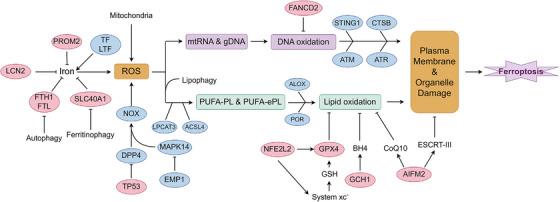
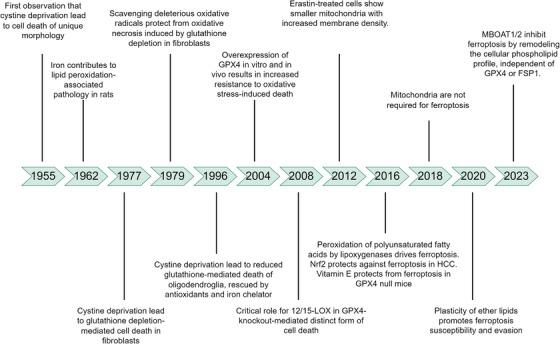
Ferroptosis, an iron-dependent cell death pathway driven by lipid peroxidation, has emerged as a critical pathophysiological mechanism linking cancer and inflammatory diseases. The seemingly distinct pathologies exhibit shared microenvironmental hallmarks-oxidative stress, immune dysregulation, and metabolic reprogramming-that converge on ferroptosis regulation. This review synthesizes how ferroptosis operates at the intersection of these diseases, acting as both a tumor-suppressive mechanism and a driver of inflammatory tissue damage. In cancer, ferroptosis eliminates therapy-resistant cells but paradoxically facilitates metastasis through lipid peroxidation byproducts that remodel the tumor microenvironment and suppress antitumor immunity. In chronic inflammatory diseases-from atherosclerosis to rheumatoid arthritis-ferroptosis amplifies neuroinflammatory cascades while simultaneously exposing vulnerabilities for therapeutic targeting. Central to this duality are shared regulatory nodes, including nuclear factor kappa B-driven inflammation, NOD-like receptor family pyrin domain-containing 3 inflammasome activation, and GPX4 dysfunction. Therapeutically, ferroptosis induction shows promise against therapy-resistant cancers but risks exacerbating inflammatory damage, underscoring the need for precision modulation. Emerging strategies-nanoparticle-based inducers, immunotherapy combinations, and biomarker-guided patient stratification-aim to balance prodeath efficacy against off-target toxicity. By dissecting the ferroptosis-inflammation-cancer axis, this review provides a unified framework for understanding disease pathogenesis and advancing therapies for conditions resistant to conventional treatments. Future research must prioritize spatial mapping of ferroptosis dynamics, mechanistic crosstalk with immune checkpoints, and combinatorial regimens that exploit ferroptosis vulnerabilities while mitigating its inflammatory consequences.
铁死亡是一种由脂质过氧化驱动的铁依赖性细胞死亡途径,已成为连接癌症和炎症性疾病的关键病理生理机制。这些看似不同的病理表现出共同的微环境特征——氧化应激、免疫失调和代谢重编程——它们都汇聚在铁死亡调节上。这篇综述综合阐述了铁死亡在这些疾病的交叉点上如何发挥作用,既作为一种肿瘤抑制机制,又作为炎症组织损伤的驱动因素。在癌症中,铁死亡消除了对治疗耐药的细胞,但矛盾的是,它通过脂质过氧化副产物促进转移,这些副产物重塑肿瘤微环境并抑制抗肿瘤免疫。在从动脉粥样硬化到类风湿性关节炎的慢性炎症性疾病中,铁死亡放大神经炎症级联反应,同时暴露了治疗靶点的脆弱性。这种双重性的核心是共享的调节节点,包括核因子κB驱动的炎症、含NOD样受体家族吡啉结构域3的炎性小体激活和谷胱甘肽过氧化物酶4功能障碍。在治疗方面,诱导铁死亡对治疗耐药的癌症显示出前景,但有加剧炎症损伤的风险,这突出了精确调节的必要性。新兴策略——基于纳米颗粒的诱导剂、免疫治疗联合方案和生物标志物引导的患者分层——旨在平衡促死亡疗效与脱靶毒性。通过剖析铁死亡-炎症-癌症轴,本综述提供了一个统一的框架,用于理解疾病发病机制并推进对传统治疗耐药疾病的治疗。未来的研究必须优先考虑铁死亡动力学的空间映射、与免疫检查点的机制性相互作用,以及利用铁死亡脆弱性同时减轻其炎症后果的联合治疗方案。




 Zotero 插件