
中药活性成分抗抑郁作用的分子机制:自噬的作用
Molecular Mechanism of Antidepressant Effects of Active Ingredients in Traditional Chinese Medicine: The Role of Autophagy.
作者信息
Zhang Li-Juan, Chen Dan, Xu Kai-Yong, Shang Rui-Rui, Liu Xiao-Yu, Li Zi-Fa, Wang Kang-Feng, Zhang Min
机构信息
No. 3 Department of Encephalopathy, Affiliated Hospital of Shandong University of Traditional Chinese Medicine, 250011 Jinan, Shandong, China.
Experimental Center, Shandong University of Traditional Chinese Medicine, 250355 Jinan, Shandong, China.
出版信息
Alpha Psychiatry. 2025 Aug 11;26(4):45685. doi: 10.31083/AP45685. eCollection 2025 Aug.
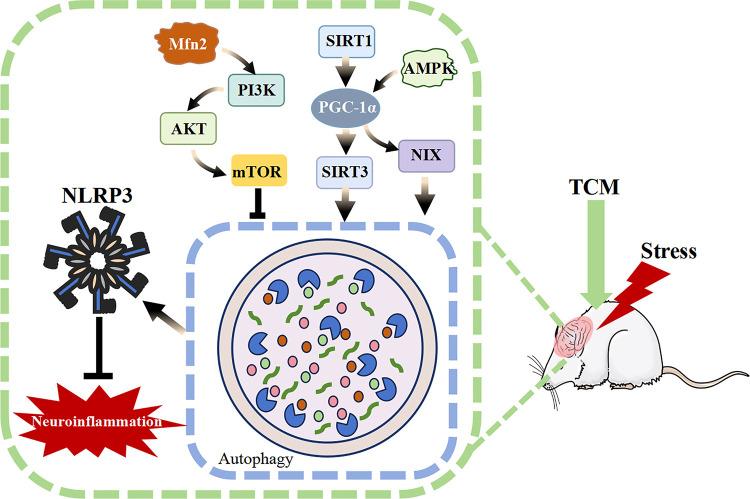
In clinical practice, selective serotonin reuptake inhibitors (SSRIs), a kind of Western medicine, are the primary treatment for depression, a complex mental illness. However, these treatments are associated with significant adverse reactions. With their many benefits and distinctive features, such as all-encompassing intervention and general control through several targets, processes, and pathways, the active components in traditional Chinese medicine (TCM) hold great promise for the treatment of depression. Autophagy plays a crucial role in the pathophysiology of depression, and its regulation has emerged as a potentially crucial management tactic. However, comprehensive evaluations of the link between depression and mitochondrial autophagy, as well as the therapeutic potential of TCM's active components, remain limited. This review examined recent literature on autophagy and its role in depression, along with studies on the effects of TCM active ingredients. Furthermore, it highlighted the limitations of current research to offer insights to guide future fundamental studies and clinical treatments for depression.
在临床实践中,选择性5-羟色胺再摄取抑制剂(SSRIs)作为一种西药,是治疗抑郁症(一种复杂的精神疾病)的主要方法。然而,这些治疗方法会引发严重的不良反应。中药的活性成分具有诸多益处和独特特性,比如全方位干预以及通过多个靶点、过程和途径进行整体调控,因而在抑郁症治疗方面极具潜力。自噬在抑郁症的病理生理过程中起着关键作用,对其进行调控已成为一种潜在的关键治疗策略。然而,对于抑郁症与线粒体自噬之间的关联以及中药活性成分的治疗潜力,目前仍缺乏全面评估。本综述研究了近期有关自噬及其在抑郁症中作用的文献,以及关于中药活性成分作用的研究。此外,还强调了当前研究的局限性,以期为未来抑郁症的基础研究和临床治疗提供指导。
 Zotero 插件