
基于PET/CT影像组学的集成学习模型预测肺腺癌淋巴结转移及其病理基础
Prediction of lymph node metastasis in lung adenocarcinoma using a PET/CT radiomics-based ensemble learning model and its pathological basis.
作者信息
Li Shulin, Chen Fang, Wang Lei, Xiang Zhiming
机构信息
Postgraduate Cultivation Base of Guangzhou University of Chinese Medicine, Panyu Central Hospital, Guangzhou, China.
Department of Radiology, The Affiliated Panyu Central Hospital, Guangzhou Medical University, Guangzhou, China.
出版信息
Front Oncol. 2025 Aug 25;15:1618494. doi: 10.3389/fonc.2025.1618494. eCollection 2025.
OBJECTIVES
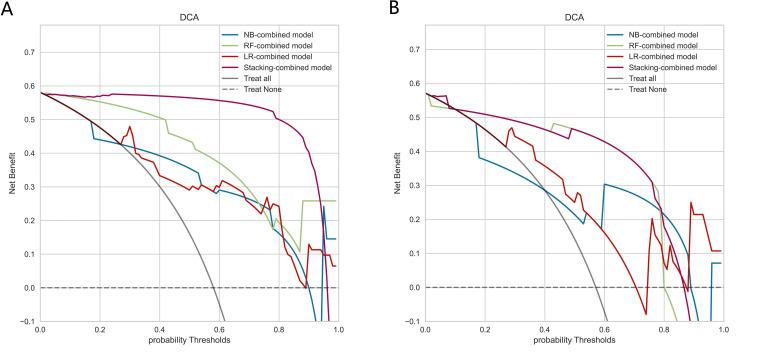
Lymph node metastasis (LNM) is an important factor affecting the stage and prognosis of patients with lung adenocarcinoma. The purpose of this study is to explore the predictive value of the stacking ensemble learning model based on F-FDG PET/CT radiomic features and clinical risk factors for LNM in lung adenocarcinoma, and elucidate the biological basis of predictive features through pathological analysis.
METHODS
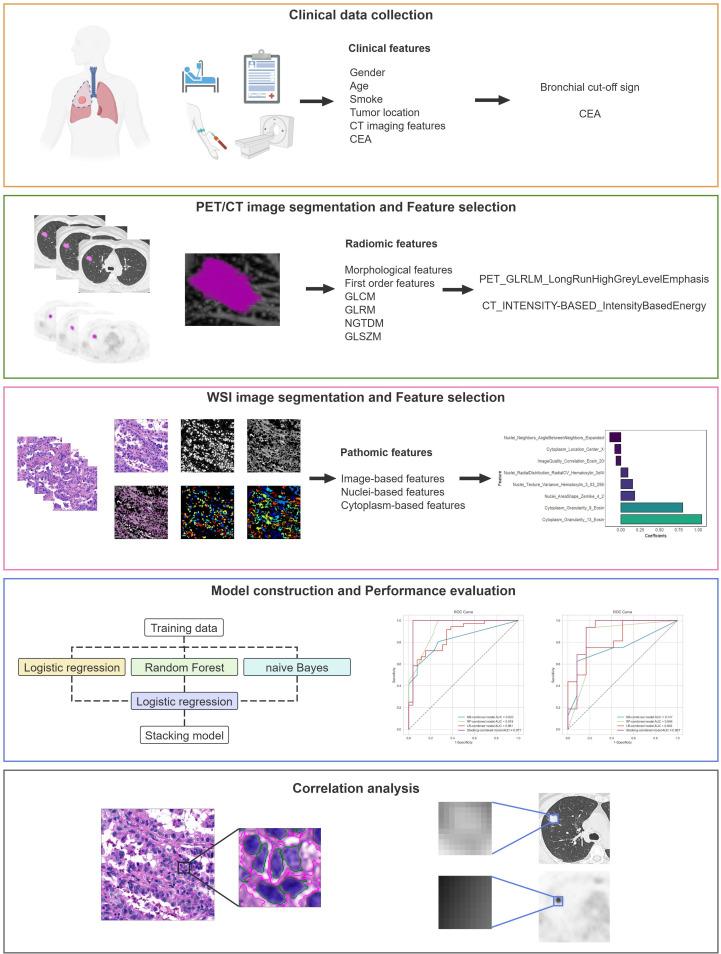
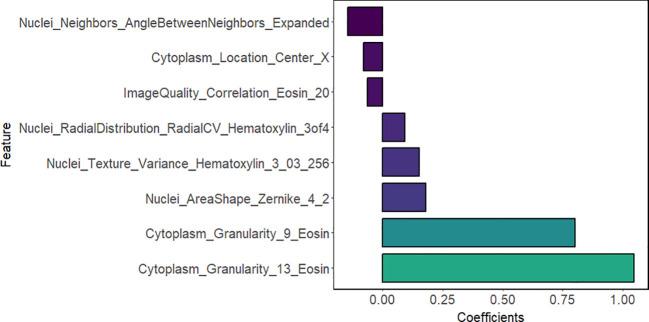
Ninety patients diagnosed with lung adenocarcinoma who underwent PET/CT were retrospectively analyzed and randomly divided into the training and testing sets in a 7:3 ratio. Stacking ensemble learning models were developed based on radiomic features combined with clinical risk factors. The predictive performance of each model was assessed through area under the curve (AUC). Additionally, Spearman's correlation analysis was employed to investigate the association between features predicting LNM and pathological features.
RESULTS
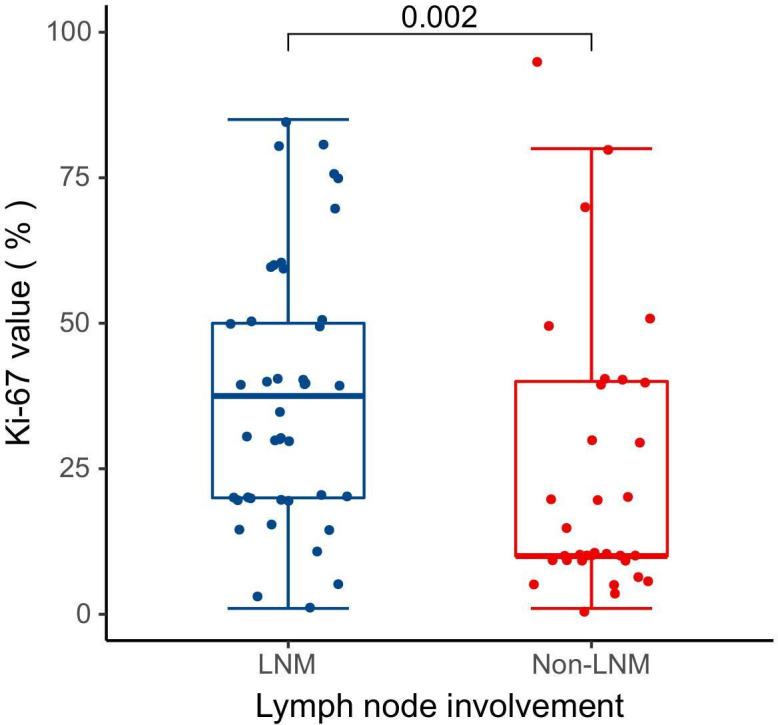
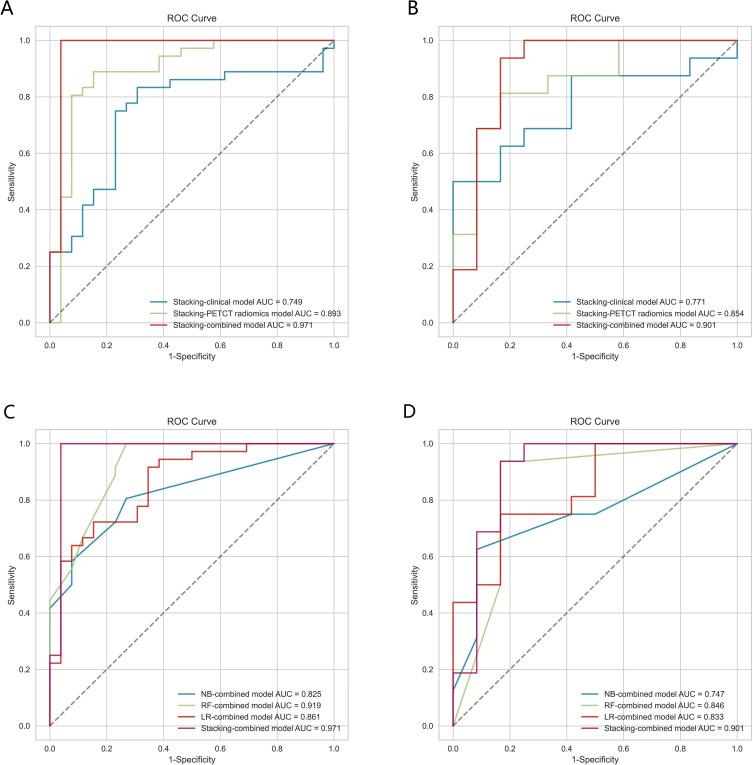
Multifactorial logistic regression identified the bronchial cut-off sign and serum carcinoembryonic antigen (CEA) as clinical risk factors. The Stacking-combined model demonstrated superior diagnostic efficacy compared with logistic regression, random forest, and naive Bayes-combined models, with AUC values of 0.971 and 0.901 in the training and testing sets, respectively. Despite the absence of FDR-significant radiomic-pathomic correlations (all > 0.05), exploratory analysis revealed nominal associations (uncorrected < 0.05) for partial feature pairs. Crucially, radiomic features demonstrated strong associations with Ki-67 expression: PET_GLRLM_LongRunHigh GreyLevelEmphasis (r = 0.610, < 0.001) and CT_INTENSITY-BASED_Intensity BasedEnergy (r = 0.332, = 0.004).
CONCLUSIONS
The stacking ensemble learning model based on F-FDG PET/CT radiomics demonstrates potential for predicting LNM in lung adenocarcinoma, and the quantitative analysis of radiomic features holds significant biological significance.
目的
淋巴结转移(LNM)是影响肺腺癌患者分期和预后的重要因素。本研究旨在探讨基于F-FDG PET/CT影像组学特征和临床危险因素的堆叠集成学习模型对肺腺癌LNM的预测价值,并通过病理分析阐明预测特征的生物学基础。
方法
回顾性分析90例接受PET/CT检查并诊断为肺腺癌的患者,并按7:3的比例随机分为训练集和测试集。基于影像组学特征结合临床危险因素构建堆叠集成学习模型。通过曲线下面积(AUC)评估各模型的预测性能。此外,采用Spearman相关性分析来研究预测LNM的特征与病理特征之间的关联。
结果
多因素逻辑回归确定支气管截断征和血清癌胚抗原(CEA)为临床危险因素。与逻辑回归、随机森林和朴素贝叶斯组合模型相比,堆叠组合模型显示出更高的诊断效能,训练集和测试集的AUC值分别为0.971和0.901。尽管没有FDR显著的影像组学-病理组学相关性(均>0.05),但探索性分析揭示了部分特征对存在名义关联(未校正<0.05)。至关重要的是,影像组学特征与Ki-67表达显示出强关联:PET_GLRLM_LongRunHigh GreyLevelEmphasis(r = 0.610,<0.001)和CT_INTENSITY-BASED_Intensity BasedEnergy(r = 0.332,= 0.004)。
结论
基于F-FDG PET/CT影像组学的堆叠集成学习模型在预测肺腺癌LNM方面具有潜力,影像组学特征的定量分析具有重要的生物学意义。

 Zotero 插件