
癌症免疫治疗中的肠道菌群失调:微生物群介导的耐药性及新出现的治疗方法
Gut dysbiosis in cancer immunotherapy: microbiota-mediated resistance and emerging treatments.
作者信息
Eiman Liza, Moazzam Khadija, Anjum Sumaira, Kausar Humera, Sharif Elham Abdullatif M, Ibrahim Wisam Nabeel
机构信息
Department of Biotechnology, Kinnaird College for Women, Lahore, Pakistan.
Department of Biomedical Sciences, College of Health Sciences, QU Health, Qatar University, Doha, Qatar.
出版信息
Front Immunol. 2025 Aug 25;16:1575452. doi: 10.3389/fimmu.2025.1575452. eCollection 2025.
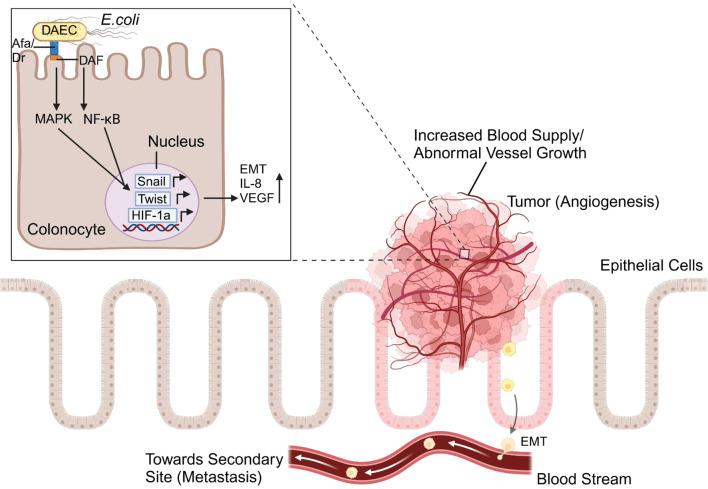
Cancer is a multifaceted disease driven by a complex interplay of genetic predisposition, environmental factors and lifestyle habits. With the accelerating pace of cancer research, the gut microbiome has emerged as a critical modulator of human health and immunity. Disruption in the gut microbial populations and diversity, known as dysbiosis, has been linked with the development of chronic inflammation, oncogenesis, angiogenesis and metastasis. This review discusses the microbial species associated with various types of cancer and the pathways involved in their tumorigenic effect including mechanisms like inflammatory cytokine response, immune modulation, genotoxicity and modification of the tumor microenvironment. Diagnostic tools such as metagenomics, metabolomics, and the use of dysbiosis indexes help in the detection of gut bacterial imbalances, enabling early detection of cancer and potential intervention. Gut dysbiosis diminishes the efficacy of cancer treatments including immunotherapies, and creates immunotherapy resistance by altering drug metabolism and driving immunometabolic reprogramming, allowing tumor cells to evade immune attack. Immunometabolic reprogramming through gut microbiota modulation provides a new avenue to be explored that can restore anti-tumor immunity and reverse resistance to cancer treatments. This review also highlights the use of fecal microbiota transplantation and probiotics to mitigate chances of dysbiosis-related cancer progression. Through a comprehensive assessment of the role of gut microbiota in cancer, this review underscores the need for the use of gut microbial biomarkers for cancer detection and microbiome-targeting strategies to individualize cancer treatment.
癌症是一种多方面的疾病,由遗传易感性、环境因素和生活方式习惯的复杂相互作用驱动。随着癌症研究步伐的加快,肠道微生物群已成为人类健康和免疫的关键调节因子。肠道微生物种群和多样性的破坏,即生态失调,与慢性炎症、肿瘤发生、血管生成和转移的发展有关。本综述讨论了与各种类型癌症相关的微生物种类及其致瘤作用所涉及的途径,包括炎症细胞因子反应、免疫调节、基因毒性和肿瘤微环境改变等机制。宏基因组学、代谢组学等诊断工具以及生态失调指数的使用有助于检测肠道细菌失衡,实现癌症的早期检测和潜在干预。肠道生态失调会降低包括免疫疗法在内的癌症治疗效果,并通过改变药物代谢和驱动免疫代谢重编程产生免疫治疗抗性,使肿瘤细胞逃避免疫攻击。通过调节肠道微生物群进行免疫代谢重编程提供了一条有待探索的新途径,可恢复抗肿瘤免疫力并逆转对癌症治疗的抗性。本综述还强调了使用粪便微生物群移植和益生菌来降低与生态失调相关的癌症进展几率。通过全面评估肠道微生物群在癌症中的作用,本综述强调了使用肠道微生物生物标志物进行癌症检测以及采用针对微生物群的策略实现癌症治疗个体化的必要性。


 Zotero 插件