
共生真菌作为对抗大白菜镉毒性的天然生物增强剂
Symbiotic Fungus as a Natural Bioenhancer Against Cadmium Toxicity in Chinese Cabbage.
作者信息
Rahbari Akram, Esmaielpour Behrooz, Azarmi Rasoul, Fatemi Hamideh, Lajayer Hassan Maleki, Panahirad Sima, Gohari Gholamreza, Vita Federico
机构信息
Department of Horticulture, Faculty of Agriculture and Natural Resources, University of Mohaghegh Ardabili, Ardabil 5619911367, Iran.
Department of Horticulture, Ferdowsi University of Mashhad, Mashhad 9177948974, Iran.
出版信息
Plants (Basel). 2025 Sep 4;14(17):2773. doi: 10.3390/plants14172773.
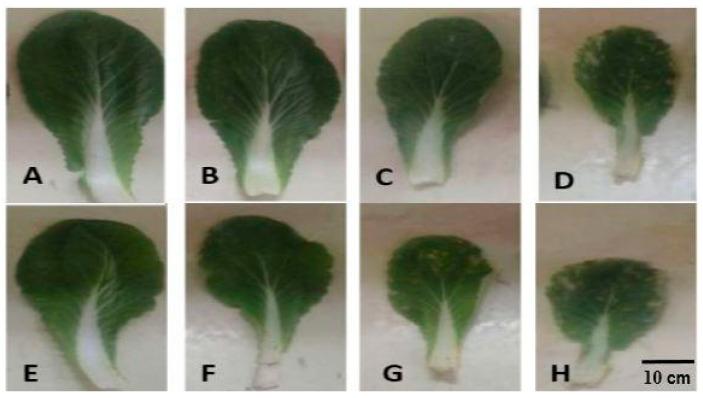
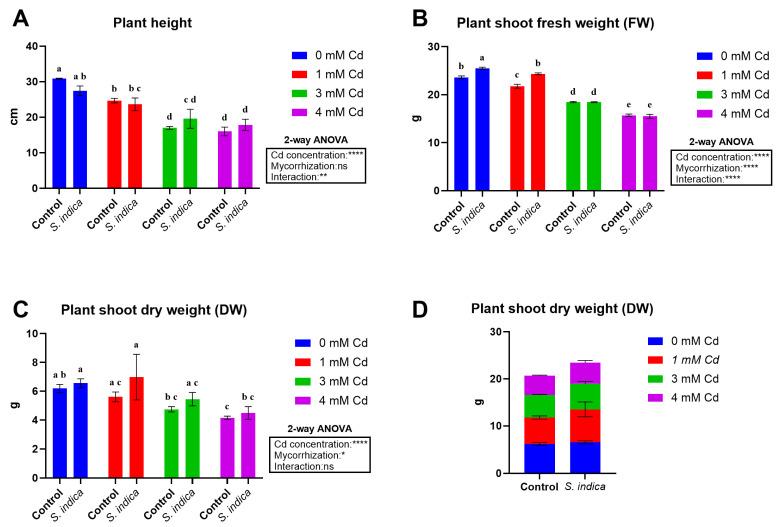
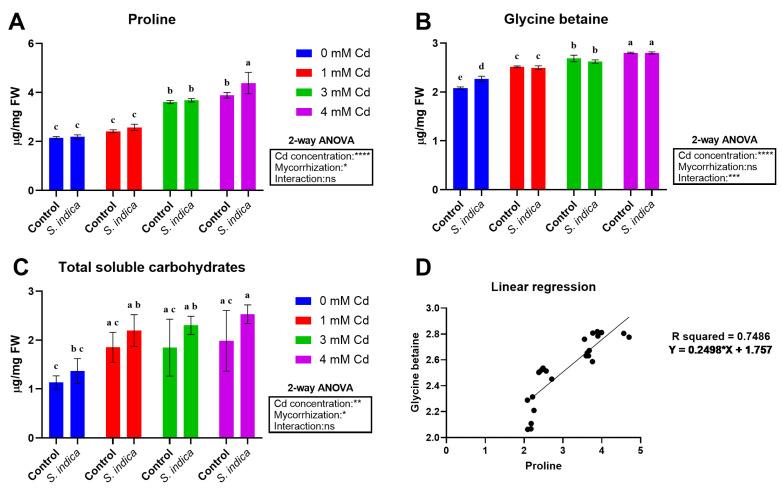
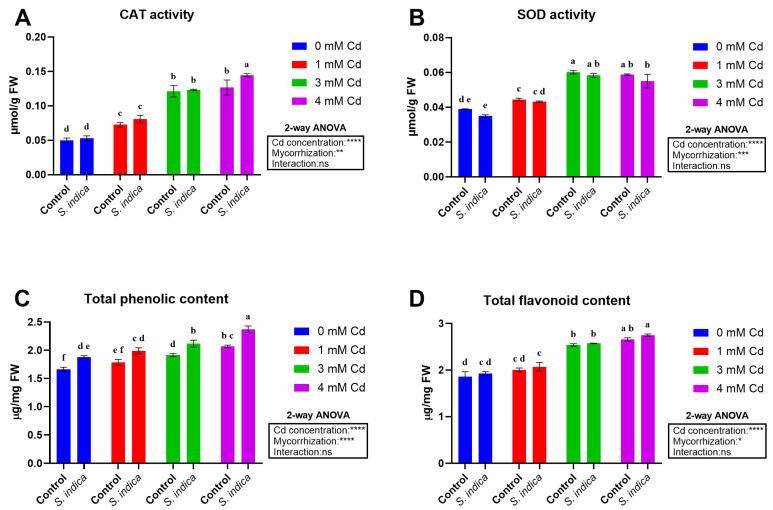
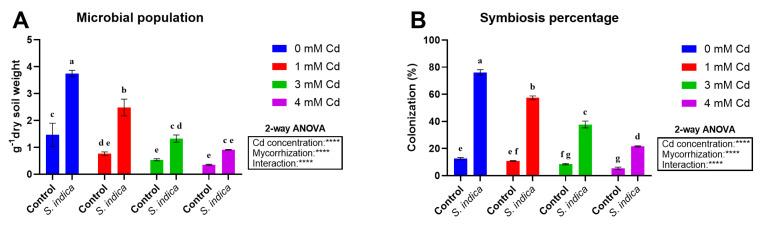
Heavy metal toxicity, particularly cadmium (Cd), poses a growing threat to agriculture and human health due to its persistence and high solubility, which facilitates its entry into the food chain. Among the strategies proposed to reduce Cd toxicity in plants and the environment, the use of beneficial microorganisms, such as endophytic fungi, has gained attention due to its effectiveness and eco-friendliness. This study investigates the potential of the root-colonizing fungus (formerly ) to mitigate cadmium (Cd) stress in Chinese cabbage ( L. subsp. ) grown hydroponically under varying Cd concentrations (0, 1, 3, and 4 mM). Several parameters were assessed, including morphological traits, physiological and biochemical responses, and changes in leaf composition. Exposure to Cd significantly reduced plant growth, increased membrane electrolyte leakage, and decreased relative water content and root colonization, while enhancing antioxidant enzyme activities and the accumulation of phenolics, flavonoids, proline, glycine betaine, and carbohydrates. Notably, plants treated with showed improved tolerance to Cd stress, indicating the potential of the fungus. These findings suggest that can enhance plant resilience in Cd-contaminated environments and may offer a promising biological strategy for sustainable crop production under heavy metal stress.
重金属毒性,尤其是镉(Cd),因其持久性和高溶解性,对农业和人类健康构成了日益严重的威胁,这使得它易于进入食物链。在为降低植物和环境中镉毒性而提出的策略中,使用有益微生物,如内生真菌,因其有效性和生态友好性而受到关注。本研究调查了根部定殖真菌(原)在不同镉浓度(0、1、3和4 mM)水培条件下,减轻大白菜(L. subsp.)镉胁迫的潜力。评估了几个参数,包括形态特征、生理和生化反应以及叶片成分的变化。镉暴露显著降低了植物生长,增加了膜电解质渗漏,降低了相对含水量和根部定殖,同时增强了抗氧化酶活性以及酚类、黄酮类、脯氨酸、甘氨酸甜菜碱和碳水化合物的积累。值得注意的是,用处理的植物对镉胁迫的耐受性有所提高,表明该真菌具有潜力。这些发现表明,可以增强植物在镉污染环境中的恢复力,并可能为重金属胁迫下的可持续作物生产提供一种有前景的生物学策略。





 Zotero 插件