
大麻二酚在呼吸相关细胞和HepG2衍生细胞中的代谢以及大麻二酚及其代谢产物与细胞色素P450酶和大麻素受体的分子对接
Metabolism of Cannabidiol in Respiratory-Associated Cells and HepG2-Derived Cells and Molecular Docking of Cannabidiol and Its Metabolites with CYP Enzymes and Cannabinoid Receptors.
作者信息
Tongkanarak Krittawan, Paul Pijush Kumar, Bintang Muhammad A Khumaini Mudhar, Suedee Roongnapa, Sawatdee Somchai, Srichana Teerapol
机构信息
Drug Delivery System Excellence Center, Department of Pharmaceutical Technology, Faculty of Pharmaceutical Sciences, Prince of Songkla University, Hat Yai, Songkhla 90112, Thailand.
Department of Nutrition and Health Sciences, University of Nebraska-Lincoln, Lincoln, NE 68583, USA.
出版信息
Int J Mol Sci. 2025 Aug 28;26(17):8384. doi: 10.3390/ijms26178384.
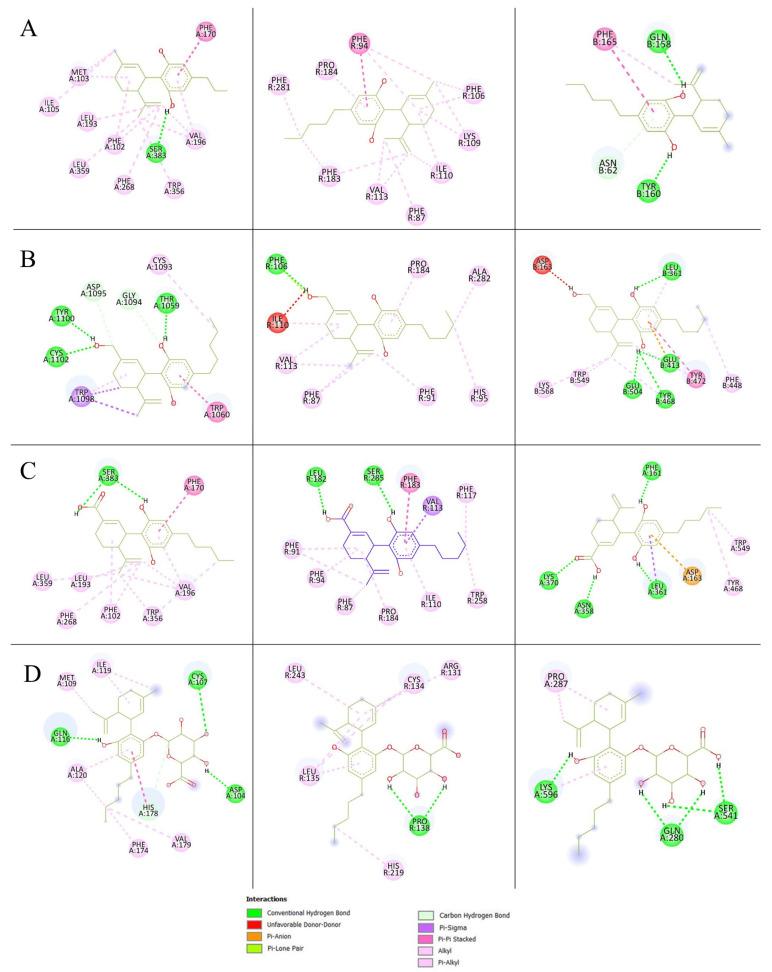
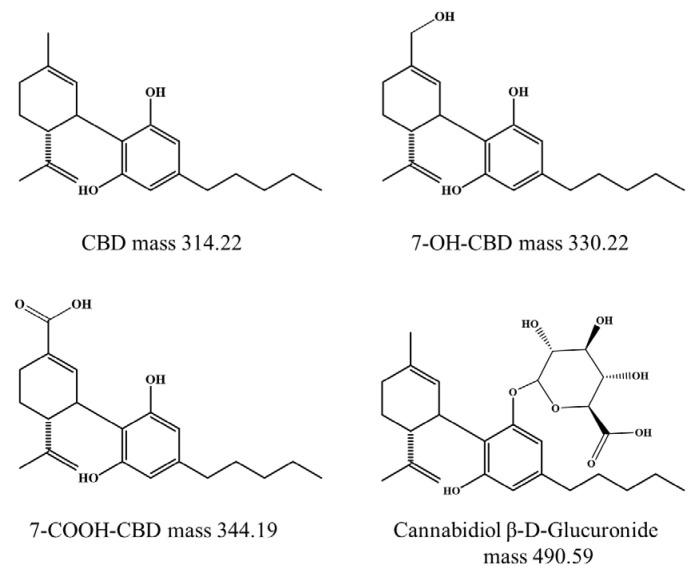
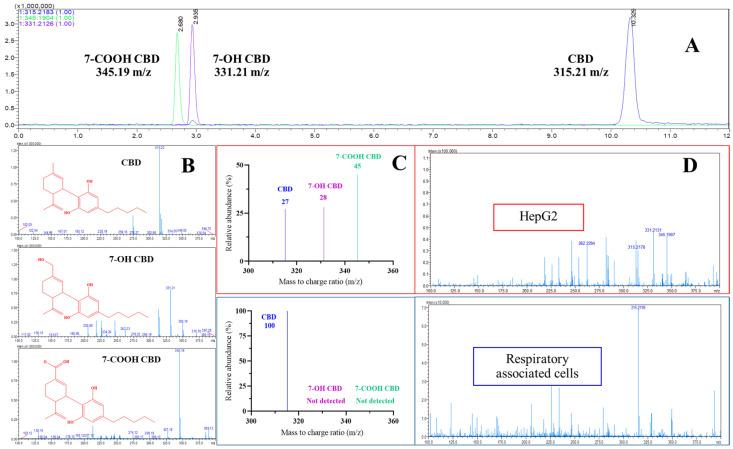
Cannabidiol (CBD) has been reported in medical applications for various indications. The enzymatic metabolism of CBD is not fully understood in the different routes of administration. This research aimed to identify the CBD metabolites after incubation of CBD with derived hepatocyte cells (HepG2), bronchial epithelial cells (NCI-H358), alveolar cells (A549), and alveolar macrophage cells (NR8383). A liquid chromatography-mass spectrometry technique was developed to quantify the CBD and its metabolites. Molecular docking was employed to evaluate the binding affinity of CBD with different cytochrome P-450 (CYP-450) enzymes and further predict the implication of drug-drug interactions. CBD and major metabolites of CBD were also docked with cannabinoid receptors. The results revealed that only HepG2 cells metabolized CBD to 7-hydroxy-CBD (7-OH-CBD) and 7-carboxy-CBD (7-COOH-CBD), whereas other respiratory cell lines and alveolar macrophages were found to have mainly CBD in the incubated samples without any metabolites. The CYP2C19 and CYP3A4 enzymes were responsible for CBD conversion to hydroxylated CBD metabolites. The 7-OH-CBD and 7-COOH-CBD metabolites were found to bind to cannabinoid receptors with different affinities. The relative abundance of CBD and major metabolites may indicate the potential route of CBD administration.
大麻二酚(CBD)已被报道用于多种适应症的医学应用中。在不同给药途径下,CBD的酶促代谢尚未完全明确。本研究旨在确定CBD与原代肝细胞(HepG2)、支气管上皮细胞(NCI-H358)、肺泡细胞(A549)和肺泡巨噬细胞(NR8383)孵育后的代谢产物。开发了一种液相色谱-质谱技术来定量分析CBD及其代谢产物。采用分子对接技术评估CBD与不同细胞色素P-450(CYP-450)酶的结合亲和力,并进一步预测药物-药物相互作用的影响。还将CBD及其主要代谢产物与大麻素受体进行对接。结果显示,只有HepG2细胞将CBD代谢为7-羟基-CBD(7-OH-CBD)和7-羧基-CBD(7-COOH-CBD),而在其他呼吸道细胞系和肺泡巨噬细胞的孵育样品中,主要检测到的是CBD,未发现任何代谢产物。CYP2C19和CYP3A4酶负责将CBD转化为羟基化的CBD代谢产物。发现7-OH-CBD和7-COOH-CBD代谢产物与大麻素受体具有不同的结合亲和力。CBD及其主要代谢产物的相对丰度可能表明CBD的潜在给药途径。

 Zotero 插件