
高血压和体重指数作为2型糖尿病诱发慢性肾脏病的中介因素:一项综合多数据库研究的见解
Hypertension and BMI as Mediators of Type 2 Diabetes-Induced CKD: Insights from an Integrative Multi-Database Study.
作者信息
Wang Heng, Fan Keyi, Ning Yijie, Li Yaling, Qi Xiaotong, Wang Ziyan, Xu Keyang, Zhang Ruijing, Zhou Yun, Dong Honglin, Zheng Guoping
机构信息
Centre for Transplant and Renal Research, Westmead Institute for Medical Research, The University of Sydney, Sydney, NSW, Australia.
Vascular Institute of Shanxi Medical University, Taiyuan, Shanxi, People's Republic of China.
出版信息
Diabetes Metab Syndr Obes. 2025 Sep 9;18:3343-3361. doi: 10.2147/DMSO.S538554. eCollection 2025.
BACKGROUND
Chronic kidney disease is a major global health concern, with type 2 diabetic nephropathy (T2DN) significantly contributing to its burden. This study examines global trends, key risk factors, and clinical characteristics of T2DN to identify modifiable contributors and inform precision management.
METHODS
Data from the 2021 GBD Study, Mendelian randomization (MR) analyses, NHANES, and a clinical cohort were utilized. Trends in prevalence, incidence, mortality, disability-adjusted life years (DALYs), and population-attributable fractions (PAF) of T2DN risk factors were analyzed globally and across sociodemographic strata. Genetic determinants were identified via two-sample and multivariable MR, while clinical data were analyzed using regression and correlation analyses.
RESULTS
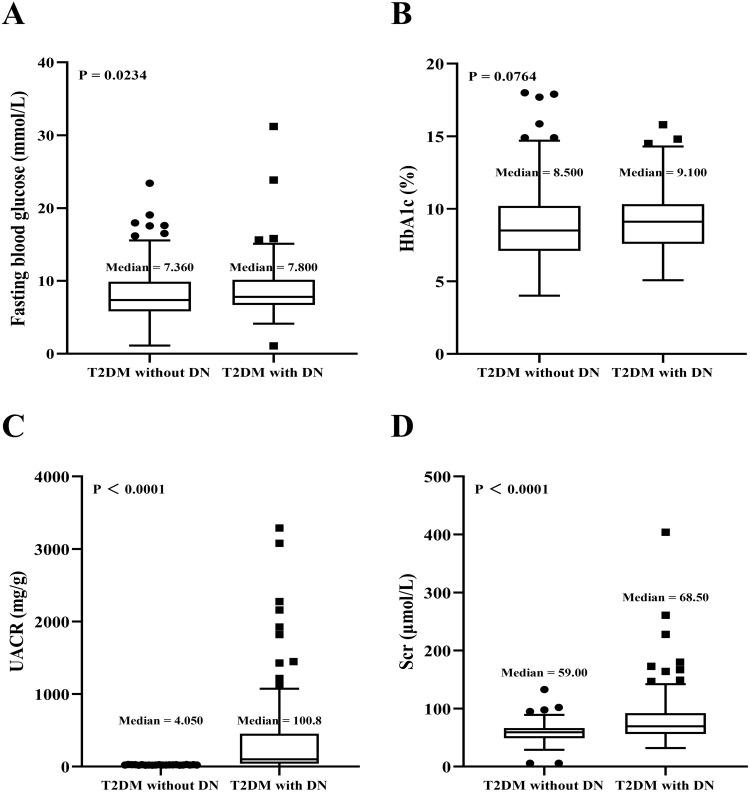
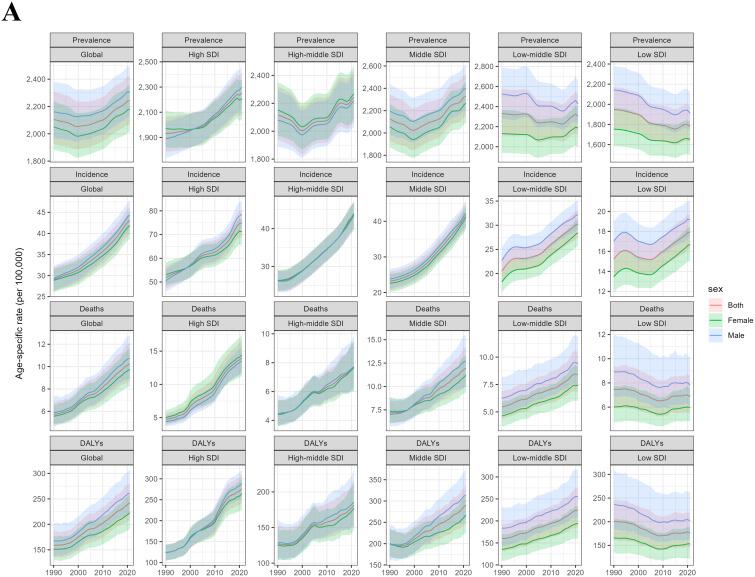
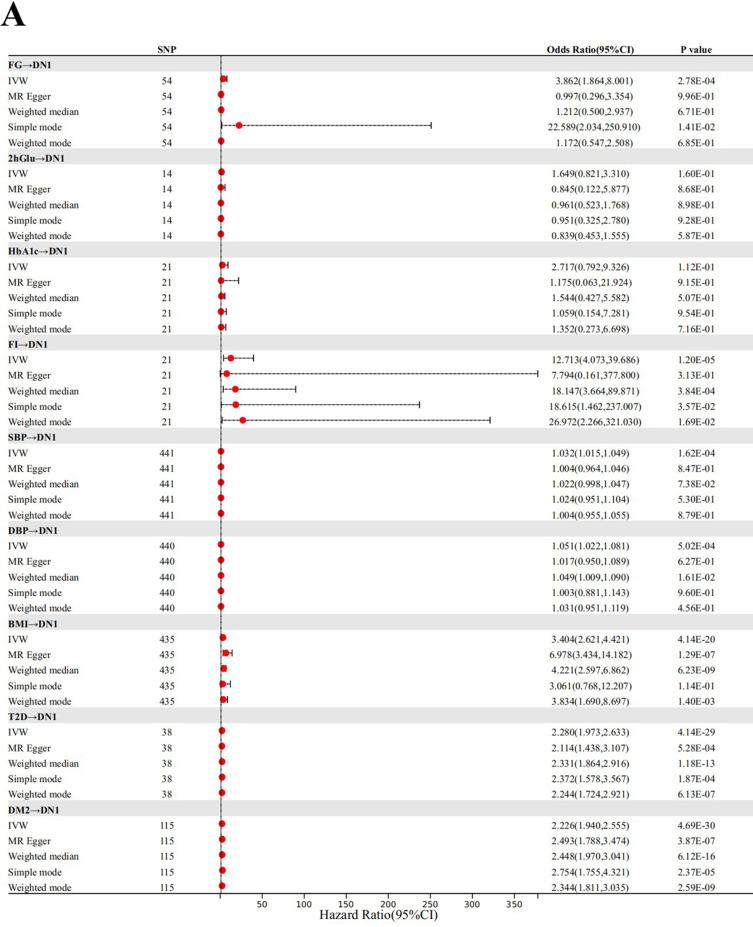
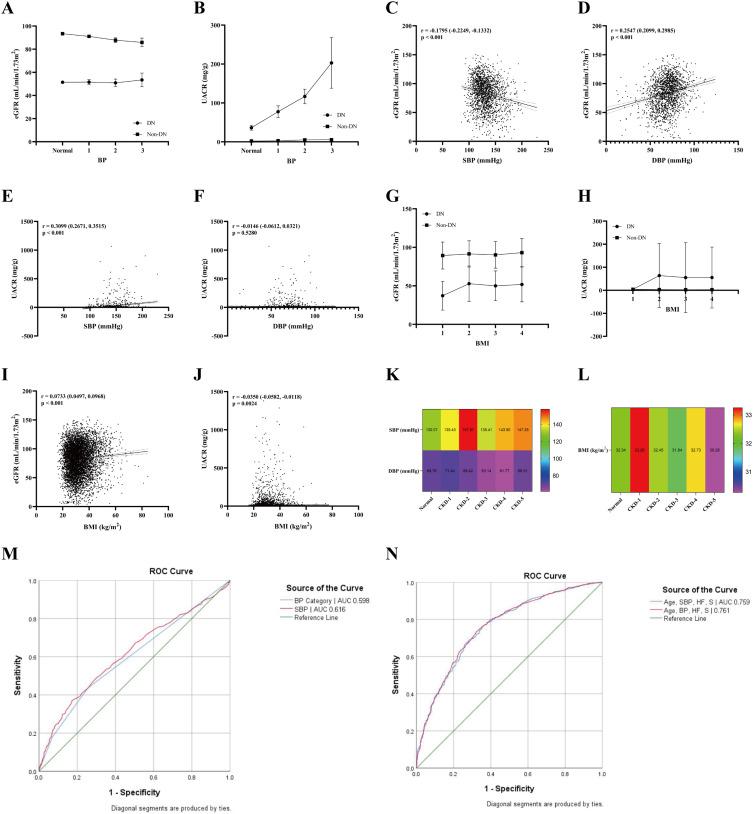
Between 1990 and 2021, T2DN prevalence, incidence, and DALYs increased globally, and the global mortality rate rose from 5.73 (4.81, 6.83) to 10.25 (8.62, 12.15). High fasting plasma glucose was the primary risk factor, with rising PAFs for high BMI and systolic blood pressure (SBP), and the global PAF for deaths due to T2DN attributed to high fasting plasma glucose increased from 0.80 to 0.90. MR analysis confirmed causal links between fasting glucose (β = 1.351, = 2.78e-4), insulin (β = 2.543, = 1.20e-5), T2DM (OR = 2.280, = 4.14e-29) and T2DN risk, with BMI and SBP influencing disease progression. NHANES data showed BP's impact on renal function. A diagnostic model incorporating age, categorical blood pressure data, history of heart failure, and history of stroke was developed, with an AUC of 0.716. In the clinical cohort, T2DN correlated with elevated urinary albumin-to-creatinine ratio, serum creatinine, BP, and BMI variations.
CONCLUSION
T2DM progression to T2DN is driven by hyperglycemia, BMI, and BP, highlighting the need for targeted interventions.
背景
慢性肾脏病是全球主要的健康问题,2型糖尿病肾病(T2DN)对其负担有显著影响。本研究调查T2DN的全球趋势、关键危险因素和临床特征,以确定可改变的影响因素并为精准管理提供依据。
方法
利用2021年全球疾病负担(GBD)研究、孟德尔随机化(MR)分析、美国国家健康和营养检查调查(NHANES)以及一个临床队列的数据。在全球范围内以及不同社会人口学阶层中分析T2DN危险因素的患病率、发病率、死亡率、伤残调整生命年(DALYs)和人群归因分数(PAF)的趋势。通过两样本和多变量MR确定遗传决定因素,同时使用回归和相关分析对临床数据进行分析。
结果
1990年至2021年期间,全球T2DN的患病率、发病率和DALYs均有所增加,全球死亡率从5.73(4.81,6.83)升至10.25(8.62,12.15)。空腹血糖升高是主要危险因素,高体重指数(BMI)和收缩压(SBP)的PAF上升,因空腹血糖升高导致的T2DN死亡的全球PAF从0.80增至0.90。MR分析证实空腹血糖(β = 1.351, = 2.78e - 4)、胰岛素(β = 2.543, = 1.20e - 5)、2型糖尿病(OR = 2.280, = 4.14e - 29)与T2DN风险之间存在因果关系,BMI和SBP影响疾病进展。NHANES数据显示血压对肾功能的影响。开发了一个包含年龄、分类血压数据、心力衰竭病史和中风病史的诊断模型,曲线下面积(AUC)为0.716。在临床队列中,T2DN与尿白蛋白与肌酐比值升高、血清肌酐、血压和BMI变化相关。
结论
2型糖尿病进展为T2DN是由高血糖、BMI和血压驱动的,这凸显了进行针对性干预的必要性。



 Zotero 插件