
亚100微米微塑料的流入式单颗粒检测
In-flow single particle detection of sub-100 micron microplastics.
作者信息
Paruli Ernesto Iii, De Lavigne Sainte-Suzanne Agnès, Debeaumont Mathieu, Thomas Lena, Courson Remi, Challier Lylian, El Rakwe Maria, Prado Enora
机构信息
IFREMER, RDT Research and Technological Development F-29280 Plouzané France
Laboratoire ITODYS/UMR 7086, Université Paris Cité - Faculté des Sciences Paris 75013 France.
出版信息
RSC Adv. 2025 Sep 11;15(40):33139-33150. doi: 10.1039/d5ra04700e.
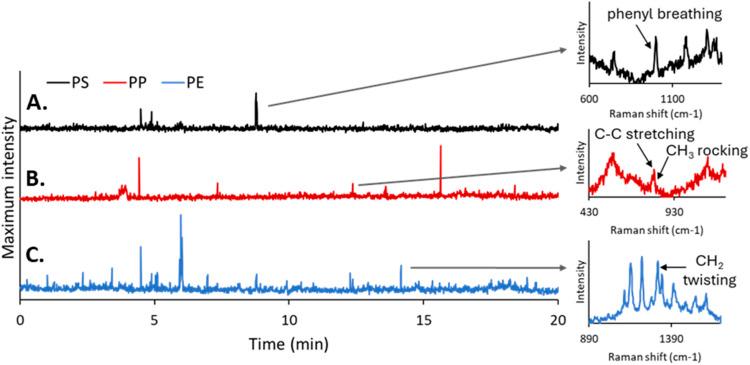
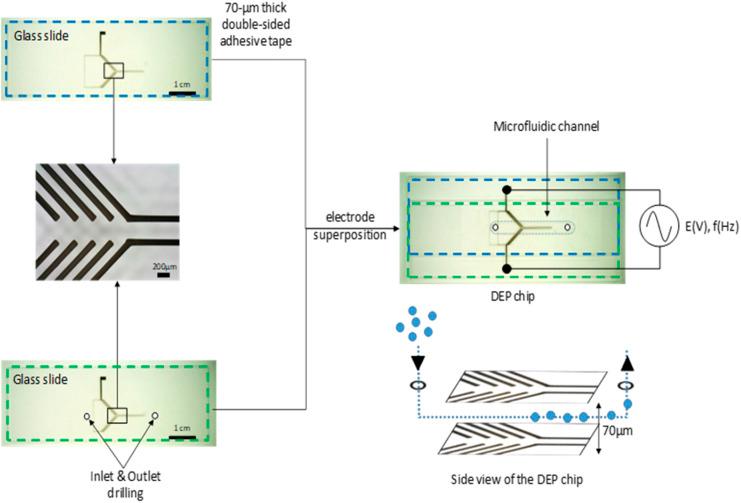
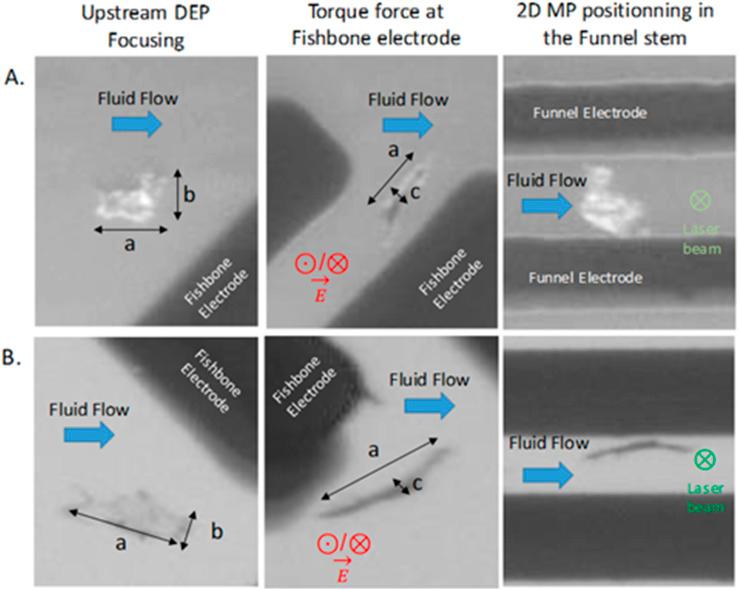
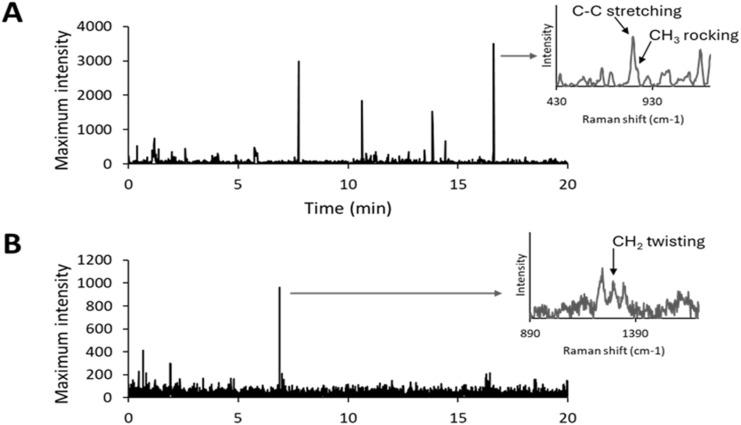
The pervasive and growing contamination of ecosystems by microplastics (MPs) has emerged as a critical environmental and societal challenge. These synthetic polymer fragments, typically defined as plastic particles smaller than 5 mm, are now recognized not only for their persistence in natural environments but also for their potential to carry adsorbed pollutants and to be ingested by a wide range of organisms, including humans. Of particular concern are MPs in the sub-100 μm range, which are more difficult to isolate and analyze but may exhibit enhanced mobility, reactivity, and bioavailability. The accurate detection, quantification, and chemical characterization of such small MPs are therefore essential for advancing our understanding of their sources, fate, and impacts. However, current analytical approaches-primarily based on filtration, staining, and spectroscopic methods-remain time-consuming and often lack the sensitivity or selectivity required for sub-100 μm particles in complex aqueous matrices. In this study, we present a novel microfluidic strategy for the rapid, in-flow detection and molecular identification of individual MPs in suspension. The method integrates dielectrophoresis (DEP) for the label-free spatial manipulation of particles and Raman microspectroscopy (RM) for their chemical fingerprinting. A custom-fabricated glass microfluidic chip was developed, incorporating electrodes on both the top and bottom surfaces of the main channel to achieve three-dimensional DEP focusing. MPs ranging from 25 to 50 μm in diameter were successfully aligned along the channel's central axis and interrogated in real time using RM. This approach enabled unambiguous, particle-by-particle identification of five widely encountered polymer types: polystyrene (PS), polypropylene (PP), polyethylene (PE), polyvinyl chloride (PVC), and polyethylene terephthalate (PET), both in monodisperse and polydisperse mixtures. Our results demonstrate that DEP/RM coupling offers a powerful and scalable platform for in-flow MPs analysis, combining high spatial resolution and chemical specificity. This proof of concept opens new possibilities for high-throughput and automated detection of MPs in environmental monitoring and water analysis.
微塑料(MPs)对生态系统的普遍且日益严重的污染已成为一项严峻的环境和社会挑战。这些合成聚合物碎片,通常被定义为尺寸小于5毫米的塑料颗粒,如今不仅因其在自然环境中的持久性而受到关注,还因其携带吸附污染物以及被包括人类在内的广泛生物体摄入的可能性而受到重视。特别令人担忧的是直径小于100微米的微塑料,它们更难分离和分析,但可能具有更高的迁移率、反应性和生物利用度。因此,准确检测、量化和化学表征此类小尺寸微塑料对于增进我们对其来源、归宿和影响的理解至关重要。然而,当前的分析方法——主要基于过滤、染色和光谱法——仍然耗时,并且往往缺乏对复杂水基质中小于100微米颗粒所需的灵敏度或选择性。在本研究中,我们提出了一种新颖的微流控策略,用于快速、在流检测和分子识别悬浮液中的单个微塑料。该方法集成了介电电泳(DEP)用于颗粒的无标记空间操纵以及拉曼显微光谱(RM)用于其化学指纹识别。开发了一种定制制造的玻璃微流控芯片,在主通道的顶部和底部表面均设有电极,以实现三维DEP聚焦。直径在25至50微米范围内的微塑料成功地沿通道中心轴排列,并使用RM进行实时检测。这种方法能够明确地逐个颗粒识别五种广泛存在的聚合物类型:聚苯乙烯(PS)、聚丙烯(PP)、聚乙烯(PE)、聚氯乙烯(PVC)和聚对苯二甲酸乙二酯(PET),无论是单分散还是多分散混合物。我们的结果表明,DEP/RM耦合为在流微塑料分析提供了一个强大且可扩展的平台,结合了高空间分辨率和化学特异性。这一概念验证为环境监测和水分析中微塑料的高通量和自动化检测开辟了新的可能性。




 Zotero 插件