
冠状病毒感染中的免疫表观遗传学模式
Immuno-epigenetic paradigms in coronavirus infection.
作者信息
Gupta Swati, Hemeg Hassan A, Afrin Farhat
机构信息
Centre for Interdisciplinary Sciences, JIS Institute of Advanced Studies and Research, JIS University, Santragachi, Howrah, West Bengal, India.
Department of Medical Laboratory Technology, Faculty of Applied Medical Sciences, Taibah University, Medina, Saudi Arabia.
出版信息
Front Immunol. 2025 Sep 3;16:1596135. doi: 10.3389/fimmu.2025.1596135. eCollection 2025.
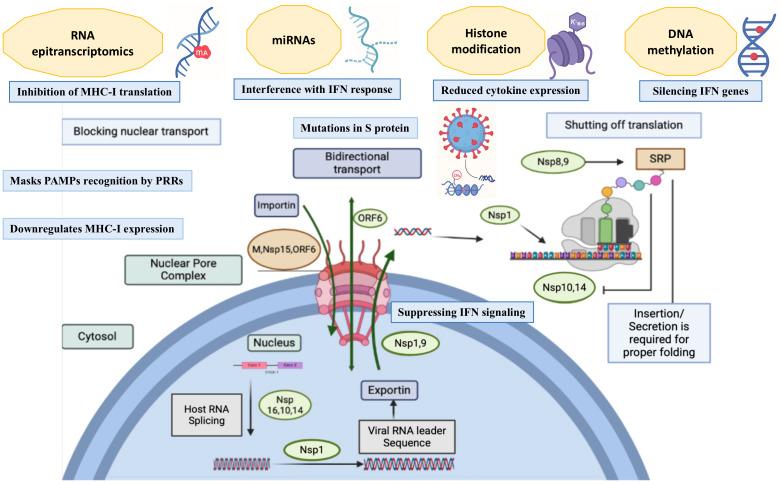
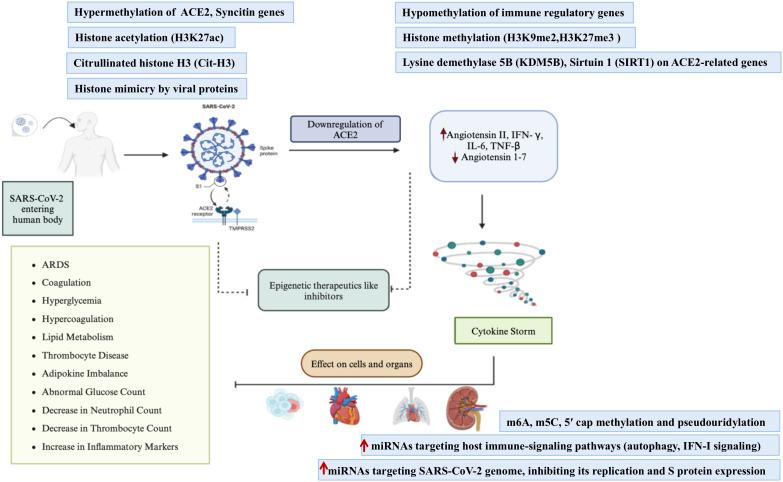
Coronavirus Disease 2019 (COVID-19) is caused by the Severe Acute Respiratory Syndrome Coronavirus-2 (SARS-CoV-2), a novel member of the Coronaviridae family. The viral genome encodes both structural proteins, such as spike, membrane, hemagglutinin, and envelope, as well as non-structural proteins that include auxiliary proteins and replicase essential for viral replication. While immunization campaigns have mitigated the spread of the virus, therapeutic interventions remain critical for managing outbreaks and preventing long-term health consequences. Despite extensive global research into the genome, structure, entry process, and replication mechanisms of SARS-CoV-2, key aspects such as the roles of membrane lipids in viral entry, packaging, and release, as well as the metabolic alterations in infected cells, remain poorly understood. Epigenetics, the study of heritable phenotypic changes driven by genetic and non-genetic factors, plays a pivotal role in shaping host responses to SARS-CoV-2 infection. Epigenetic modifications, such as histone methylation and acetylation, DNA and RNA methylation, chromatin remodeling, and non-coding RNA regulation, significantly influence gene expression in infected host cells. These reversible changes orchestrate the host's antiviral responses and potentially alter susceptibility to COVID-19. This review delves into the immuno-epigenetic modifications occurring in hosts infected with SARS-CoV-2, providing insights into how these changes trigger viral replication and infection processes. By examining the current state of research on the immune-epigenetic landscape of SARS-CoV-2 infections, we highlight the mechanisms by which these modifications affect the host-viral interplay. Furthermore, we propose potential therapeutic targets within the immune-epigenetic pathways that could enhance ongoing efforts to combat COVID-19. Understanding these mechanisms will not only provide a deeper perspective on the virus's pathogenic strategies but also offer innovative approaches to improve therapeutic interventions. By addressing the gaps in knowledge surrounding immune-epigenetic factors, this review aims to contribute to the development of novel strategies for preventing and managing coronavirus infections and its variants.
2019冠状病毒病(COVID-19)由严重急性呼吸综合征冠状病毒2(SARS-CoV-2)引起,它是冠状病毒科的一个新成员。病毒基因组既编码结构蛋白,如刺突蛋白、膜蛋白、血凝素和包膜蛋白,也编码非结构蛋白,包括辅助蛋白和病毒复制所必需的复制酶。虽然免疫接种活动减缓了病毒的传播,但治疗干预对于控制疫情和预防长期健康后果仍然至关重要。尽管全球对SARS-CoV-2的基因组、结构、进入过程和复制机制进行了广泛研究,但膜脂在病毒进入、包装和释放中的作用以及受感染细胞中的代谢改变等关键方面仍知之甚少。表观遗传学是研究由遗传和非遗传因素驱动的可遗传表型变化的学科,在塑造宿主对SARS-CoV-2感染的反应中起着关键作用。表观遗传修饰,如组蛋白甲基化和乙酰化、DNA和RNA甲基化、染色质重塑以及非编码RNA调控,显著影响受感染宿主细胞中的基因表达。这些可逆变化协调宿主的抗病毒反应,并可能改变对COVID-19的易感性。本综述深入探讨了感染SARS-CoV-2的宿主中发生的免疫表观遗传修饰,深入了解这些变化如何触发病毒复制和感染过程。通过研究SARS-CoV-2感染的免疫表观遗传格局的当前研究状态,我们强调了这些修饰影响宿主-病毒相互作用的机制。此外,我们提出了免疫表观遗传途径中的潜在治疗靶点,这些靶点可以加强正在进行的抗击COVID-19的努力。了解这些机制不仅将为病毒的致病策略提供更深入的视角,还将提供创新方法来改进治疗干预。通过填补围绕免疫表观遗传因素的知识空白,本综述旨在为预防和管理冠状病毒感染及其变体的新策略的开发做出贡献。


 Zotero 插件