
磷脂酶A2激活蛋白与特发性炎症性肠病
Phospholipase A2 activating protein and idiopathic inflammatory bowel disease.
作者信息
Peterson J W, Dickey W D, Saini S S, Gourley W, Klimpel G R, Chopra A K
机构信息
Department of microbiology and Immunology, University of Texas Medical Branch, Galveston 77555-1019, USA.
出版信息
Gut. 1996 Nov;39(5):698-704. doi: 10.1136/gut.39.5.698.
BACKGROUND
Crohn's disease and ulcerative colitis are idiopathic inflammatory bowel diseases (IBD) involving synthesis of eicosanoids from arachidonic acid (AA), which is released from membrane phospholipids by phospholipase A2 (PLA2). A potentially important regulator of the production of these mediators is a protein activator of PLA2, referred to as PLA2 activating protein (PLAP).
AIMS
The purpose of this investigation was to discover if PLAP values might be increased in the inflamed intestinal tissue of patients with IBD and in intestinal tissue of mice with colitis.
PATIENTS
Biopsy specimens were taken from patients with ulcerative colitis and Crohn's disease undergoing diagnostic colonoscopy, and normal colonic mucosa was obtained from patients without IBD after surgical resection.
METHODS
Immunocytochemistry with affinity purified antibodies to PLAP synthetic peptides was used to locate PLAP antigen in sections of intestinal biopsy specimens from IBD patients compared with that of normal intestinal tissue. Northern blot analysis with a murine [32P] labelled plap cDNA probe was performed on RNA extracted from the colons of mice fed dextran sulphate sodium (DSS) and cultured HT-29 cells exposed to lipopolysaccharide (LPS).
RESULTS
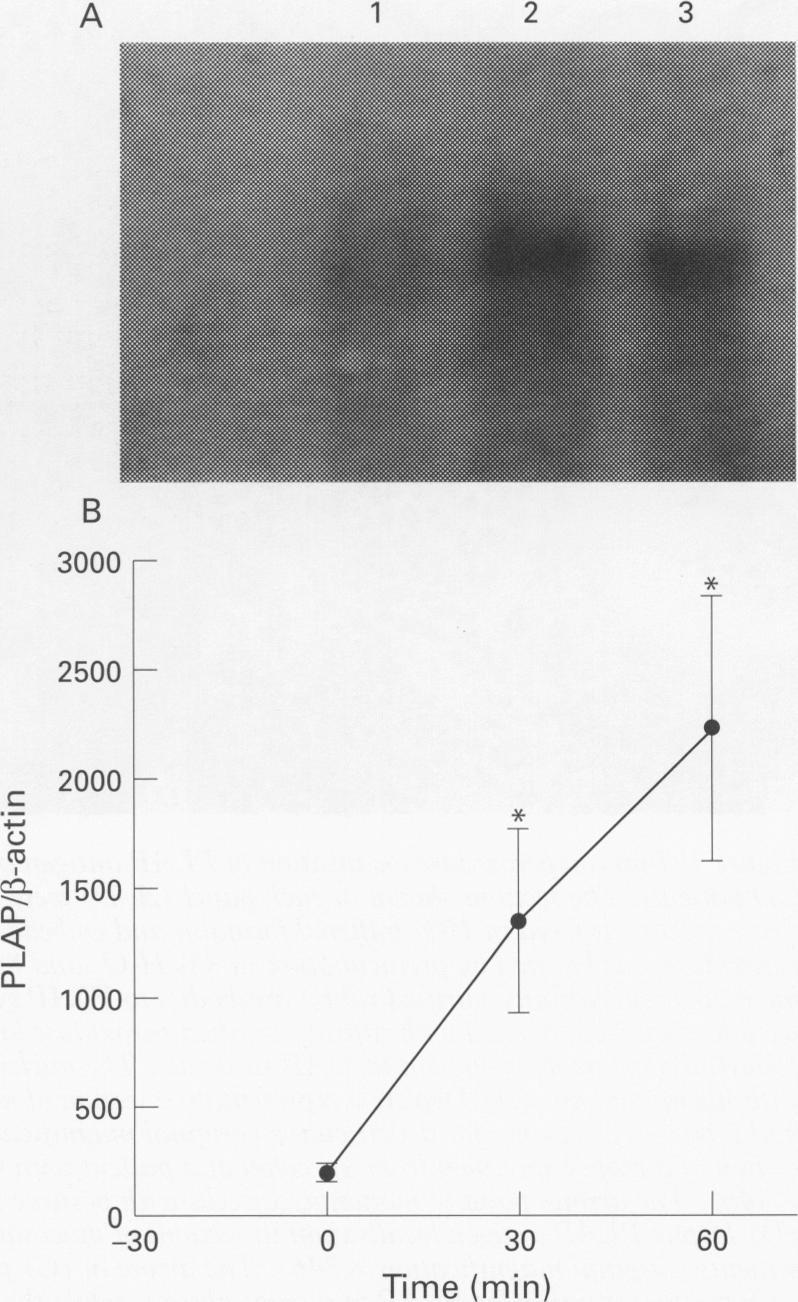
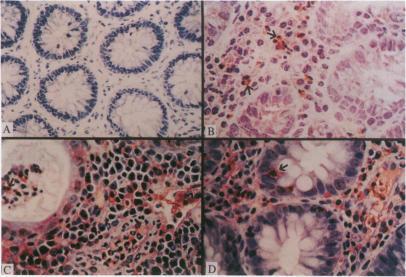
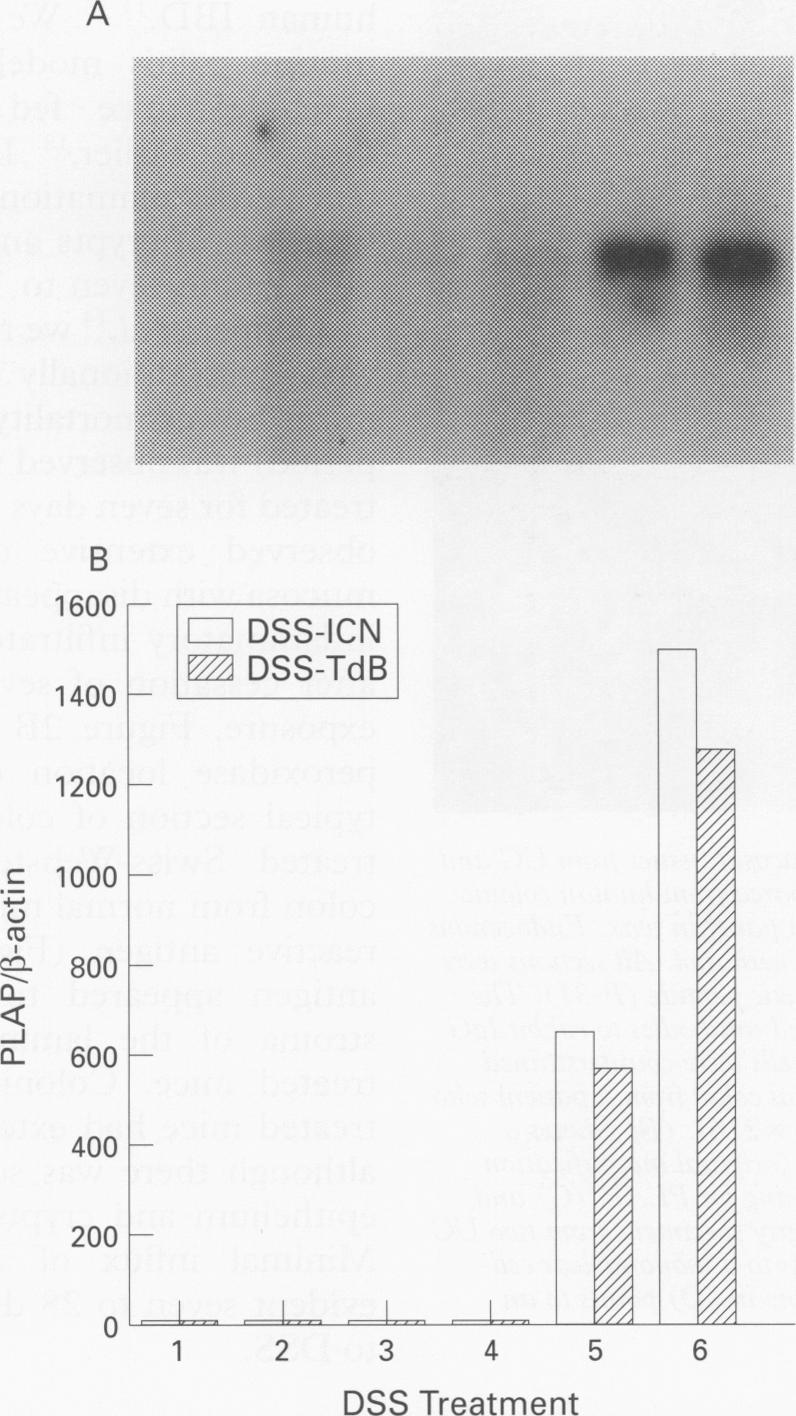
PLAP antigen was localised predominantly within monocytes and granulocytes in intestinal tissue sections from IBD patients, and additional deposition of extracellular PLAP antigen was associated with blood vessels and oedema fluid in the inflamed tissues. In contrast, tissue sections from normal human intestine were devoid of PLAP reactive antigen, except for some weak cytoplasmic reaction of luminal intestinal epithelial cells. Similarly, colonic tissue from DSS treated mice contained an increased amount of PLAP antigen compared with controls. The stroma of the lamina propria of the colonic mucosa from the DSS treated mice reacted intensely with antibodies to PLAP synthetic peptides, while no reaction was observed with control mouse colons. These data were supported by northern analysis which showed that PLAP mRNA was increased in the colons of DSS treated mice and cultured HT-29 cells exposed to LPS.
CONCLUSIONS
As PLAP values were increased in the intestinal mucosa of IBD patients and mice with colitis, as well as in LPS treated cultured HT-29 cells, a role was postulated for PLAP in increasing PLA2 activity, which leads to the increased synthesis of eicosanoids in intestinal tissues of patients with these inflammatory diseases.
背景
克罗恩病和溃疡性结肠炎是特发性炎症性肠病(IBD),涉及由花生四烯酸(AA)合成类花生酸,花生四烯酸由磷脂酶A2(PLA2)从膜磷脂中释放。这些介质产生的一个潜在重要调节因子是PLA2的蛋白激活剂,称为PLA2激活蛋白(PLAP)。
目的
本研究的目的是探究IBD患者发炎的肠道组织以及结肠炎小鼠的肠道组织中PLAP值是否可能升高。
患者
对接受诊断性结肠镜检查的溃疡性结肠炎和克罗恩病患者进行活检取样,并从非IBD患者手术切除后获取正常结肠黏膜。
方法
使用针对PLAP合成肽的亲和纯化抗体进行免疫细胞化学,以在IBD患者肠道活检标本切片中定位PLAP抗原,并与正常肠道组织进行比较。用小鼠[32P]标记的plap cDNA探针进行Northern印迹分析,对从喂食葡聚糖硫酸钠(DSS)的小鼠结肠和暴露于脂多糖(LPS)的培养HT - 29细胞中提取的RNA进行检测。
结果
在IBD患者肠道组织切片中,PLAP抗原主要定位于单核细胞和粒细胞内,炎症组织中细胞外PLAP抗原的额外沉积与血管和水肿液有关。相比之下,正常人肠道组织切片除了管腔肠上皮细胞有一些微弱的细胞质反应外,没有PLAP反应性抗原。同样,与对照组相比,DSS处理小鼠的结肠组织中PLAP抗原量增加。DSS处理小鼠结肠黏膜固有层的基质与PLAP合成肽抗体发生强烈反应,而对照小鼠结肠未观察到反应。Northern分析支持了这些数据,该分析表明DSS处理小鼠的结肠和暴露于LPS的培养HT - 29细胞中PLAP mRNA增加。
结论
由于IBD患者和结肠炎小鼠的肠道黏膜以及LPS处理的培养HT - 29细胞中PLAP值升高,推测PLAP在增加PLA2活性中起作用,这导致这些炎症性疾病患者肠道组织中类花生酸合成增加。

 Zotero 插件