
用于预测早期肝硬化患者肝细胞癌发生的新型生物标志物的鉴定
Identification of New Biomarker for Prediction of Hepatocellular Carcinoma Development in Early-Stage Cirrhosis Patients.
作者信息
Ning Gang, Li Yongqiang, Chen Wenji, Tang Wenjuan, Shou Diwen, Luo Qingling, Chen Huiting, Zhou Yongjian
机构信息
Department of Gastroenterology and Hepatology, Guangzhou Digestive Diseases Center, Guangzhou First People's Hospital, South China University of Technology, Guangzhou, Guangdong Province, China.
出版信息
J Oncol. 2021 Jul 20;2021:9949492. doi: 10.1155/2021/9949492. eCollection 2021.
BACKGROUND
Liver cirrhosis is one of the major drivers of hepatocellular carcinoma (HCC). In the present study, we aimed to identify and validate new biomarker for early prediction of HCC development in early-stage cirrhosis patients.
METHODS
mRNA expression and clinical parameters of GSE63898, GSE89377, GSE15654, GSE14520, and TCGA-HCC cohort and ICGC-HCC cohort were downloaded for analysis. Wilcoxon test was performed to identify DEGs. Univariate and multivariate Cox regression analysis were used to develop the risk signature, and ROC analysis was performed to analyze the predictive accuracy and sensitivity of the risk signature.
RESULTS
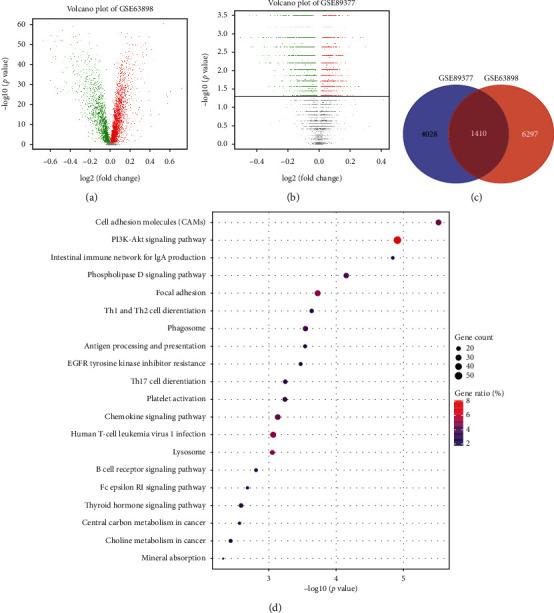
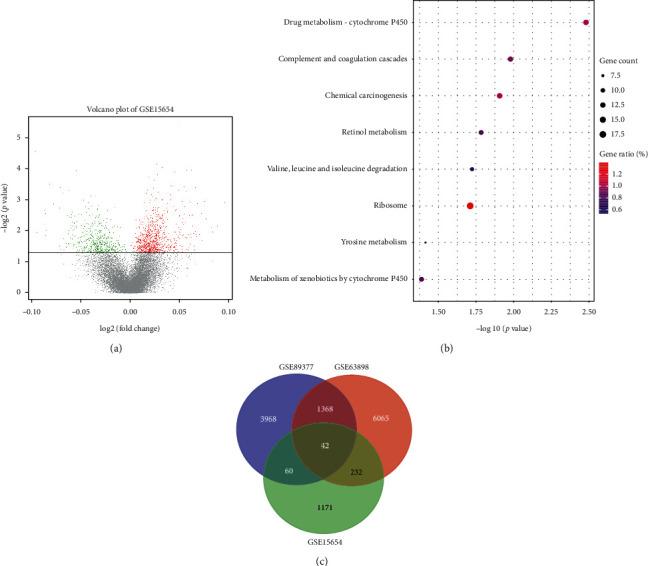
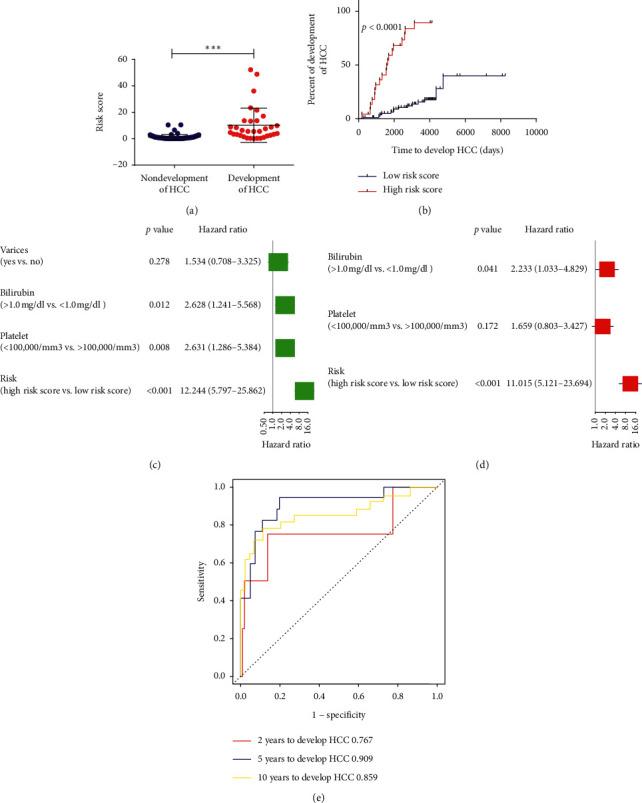
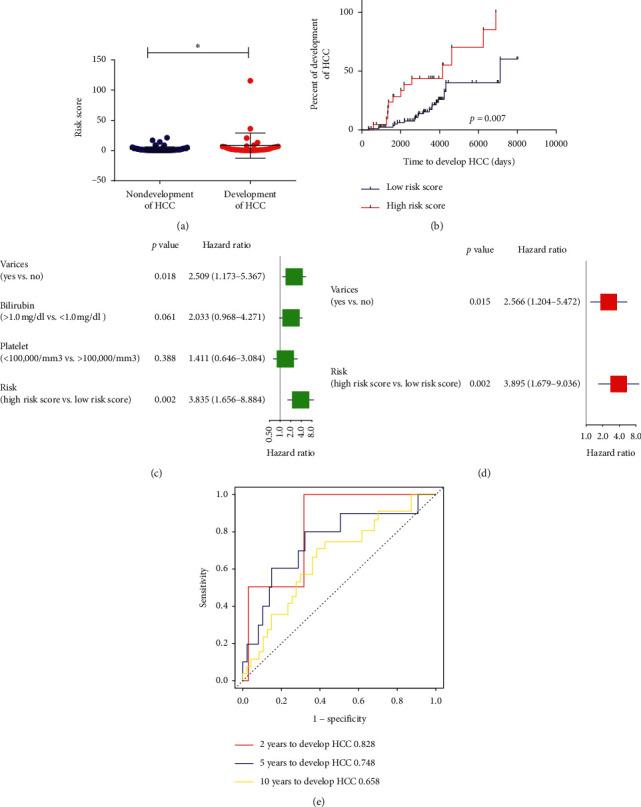
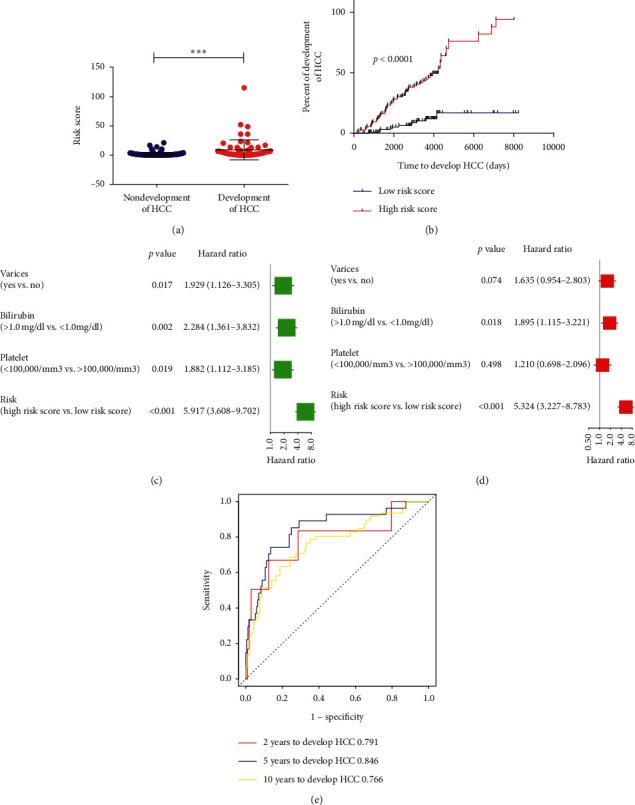
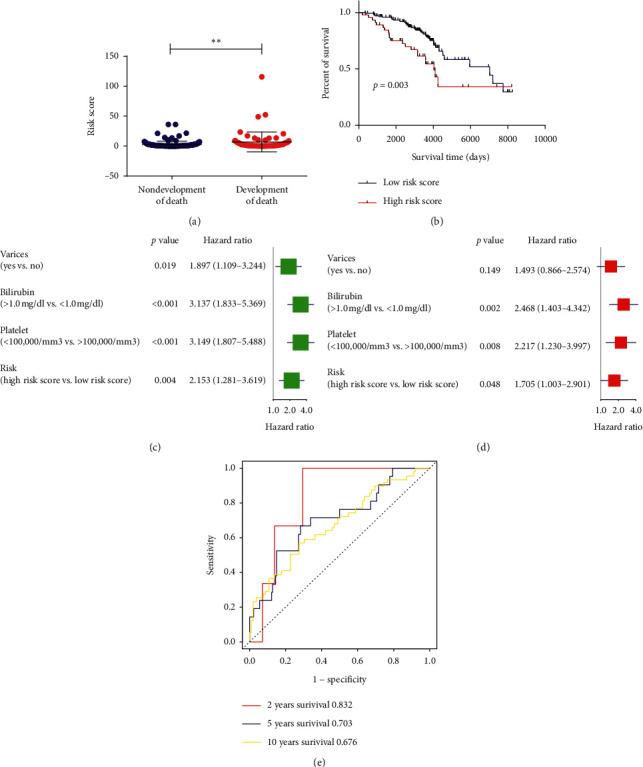
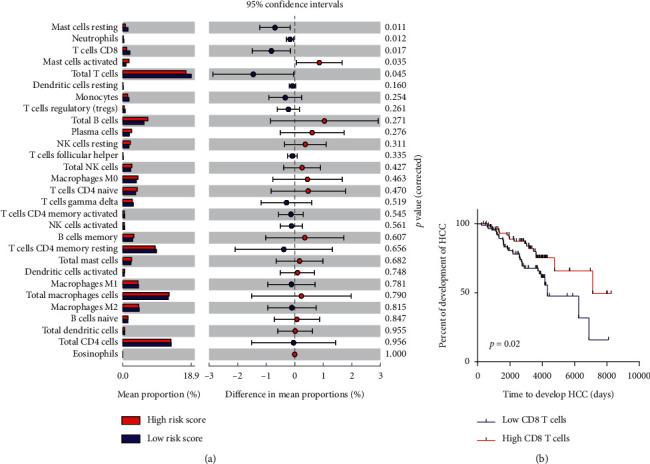
There were 42 DEGs (including 28 upregulated genes and 14 downregulated genes) found in early-stage liver cirrhosis patients before developing HCC from GSE1565442. Then, a risk signature consisting of 8 DEGs could effectively classify early-stage cirrhosis patients into high-risk group with shorter HCC development time and low-risk group with longer HCC development time from GSE15654. Multivariate Cox analysis indicated that the risk signature was an independent prognostic factor for the prediction of HCC development and ROC analysis showed that the signature exhibited good predictive efficiency in predicting 2-, 5-, and 10-year HCC development. Mechanistically, significantly higher proportions of CD8 T cells were found to be enriched in cirrhosis patients with low risk score, and higher CD8 T cells were associated with longer HCC development time. Besides, the signature was an independent prognostic factor for poorer prognosis of early-stage liver cirrhosis patients of GSE15654. Moreover, the signature could also separate HCC patients from healthy controls and was also associated with the poorer prognosis of HCC patients from three HCC cohorts. Finally, we also identified HDAC inhibitors, such as trichostatin A, to be a potential chemopreventive treatment for the prevention of HCC development by targeting risk signature based on CMap analysis.
CONCLUSION
A risk signature was developed and validated for early prediction of HCC development, which may be a useful tool to set up individualized follow-up interval schedules.
背景
肝硬化是肝细胞癌(HCC)的主要驱动因素之一。在本研究中,我们旨在识别和验证用于早期预测早期肝硬化患者HCC发生的新生物标志物。
方法
下载GSE63898、GSE89377、GSE15654、GSE14520队列以及TCGA - HCC队列和ICGC - HCC队列的mRNA表达和临床参数进行分析。采用Wilcoxon检验识别差异表达基因(DEGs)。使用单因素和多因素Cox回归分析构建风险特征,并进行ROC分析以分析风险特征的预测准确性和敏感性。
结果
从GSE15654中发现42个DEGs(包括28个上调基因和14个下调基因)存在于早期肝硬化患者发生HCC之前。然后,一个由8个DEGs组成的风险特征能够有效地将来自GSE15654的早期肝硬化患者分为HCC发生时间较短的高风险组和HCC发生时间较长的低风险组。多因素Cox分析表明,该风险特征是预测HCC发生的独立预后因素,ROC分析显示该特征在预测2年、5年和10年HCC发生方面具有良好的预测效率。机制上,发现低风险评分的肝硬化患者中CD8 T细胞显著富集比例更高,且较高的CD8 T细胞与更长的HCC发生时间相关。此外,该特征是GSE15654早期肝硬化患者预后较差的独立预后因素。而且,该特征还能将HCC患者与健康对照区分开来,并且也与三个HCC队列中HCC患者的较差预后相关。最后,基于CMap分析,我们还确定组蛋白去乙酰化酶抑制剂,如曲古抑菌素A,是通过靶向风险特征预防HCC发生的潜在化学预防治疗方法。
结论
开发并验证了一种用于早期预测HCC发生的风险特征,这可能是制定个体化随访间隔计划的有用工具。


 Zotero 插件