
从阿拉比卡咖啡果肉中回收多酚组分及其抗真菌应用
Recovery of Polyphenolic Fraction from Arabica Coffee Pulp and Its Antifungal Applications.
作者信息
Sangta Jiraporn, Wongkaew Malaiporn, Tangpao Tibet, Withee Patchareeya, Haituk Sukanya, Arjin Chaiwat, Sringarm Korawan, Hongsibsong Surat, Sutan Kunrunya, Pusadee Tonapha, Sommano Sarana Rose, Cheewangkoon Ratchadawan
机构信息
Interdisciplinary Program in Biotechnology, Graduate School, Chiang Mai University, Chiang Mai 50200, Thailand.
Plant Bioactive Compound Laboratory, Faculty of Agriculture, Chiang Mai University, Chiang Mai 50200, Thailand.
出版信息
Plants (Basel). 2021 Jul 12;10(7):1422. doi: 10.3390/plants10071422.
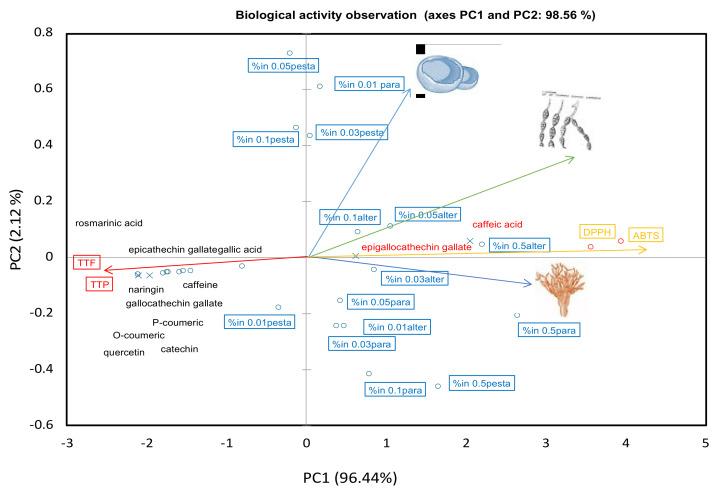
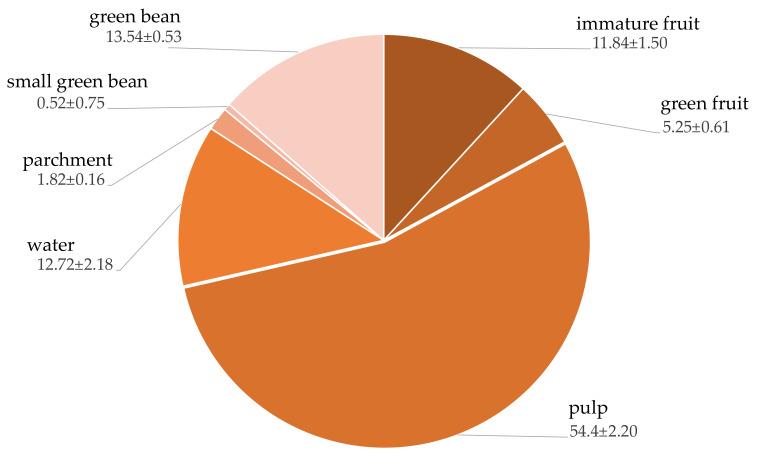
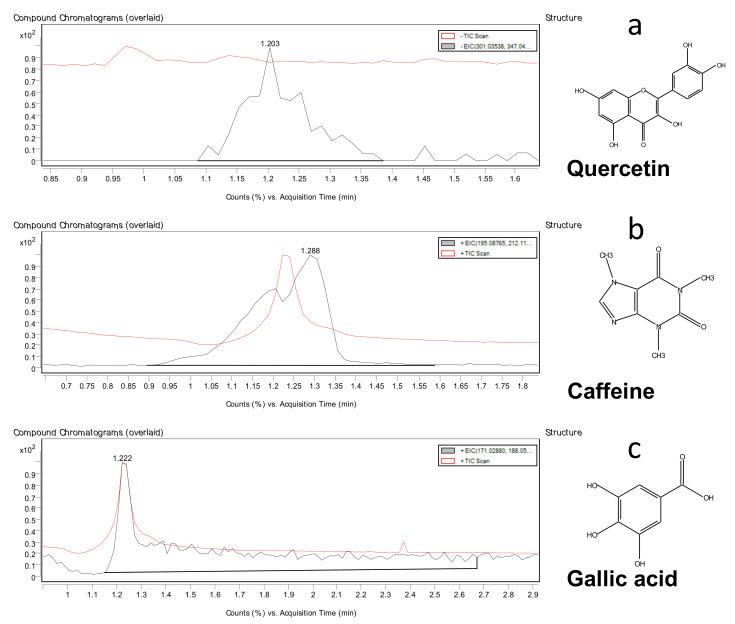
Coffee pulp is one of the most underutilised by-products from coffee processing. For coffee growers, disposing of this agro-industrial biomass has become one of the most difficult challenges. This study utilised this potential biomass as raw material for polyphenolic antifungal agents. First, the proportion of biomass was obtained from the Arabica green bean processing. The yield of by-products was recorded, and the high-potency biomass was serially extracted with organic solvents for the polyphenol fraction. Quantification of the polyphenols was performed by High Performance Liquid Chromatography (HPLC), then further confirmed by mass spectrometry modes of the liquid chromatography-quadrupole time-of-flight (QTOF). Then, the fraction was used to test antifungal activities against , sp. and . The results illustrated that caffeic acid and epigallocatechin gallate represented in the polyphenol fraction actively inhibited these fungi with an inhibitory concentration (IC50) of 0.09, 0.31 and 0.14, respectively. This study is also the first report on the alternative use of natural biocontrol agent of , the pathogen causing leaf spot in the Arabica coffee.
咖啡果肉是咖啡加工过程中最未被充分利用的副产品之一。对于咖啡种植者来说,处理这种农业工业生物质已成为最困难的挑战之一。本研究将这种潜在的生物质用作多酚抗真菌剂的原料。首先,从阿拉比卡生咖啡豆加工中获取生物质的比例。记录副产品的产量,并用有机溶剂对高效生物质进行连续萃取以获得多酚部分。通过高效液相色谱法(HPLC)对多酚进行定量,然后通过液相色谱 - 四极杆飞行时间(QTOF)质谱模式进一步确认。然后,该部分用于测试对、sp.和的抗真菌活性。结果表明,多酚部分中的咖啡酸和表没食子儿茶素没食子酸酯分别以0.09、0.31和0.14的抑制浓度(IC50)积极抑制这些真菌。本研究也是关于引起阿拉比卡咖啡叶斑病的病原体的天然生物防治剂替代用途的首次报道。


 Zotero 插件