
湿巾和一次性医用口罩正在成为全球 COVID-19 期间纤维微塑料污染的新来源。
Wet wipes and disposable surgical masks are becoming new sources of fiber microplastic pollution during global COVID-19.
机构信息
College of Environmental Science and Engineering, Hunan University, Changsha, 410082, China.
Key Laboratory of Environmental Biology and Pollution Control (Hunan University), Ministry of Education, Changsha, 410082, China.
出版信息
Environ Sci Pollut Res Int. 2022 Jan;29(1):284-292. doi: 10.1007/s11356-021-17408-3. Epub 2021 Nov 10.
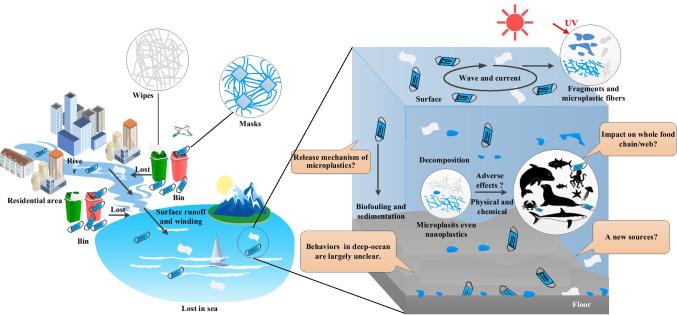
The demand of wet wipes and masks has been rising worldwide since the outbreak of global COVID-19; however, with more reports about improper handling of wipes and masks, their potential threats to the environment are gradually emerging. Wipes and masks are made of a large number of plastic fibers, which are easily broken and fragmented into microplastic fibers under the influence of environmental factors. Weathered wipes or masks can release billions of microplastic fibers, which is a great challenge to the local ecological security. Wipes and masks as new microplastic pollution sources and their potential role in the ecosystem have not been fully recognized and considered. Microplastic fiber pollution is a huge environmental issue, and how to prevent a large number of discarded wipes and masks from entering the environment and how to deal with them are an important issue for all countries and regions in the world. In the post era of global COVID-19, disposable wipes and masks, as new sources of environmental microplastic fiber pollution, should be given concern. It is urgent to recognize this potential environmental threat and prevent it from becoming the next microplastic problem.
自全球 COVID-19 爆发以来,湿巾和口罩的需求在全球范围内不断上升;然而,随着越来越多关于湿巾和口罩处理不当的报告,它们对环境的潜在威胁逐渐显现。湿巾和口罩由大量塑料纤维制成,在环境因素的影响下,很容易破碎和碎片化成为微塑料纤维。风化的湿巾或口罩会释放数十亿根微塑料纤维,这对当地生态安全构成了巨大挑战。湿巾和口罩作为新的微塑料污染来源及其在生态系统中的潜在作用尚未得到充分认识和考虑。微塑料纤维污染是一个巨大的环境问题,如何防止大量废弃的湿巾和口罩进入环境以及如何处理它们是世界各国和地区的重要问题。在后全球 COVID-19 时代,一次性湿巾和口罩作为环境微塑料纤维污染的新来源,应该引起关注。迫切需要认识到这一潜在的环境威胁,并防止其成为下一个微塑料问题。


 Zotero 插件