
通过应用生物防治剂减轻芒果采后数量和质量损失:体内和体外评估
Mitigating postharvest quantitative and qualitative losses in mango fruits through the application of biocontrol agents: An in-vivo and in-vitro assessment.
作者信息
Prasad Killi, Sharma Ram Roshan, Asrey Ram, Singh Dinesh, Lal Milan Kumar, Nishad Jyoti, Tiwari Rahul Kumar, Sethi Shruti, Srivastav Manish, Arora Ajay, Kumar Ravinder
机构信息
Department of Horticulture, Tirhut College of Agriculture, Dr. Rajendra Prasad Central Agricultural University, Pusa, Bihar, 843121, India.
Division of Food Science and Postharvest Technology, ICAR-Indian Agricultural Research Institute, New Delhi, 110012, India.
出版信息
Heliyon. 2024 Mar 28;10(7):e28758. doi: 10.1016/j.heliyon.2024.e28758. eCollection 2024 Apr 15.
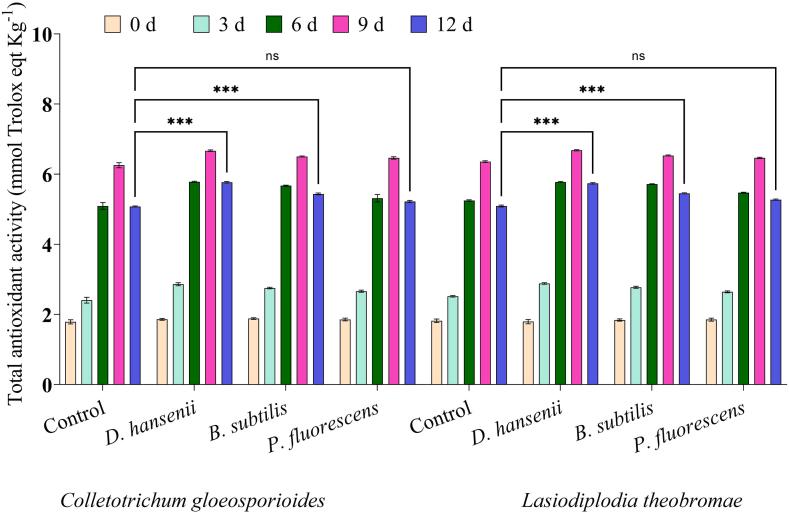
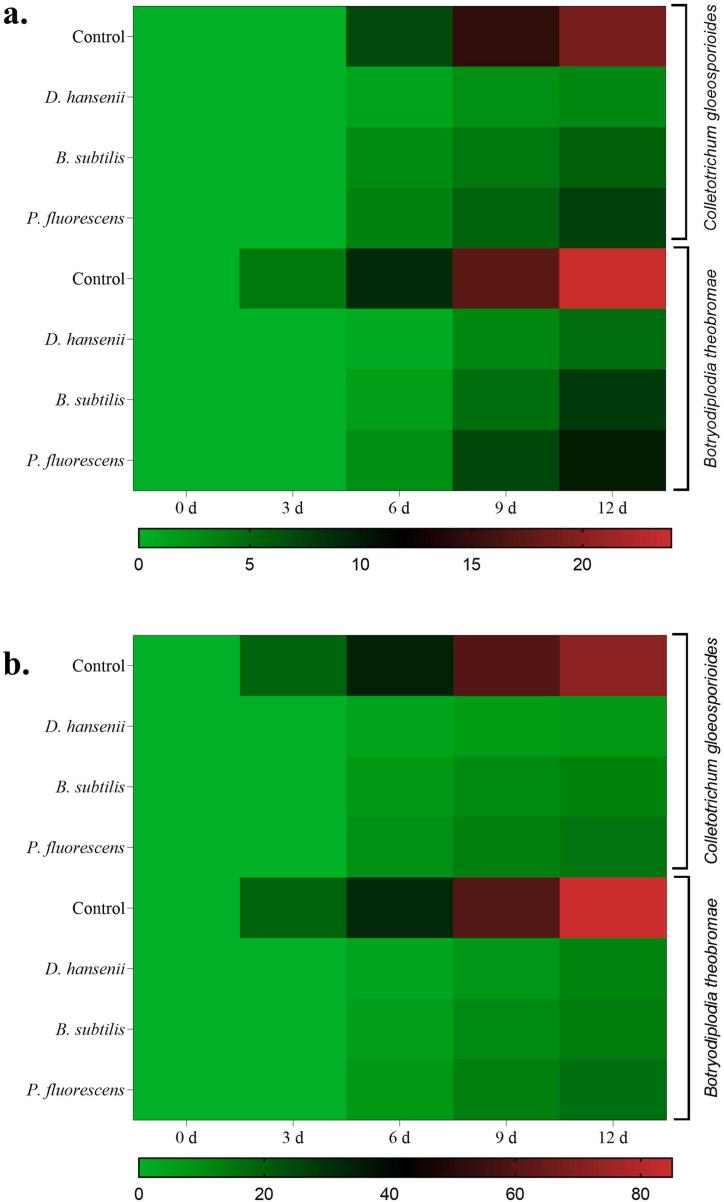
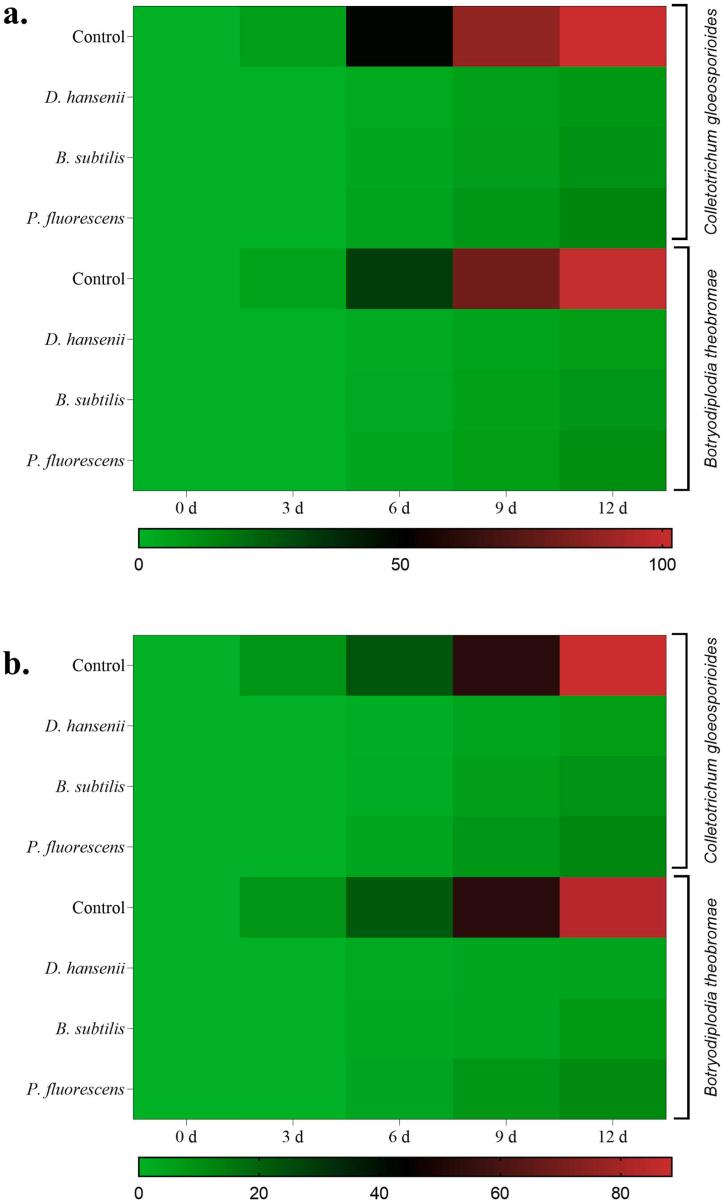
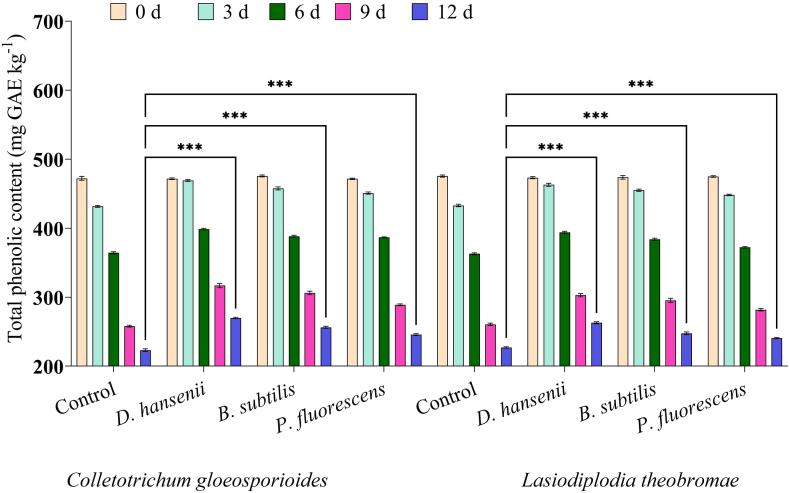
Mango is a commercial fruit crop of India that suffers huge postharvest losses every year. The application of biocontrol agents (BCAs) bears a vast potential for managing the same, which is yet to be exploited to its fullest extent. Hence, studies were conducted for BCAs application of , and strains on mango fruit under , conditions to know the efficacy of these BCAs on the postharvest pathogen, shelf life and quality retention of mango fruit. The 'poisoned food technique' was attempted for studies. For the studies, fruit of the commercial cultivar 'Amrapali' were un-inoculated and pre-inoculated with major postharvest pathogens (anthracnose: Colletotrichum and stem-end rot: ) were treated with BCA, followed by ambient storage at (24 ± 4 °C, 75 ± 5 % RH). From the results, it has been observed that under studies BCA (Strain: KP006) and (Strain: BJ0011) at the treatment level 10 CFU mL while, the at 10 CFU mL (Strain: BE0001) were significantly effective for pathogen inhibition. However, under the studies, the BCA (Strain: KP006) at 10 CFU mL treatment level was found to significantly reduce the pathogen's decay incidence while positively influencing the shelf life and biochemical (quality) attributes. This treatment increased the storage life of mango fruit by more than three days over control fruit. Therefore, BCA (Strain: KP006) at 10 CFU mL can be used to control the postharvest pathological loss of mango fruit without affecting its internal quality.
芒果是印度的一种商业水果作物,每年都会遭受巨大的采后损失。生物防治剂(BCAs)的应用在管理这一问题上具有巨大潜力,但尚未得到充分利用。因此,开展了相关研究,在不同条件下,将 、 和 菌株的生物防治剂应用于芒果果实,以了解这些生物防治剂对采后病原菌、芒果果实货架期和品质保持的效果。对 研究尝试了“毒饵技术”。对于 研究,商业品种“阿姆拉普利”的果实未接种和预先接种主要采后病原菌(炭疽病:炭疽菌 和蒂腐病: )后,用生物防治剂处理,然后在(24±4°C,75±5%相对湿度)的环境中储存。从结果可以看出,在 研究中,处理水平为10 CFU mL 的生物防治剂 (菌株:KP006)和 (菌株:BJ0011),而处理水平为10 CFU mL 的 (菌株:BE0001)对病原菌抑制具有显著效果。然而,在 研究中,发现处理水平为10 CFU mL 的生物防治剂 (菌株:KP006)能显著降低病原菌的腐烂发生率,同时对货架期和生化(品质)属性产生积极影响。这种处理使芒果果实的储存期比对照果实延长了三天以上。因此,10 CFU mL 的生物防治剂 (菌株:KP006)可用于控制芒果果实的采后病理损失,而不影响其内部品质。
 Zotero 插件