
药用植物炭疽病菌致病性丧失及水平基因转移证据
Loss of Pathogenicity and Evidence of Horizontal Gene Transfer in Colletotrichum gloeosporioides From a Medicinal Plant.
作者信息
Yue Xizhen, Yang Jia, Qi Jiale, Gao Shanshan, Huo Qingmiao, Guo Xinxin, Guo Hongwei, Luo Jinmei, Wang Yiran, Zhao Yirui, Liu Rongxing, Wang He, Yi Shichen, Fu Yanping, Ji Xu, Wei Yahui, He Wei, Guo Bin
机构信息
Key Laboratory of Resource Biology and Biotechnology in Western China, Ministry of Education, Provincial Key Laboratory of Biotechnology, College of Life Sciences, Northwest University, Xi'an, China.
Engineering Research Center of Tibetan Medicine Detection Technology, Ministry of Education, Xizang Minzu University, Xianyang, China.
出版信息
Mol Plant Pathol. 2025 Jun;26(6):e70098. doi: 10.1111/mpp.70098.
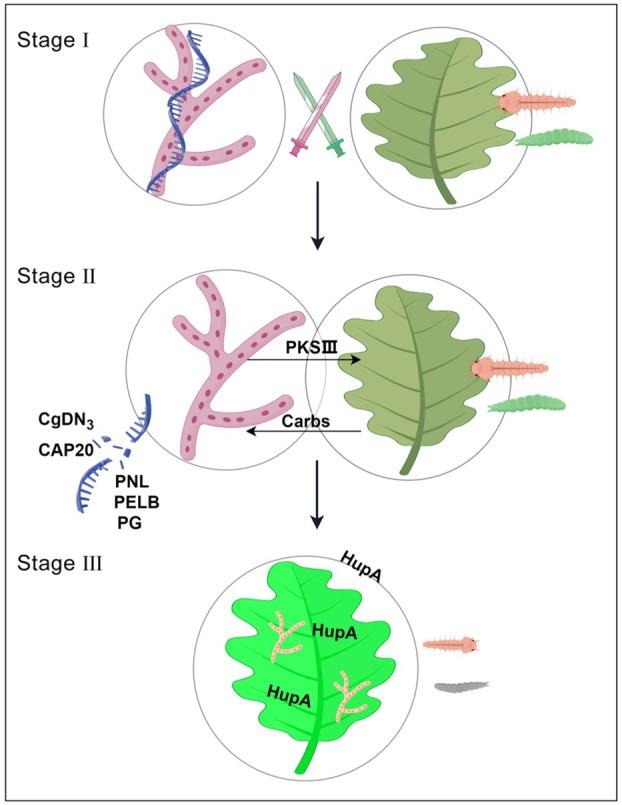
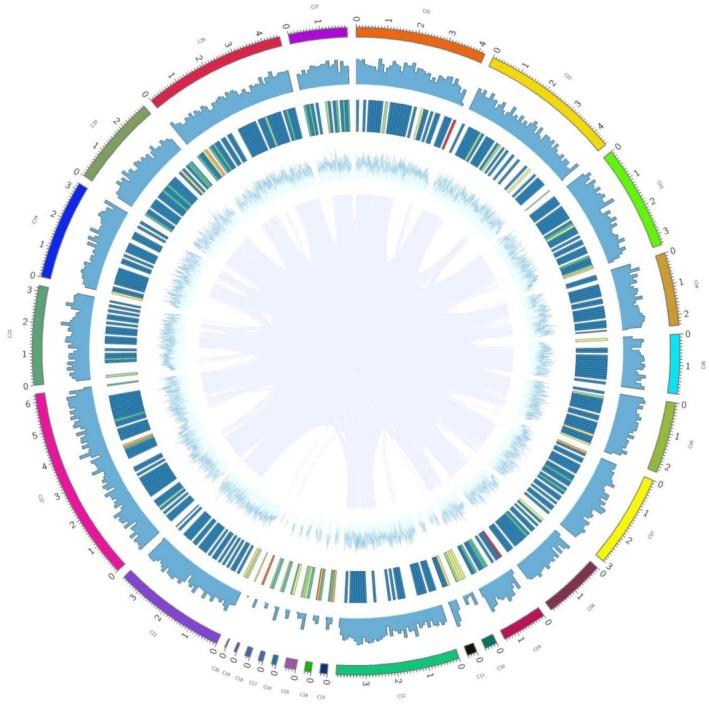
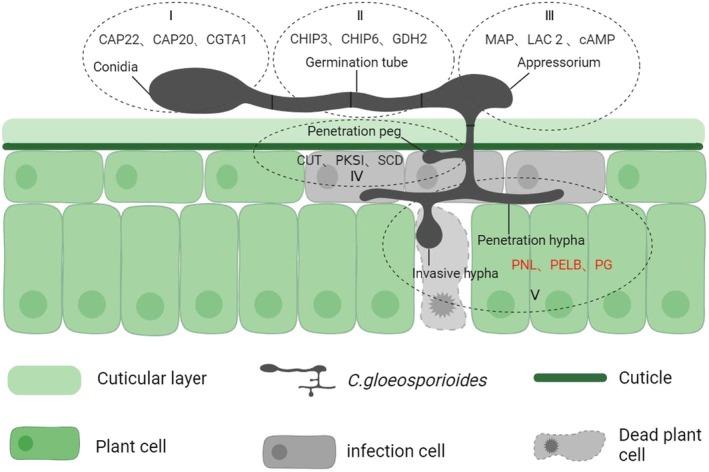
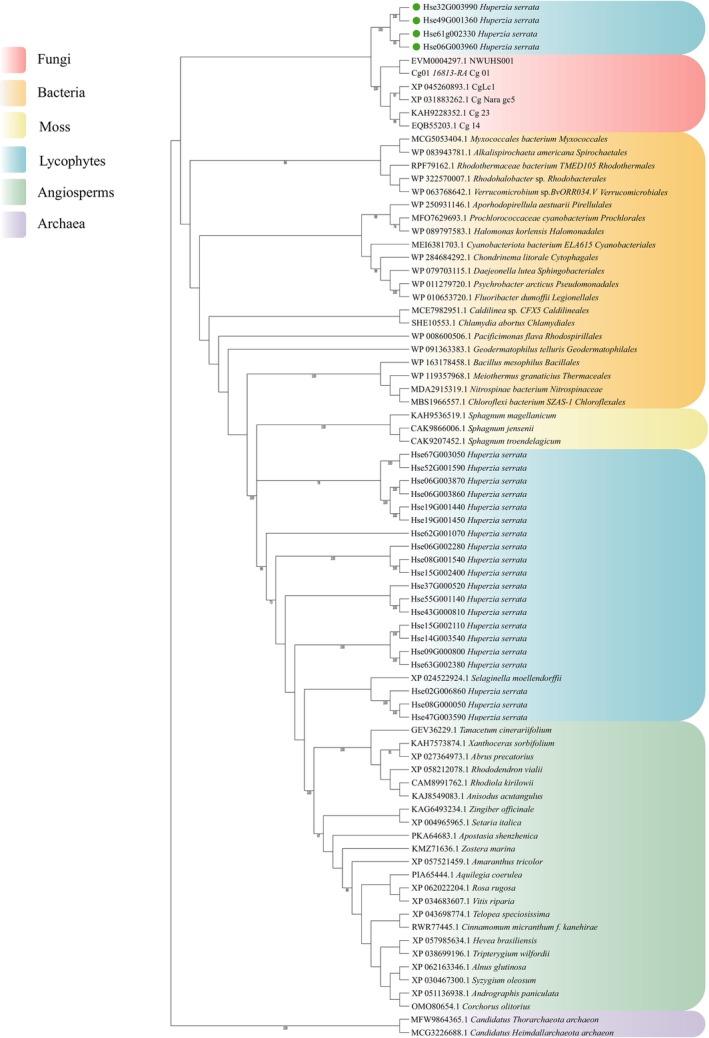
Colletotrichum gloeosporioides is a major agricultural pathogen of crops that has also been identified as an endophyte of the medicinal plant Huperzia serrata. Both H. serrata and C. gloeosporioides produce huperzine A, a potential treatment for Alzheimer's disease. In this study, a nonpathogenic C. gloeosporioides strain (NWUHS001) was isolated and its genome sequenced. Gene structure prediction identified 15,413 protein-coding genes and 879 noncoding RNAs. Through PHI-base database prediction, we found that NWUHS001 lacks two key pathogenicity genes CgDN3 and cap20, which may be the cause of its nonpathogenicity. Comparative genomic analysis showed that the number of genes encoding pectin lyase B (pelB), pectin lyase (pnl) and polygalacturonase (pg) in NWUHS001 was significantly lower than that in pathogenic strains during the expansion of mycelium into host tissues. This caused slow growth and incapability to penetrate host cells. In contrast, in NWUHS001, genes involved in carbon acquisition such as ribose and amino sugar metabolic pathways were enriched, indicating active metabolite exchange with the host. In addition, by comparing the genome of NWUHS001 with that of the host H. serrata, we found that polyketosynthetase (pksIII), a key gene in the host huperzine A biosynthetic pathway, may possibly have been acquired from the fungus by horizontal gene transfer (HGT). This study explained the possible genetic evolution mechanism of C. gloeosporioides from pathogenicity to nonpathogenicity, which is of value for studying the interaction between microorganisms and plants. It also provided clues to the genetic evolution of the biosynthetic pathway of huperzine A.
胶孢炭疽菌是农作物的一种主要农业病原菌,同时也被鉴定为药用植物蛇足石杉的内生菌。蛇足石杉和胶孢炭疽菌都能产生石杉碱甲,这是一种对阿尔茨海默病有潜在治疗作用的物质。在本研究中,分离出了一株非致病性胶孢炭疽菌菌株(NWUHS001)并对其基因组进行了测序。基因结构预测确定了15413个蛋白质编码基因和879个非编码RNA。通过PHI-base数据库预测,我们发现NWUHS001缺少两个关键的致病基因CgDN3和cap20,这可能是其不具有致病性的原因。比较基因组分析表明,在菌丝体向宿主组织扩展过程中,NWUHS001中编码果胶裂解酶B(pelB)、果胶裂解酶(pnl)和多聚半乳糖醛酸酶(pg)的基因数量明显低于致病菌株。这导致其生长缓慢且无法穿透宿主细胞。相反,在NWUHS001中,参与碳获取的基因如核糖和氨基糖代谢途径得到了富集,表明与宿主进行了活跃的代谢物交换。此外,通过比较NWUHS001与宿主蛇足石杉的基因组,我们发现宿主石杉碱甲生物合成途径中的关键基因聚酮合酶(pksIII)可能是通过水平基因转移(HGT)从真菌中获得的。本研究解释了胶孢炭疽菌从致病性到非致病性可能的遗传进化机制,这对于研究微生物与植物之间相互作用具有重要意义。它还为石杉碱甲生物合成途径的遗传进化提供了线索。


 Zotero 插件