
自然杀伤T细胞激活可在体内抑制乙型肝炎病毒复制。
Natural killer T cell activation inhibits hepatitis B virus replication in vivo.
作者信息
Kakimi K, Guidotti L G, Koezuka Y, Chisari F V
机构信息
Department of Molecular and Experimental Medicine, The Scripps Research Institute, La Jolla, California 92037, USA.
出版信息
J Exp Med. 2000 Oct 2;192(7):921-30. doi: 10.1084/jem.192.7.921.
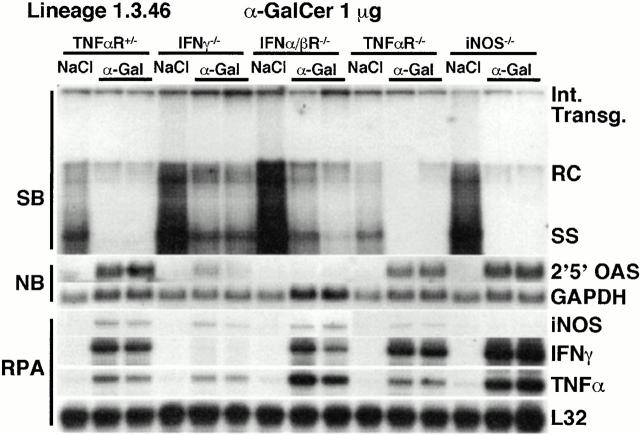
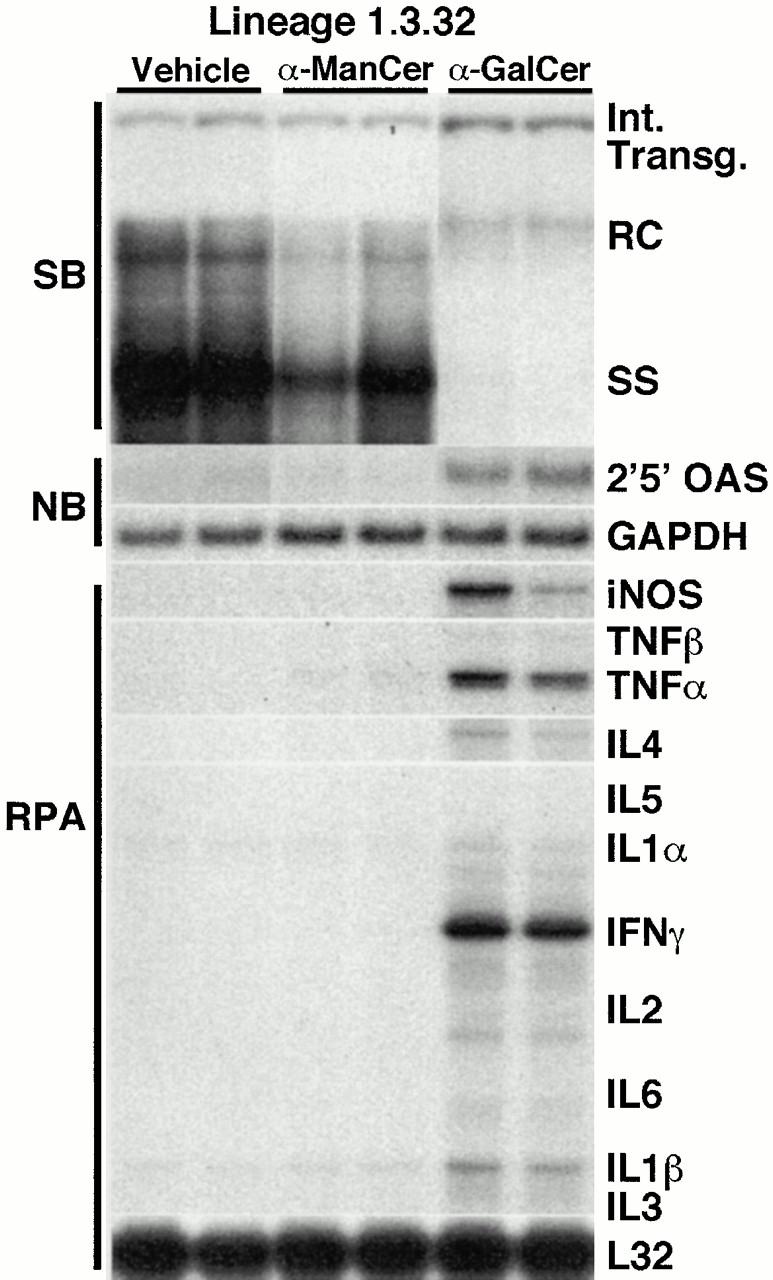
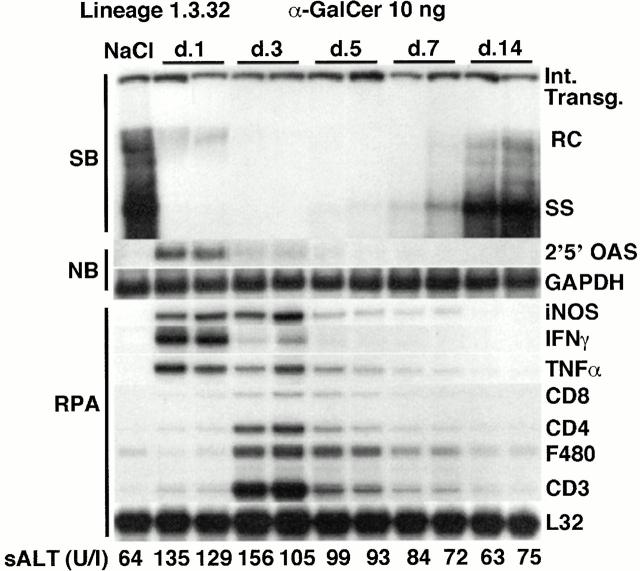
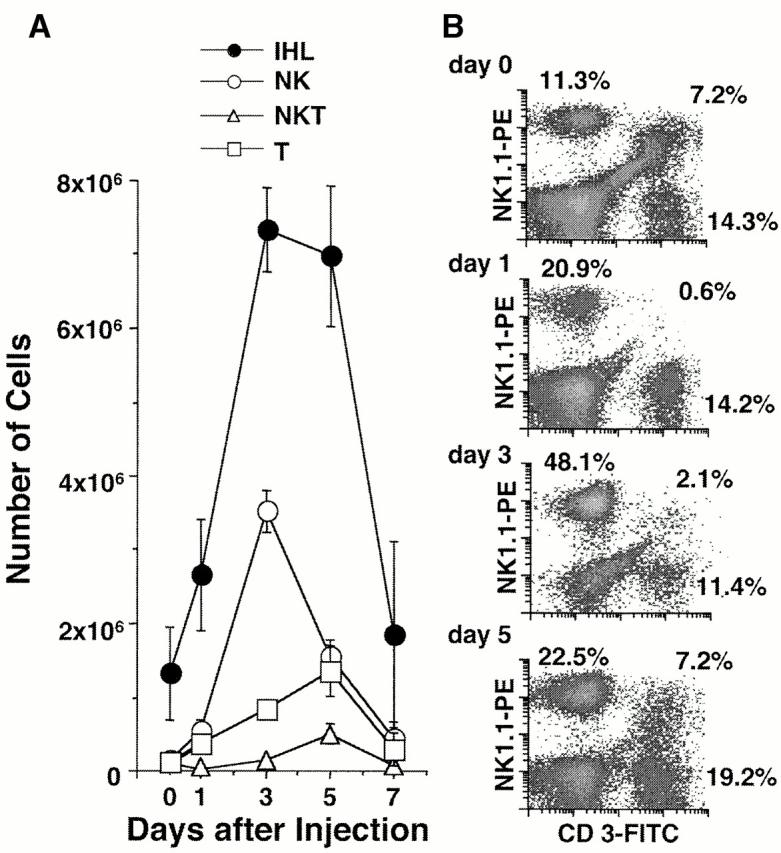
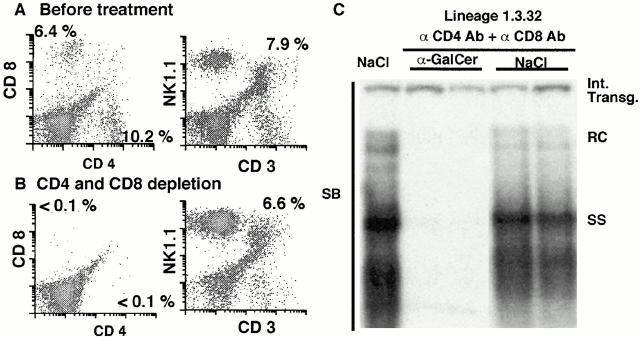
We have previously reported that hepatitis B virus (HBV)-specific CD8(+) cytotoxic T lymphocytes and CD4(+) helper T lymphocytes can inhibit HBV replication in the liver of HBV transgenic mice by secreting interferon (IFN)-gamma when they recognize viral antigen. To determine whether an activated innate immune system can also inhibit HBV replication, in this study we activated natural killer T (NKT) cells in the liver of HBV transgenic mice by a single injection of alpha-galactosylceramide (alpha-GalCer), a glycolipid antigen presented to Valpha14(+)NK1.1(+) T cells by the nonclassical major histocompatibility complex class I-like molecule CD1d. Within 24 h of alpha-GalCer injection, IFN-gamma and IFN-alpha/beta were detected in the liver of HBV transgenic mice and HBV replication was abolished. Both of these events were temporally associated with the rapid disappearance of NKT cells from the liver, presumably reflecting activation-induced cell death, and by the recruitment of activated NK cells into the organ. In addition, prior antibody-mediated depletion of CD4(+) and CD8(+) T cells from the mice did not diminish the ability of alpha-GalCer to trigger the disappearance of HBV from the liver, indicating that conventional T cells were not downstream mediators of this effect. Finally, the antiviral effect of alpha-GalCer was inhibited in mice that are genetically deficient for either IFN-gamma or the IFN-alpha/beta receptor, indicating that most of the antiviral activity of alpha-GalCer is mediated by these cytokines. Based on these results, we conclude that alpha-GalCer inhibits HBV replication by directly activating NKT cells and by secondarily activating NK cells to secrete antiviral cytokines in the liver. In view of these findings, we suggest that, if activated, the innate immune response, like the adaptive immune response, has the potential to control viral replication during natural HBV infection. In addition, the data suggest that therapeutic activation of NKT cells may represent a new strategy for the treatment of chronic HBV infection.
我们之前曾报道,乙肝病毒(HBV)特异性CD8(+)细胞毒性T淋巴细胞和CD4(+)辅助性T淋巴细胞在识别病毒抗原时,可通过分泌γ干扰素(IFN-γ)抑制HBV转基因小鼠肝脏中的HBV复制。为了确定激活的先天性免疫系统是否也能抑制HBV复制,在本研究中,我们通过单次注射α-半乳糖神经酰胺(α-GalCer)激活了HBV转基因小鼠肝脏中的自然杀伤T(NKT)细胞,α-GalCer是一种由非经典主要组织相容性复合体I类样分子CD1d呈递给Vα14(+)NK1.1(+) T细胞的糖脂抗原。在注射α-GalCer的24小时内,在HBV转基因小鼠的肝脏中检测到了IFN-γ和IFN-α/β,并且HBV复制被消除。这两个事件在时间上都与NKT细胞从肝脏中迅速消失有关,推测这反映了激活诱导的细胞死亡,并且与活化的NK细胞募集到该器官有关。此外,事先用抗体介导从小鼠体内清除CD4(+)和CD8(+) T细胞并没有削弱α-GalCer促使HBV从肝脏中消失的能力,这表明传统T细胞不是这种效应的下游介质。最后,在γ干扰素或α/β干扰素受体基因缺陷的小鼠中,α-GalCer的抗病毒作用受到抑制,这表明α-GalCer的大部分抗病毒活性是由这些细胞因子介导的。基于这些结果,我们得出结论,α-GalCer通过直接激活NKT细胞以及继而激活NK细胞在肝脏中分泌抗病毒细胞因子来抑制HBV复制。鉴于这些发现,我们认为,如果被激活,先天性免疫反应与适应性免疫反应一样,在自然HBV感染期间有可能控制病毒复制。此外,数据表明NKT细胞的治疗性激活可能代表了一种治疗慢性HBV感染的新策略。


 Zotero 插件