
干扰素γ可稳定1型辅助性T细胞表型。
Interferon gamma stabilizes the T helper cell type 1 phenotype.
作者信息
Zhang Y, Apilado R, Coleman J, Ben-Sasson S, Tsang S, Hu-Li J, Paul W E, Huang H
机构信息
The Department of Cell Biology, Neurobiology, and Anatomy, Loyola University Chicago, Stritch School of Medicine, Maywood, IL 60153, USA.
出版信息
J Exp Med. 2001 Jul 16;194(2):165-72. doi: 10.1084/jem.194.2.165.
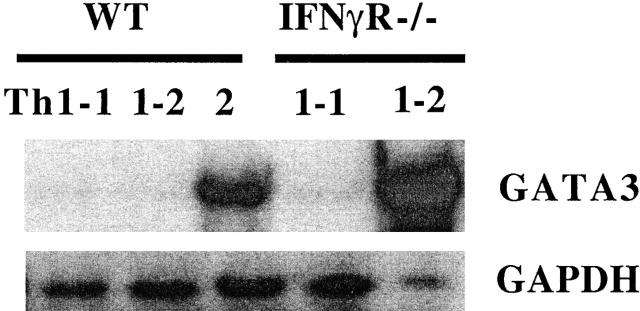
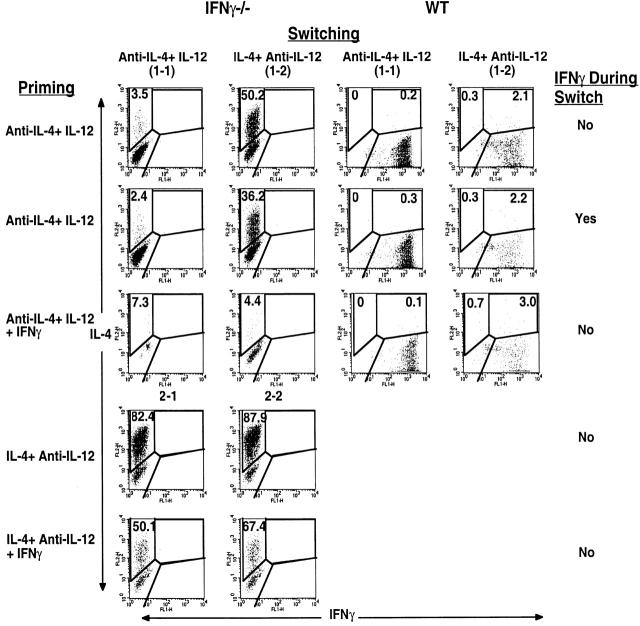
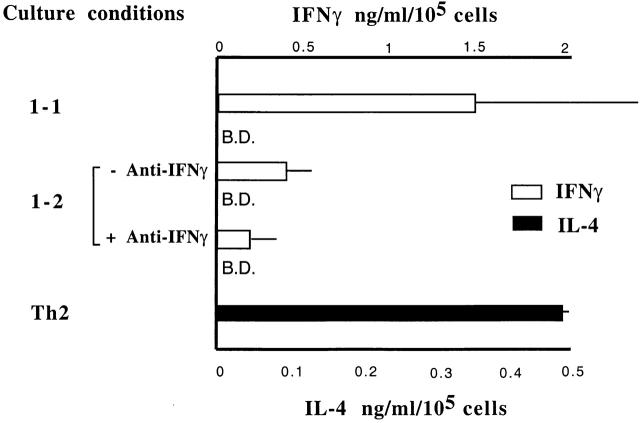
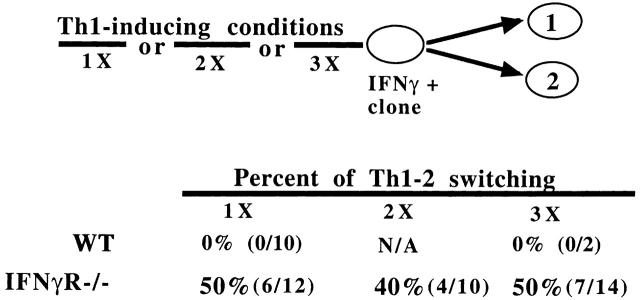
T helper cell (Th)1-primed CD4 T cells from wild-type donors make little interleukin (IL)-4 when restimulated under Th2 conditions. However, such restimulation of Th1-primed cells from interferon (IFN)-gamma(2/-) or IFN-gamma receptor (IFN-gammaR)(-/-) mice resulted in substantial production of IL-4 and other Th2 cytokines. Adding IFN-gamma to the priming culture markedly diminished the capacity of Th1-primed IFN-gamma(2/-) cells to express IL-4. Even IFN-gamma-producing cells from IFN-gammaR(-/-) mice could acquire IL-4-producing capacity. Thus, IFN-gamma is not required for the development of IFN-gamma-producing capacity, but it plays a critical role in suppressing the IL-4-producing potential of Th1 cells.
来自野生型供体的辅助性T细胞1(Th1)致敏的CD4 T细胞在Th2条件下再次刺激时产生的白细胞介素(IL)-4很少。然而,对来自干扰素(IFN)-γ(2/-)或IFN-γ受体(IFN-γR)(-/-)小鼠的Th1致敏细胞进行这种再次刺激会导致大量产生IL-4和其他Th2细胞因子。在致敏培养中添加IFN-γ显著降低了Th1致敏的IFN-γ(2/-)细胞表达IL-4的能力。即使是来自IFN-γR(-/-)小鼠的产生IFN-γ的细胞也能获得产生IL-4的能力。因此,产生IFN-γ的能力的发展不需要IFN-γ,但它在抑制Th1细胞产生IL-4的潜力方面起着关键作用。


 Zotero 插件