
在一种新的柯萨奇病毒/腺病毒受体转基因模型中,腺病毒介导的基因高效转移至原代T细胞和胸腺细胞。
Efficient adenovirus-mediated gene transfer into primary T cells and thymocytes in a new coxsackie/adenovirus receptor transgenic model.
作者信息
Hurez Vincent, Dzialo-Hatton Robin, Oliver James, Matthews R James, Weaver Casey T
机构信息
Department of Pathology, University of Alabama at Birmingham, Birmingham, AL 35294-2170, USA.
出版信息
BMC Immunol. 2002 May 2;3:4. doi: 10.1186/1471-2172-3-4.
BACKGROUND
Gene transfer studies in primary T cells have suffered from the limitations of conventional viral transduction or transfection techniques. Replication-defective adenoviral vectors are an attractive alternative for gene delivery. However, naive lymphocytes are not readily susceptible to infection with adenoviruses due to insufficient expression of the coxsackie/adenovirus receptor.
RESULTS
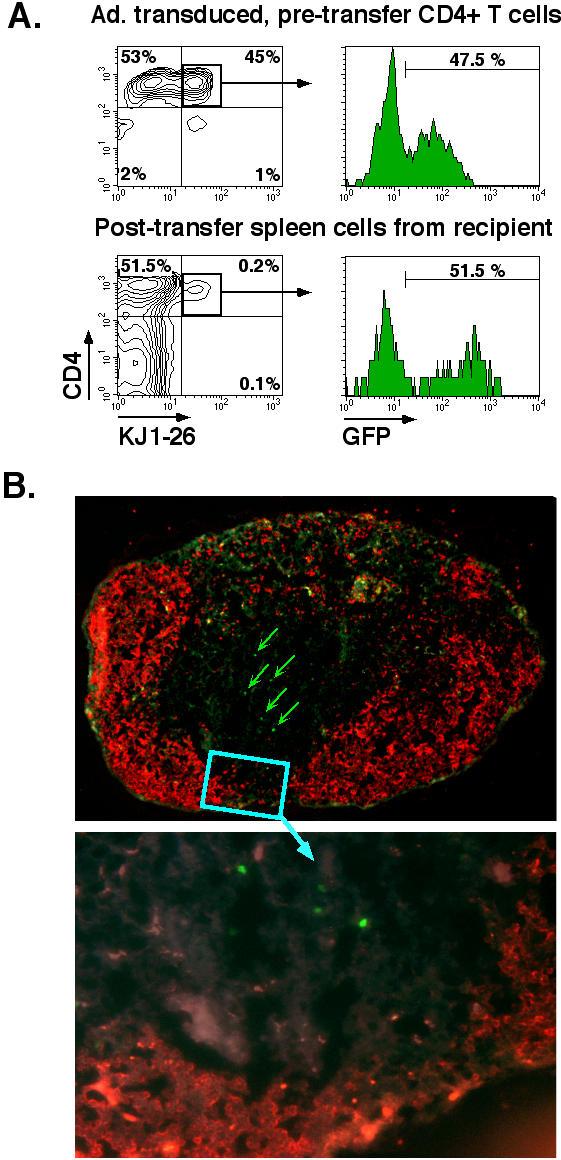
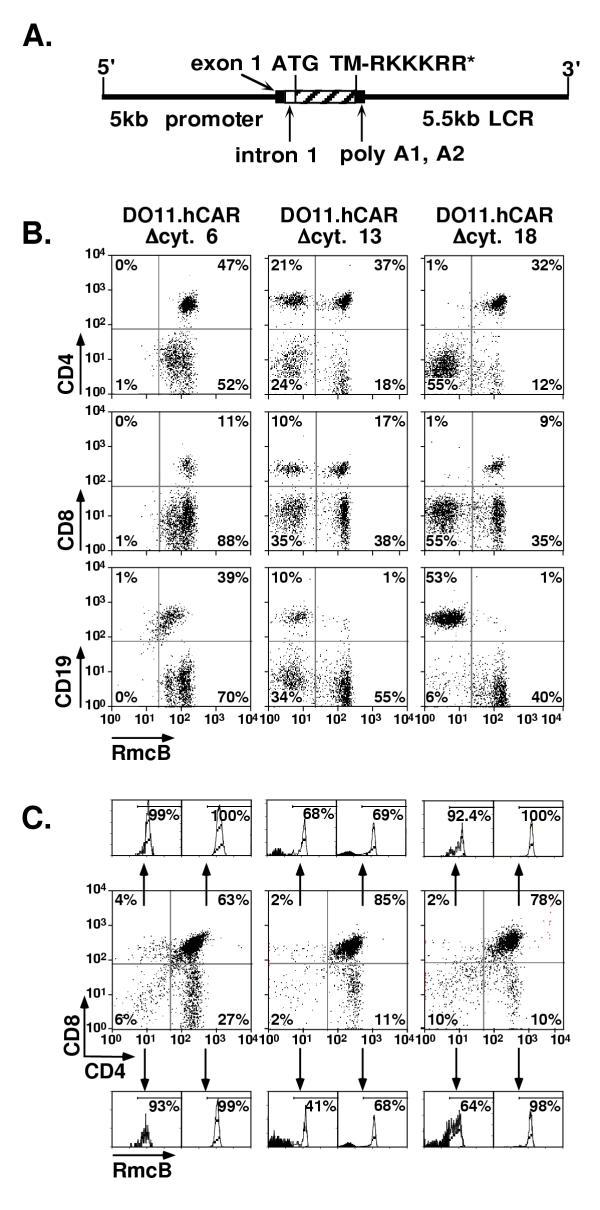
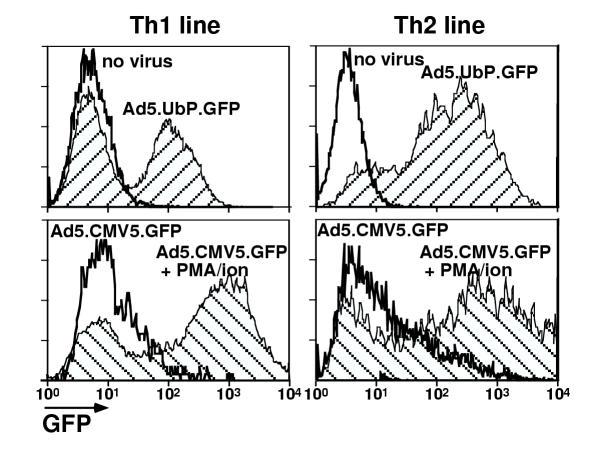
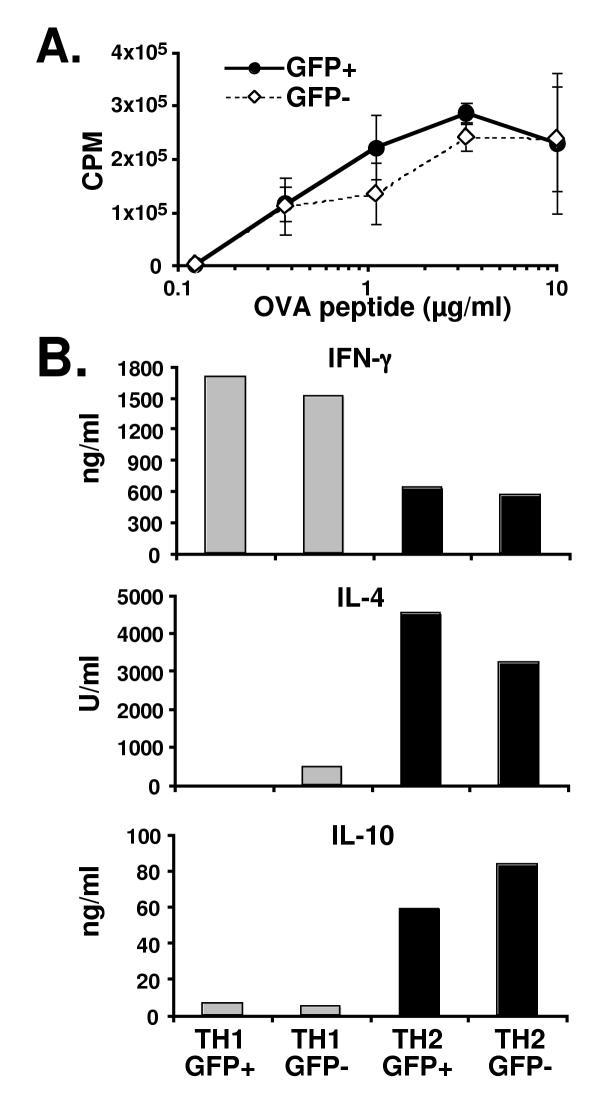
To render T cells susceptible to adenoviral gene transfer, we have developed three new murine transgenic lines in which expression of the human coxsackie/adenovirus receptor (hCAR) with a truncated cytoplasmic domain (hCAR(Delta)cyt) is limited to thymocytes and lymphocytes under direction of a human CD2 mini-gene. hCAR(Delta)cyt.CD2 transgenic mice were crossed with DO11.10 T cell receptor transgenic mice (DO11.hCAR(Delta)cyt) to allow developmental studies in a defined, clonal T cell population. Expression of hCAR(Delta)cyt enabled adenoviral transduction of resting primary CD4+ T cells, differentiated effector T cells and thymocytes from DO11.hCAR(Delta)cyt with high efficiency. Expression of hCAR(Delta)cyt transgene did not perturb T cell development in these mice and adenoviral transduction of DO11.hCAR(Delta)cyt T cells did not alter their activation status, functional responses or differentiative potential. Adoptive transfer of the transduced T cells into normal recipients did not modify their physiologic localization.
CONCLUSION
The DO11.hCAR(Delta)cyt transgenic model thus allows efficient gene transfer in primary T cell populations and will be valuable for novel studies of T cell activation and differentiation.
背景
原代T细胞中的基因转移研究受到传统病毒转导或转染技术的限制。复制缺陷型腺病毒载体是一种有吸引力的基因递送替代方法。然而,由于柯萨奇病毒/腺病毒受体表达不足,天然淋巴细胞不易被腺病毒感染。
结果
为使T细胞易于进行腺病毒基因转移,我们构建了三种新的小鼠转基因品系,其中在人CD2微型基因的调控下,具有截短细胞质结构域的人柯萨奇病毒/腺病毒受体(hCAR(Δ)cyt)的表达仅限于胸腺细胞和淋巴细胞。将hCAR(Δ)cyt.CD2转基因小鼠与DO11.10 T细胞受体转基因小鼠(DO11.hCAR(Δ)cyt)杂交,以便在确定的克隆T细胞群体中进行发育研究。hCAR(Δ)cyt的表达使来自DO11.hCAR(Δ)cyt的静息原代CD4+ T细胞、分化的效应T细胞和胸腺细胞能够高效地进行腺病毒转导。hCAR(Δ)cyt转基因的表达并未干扰这些小鼠的T细胞发育,DO11.hCAR(Δ)cyt T细胞的腺病毒转导也未改变其激活状态、功能反应或分化潜能。将转导的T细胞过继转移到正常受体中并未改变它们的生理定位。
结论
因此,DO11.hCAR(Δ)cyt转基因模型允许在原代T细胞群体中进行高效基因转移,对于T细胞激活和分化的新研究将具有重要价值。

 Zotero 插件