
典型抗精神病药物可保护海马神经元培养物免受生长培养基剥夺诱导的细胞死亡。
Prototypical antipsychotic drugs protect hippocampal neuronal cultures against cell death induced by growth medium deprivation.
作者信息
Bastianetto Stéphane, Danik Marc, Mennicken Françoise, Williams Sylvain, Quirion Rémi
机构信息
Douglas Hospital Research Centre, Department of Psychiatry, McGill University, Montreal, Québec, H4H 1R3, Canada.
出版信息
BMC Neurosci. 2006 Mar 30;7:28. doi: 10.1186/1471-2202-7-28.
BACKGROUND
Several clinical studies suggested that antipsychotic-based medications could ameliorate cognitive functions impaired in certain schizophrenic patients. Accordingly, we investigated the effects of various dopaminergic receptor antagonists--including atypical antipsychotics that are prescribed for the treatment of schizophrenia--in a model of toxicity using cultured hippocampal neurons, the hippocampus being a region of particular relevance to cognition.
RESULTS
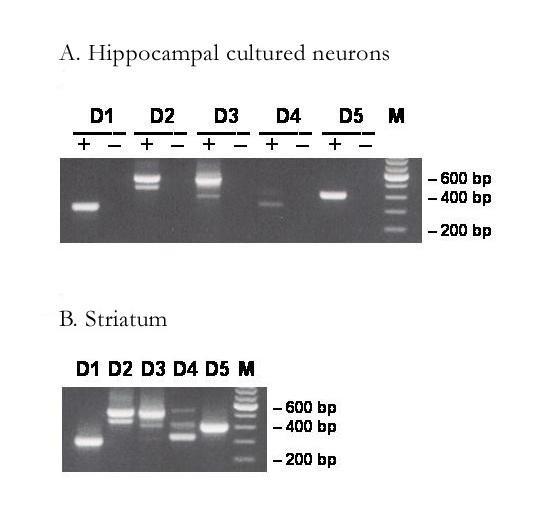
Hippocampal cell death induced by deprivation of growth medium constituents was strongly blocked by drugs including antipsychotics (10(-10)-10(-6) M) that display nM affinities for D2 and/or D4 receptors (clozapine, haloperidol, (+/-)-sulpiride, domperidone, clozapine, risperidone, chlorpromazine, (+)-butaclamol and L-741,742). These effects were shared by some caspases inhibitors and were not accompanied by inhibition of reactive oxygen species. In contrast, (-)-raclopride and remoxipride, two drugs that preferentially bind D2 over D4 receptors were ineffective, as well as the selective D3 receptor antagonist U 99194. Interestingly, (-)-raclopride (10(-6) M) was able to block the neuroprotective effect of the atypical antipsychotic clozapine (10(-6) M).
CONCLUSION
Taken together, these data suggest that D2-like receptors, particularly the D4 subtype, mediate the neuroprotective effects of antipsychotic drugs possibly through a ROS-independent, caspase-dependent mechanism.
背景
多项临床研究表明,以抗精神病药物为主的药物可改善某些精神分裂症患者受损的认知功能。因此,我们在使用培养的海马神经元的毒性模型中研究了各种多巴胺能受体拮抗剂的作用,海马体是与认知特别相关的一个区域,这些拮抗剂包括用于治疗精神分裂症的非典型抗精神病药物。
结果
剥夺生长培养基成分所诱导的海马细胞死亡被包括抗精神病药物(10⁻¹⁰ - 10⁻⁶ M)在内的药物强烈阻断,这些药物对D2和/或D4受体具有纳摩尔亲和力(氯氮平、氟哌啶醇、(±)-舒必利、多潘立酮、氯氮平、利培酮、氯丙嗪、(+)-丁酰苯和L - 741,742)。一些半胱天冬酶抑制剂也有这些作用,且未伴随活性氧的抑制。相比之下,优先结合D2而非D4受体的两种药物(-)-雷氯必利和瑞莫必利无效,选择性D3受体拮抗剂U 99194也无效。有趣的是,(-)-雷氯必利(10⁻⁶ M)能够阻断非典型抗精神病药物氯氮平(10⁻⁶ M)的神经保护作用。
结论
综上所述,这些数据表明,类D2受体,尤其是D4亚型,可能通过一种不依赖活性氧、依赖半胱天冬酶的机制介导抗精神病药物的神经保护作用。


 Zotero 插件