
人脑脊液中含有表达肠道或皮肤特异性归巢决定簇的CD4+记忆T细胞:对免疫治疗的意义。
Human cerebrospinal fluid contains CD4+ memory T cells expressing gut- or skin-specific trafficking determinants: relevance for immunotherapy.
作者信息
Kivisäkk Pia, Tucky Barbara, Wei Tao, Campbell James J, Ransohoff Richard M
机构信息
Neuroinflammation Research Center, Department of Neurosciences, Lerner Research Institute, The Cleveland Clinic, 9500 Euclid Ave, Cleveland, OH 44195, USA.
出版信息
BMC Immunol. 2006 Jul 7;7:14. doi: 10.1186/1471-2172-7-14.
BACKGROUND
Circulating memory T cells can be divided into tissue-specific subsets, which traffic through distinct tissue compartments during physiologic immune surveillance, based on their expression of adhesion molecules and chemokine receptors. We reasoned that a bias (either enrichment or depletion) of CSF T cell expression of known organ-specific trafficking determinants might suggest that homing of T cells to the subarachnoid space could be governed by a CNS-specific adhesion molecule or chemokine receptor.
RESULTS
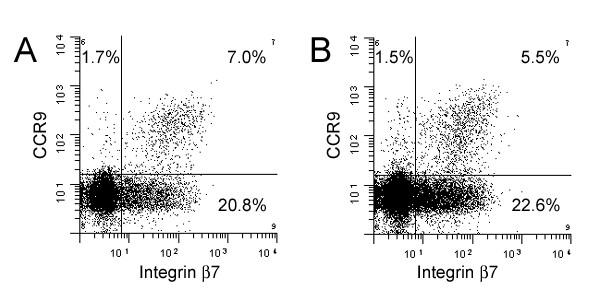
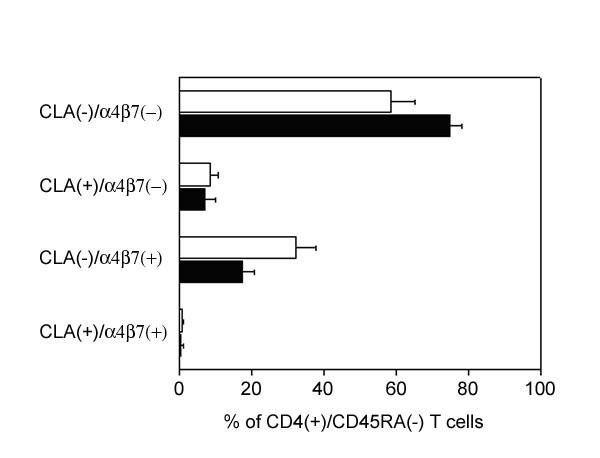
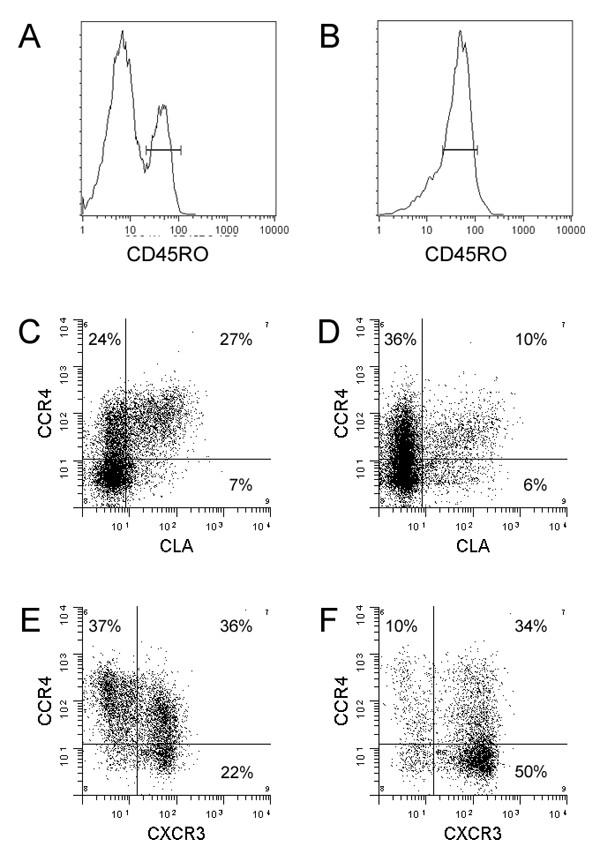
The expression of cutaneous leukocyte antigen (CLA) and CC-chemokine receptor 4 (CCR4; associated with skin-homing) as well as the expression of integrin alpha4beta7 and CCR9 (associated with gut-homing) was analyzed on CD4+ memory T cells in CSF from individuals with non-inflammatory neurological diseases using flow cytometry. CSF contained similar proportions of CD4+ memory T cells expressing CLA, CCR4, integrin alpha4beta7 and CCR9 as paired blood samples.
CONCLUSION
The results extend our previous findings that antigen-experienced CD4+ memory T cells traffic through the CSF in proportion to their abundance in the peripheral circulation. Furthermore, the ready access of skin- and gut-homing CD4+ memory T cells to the CNS compartment via CSF has implications for the mechanisms of action of immunotherapeutic strategies, such as oral tolerance or therapeutic immunization, where immunogens are administered using an oral or subcutaneous route.
背景
循环记忆T细胞可分为组织特异性亚群,在生理免疫监视过程中,它们根据黏附分子和趋化因子受体的表达,通过不同的组织区室进行迁移。我们推测,脑脊液T细胞中已知器官特异性迁移决定因素的表达存在偏差(富集或耗竭),可能表明T细胞归巢至蛛网膜下腔可能受中枢神经系统特异性黏附分子或趋化因子受体的调控。
结果
使用流式细胞术分析了非炎性神经疾病患者脑脊液中CD4 + 记忆T细胞上皮肤白细胞抗原(CLA)和CC趋化因子受体4(CCR4;与归巢至皮肤相关)以及整合素α4β7和CCR9(与归巢至肠道相关)的表达。脑脊液中表达CLA、CCR4、整合素α4β7和CCR9的CD4 + 记忆T细胞比例与配对的血液样本相似。
结论
这些结果扩展了我们之前的发现,即经历过抗原刺激的CD4 + 记忆T细胞通过脑脊液迁移的比例与其在外周循环中的丰度成正比。此外,归巢至皮肤和肠道的CD4 + 记忆T细胞通过脑脊液易于进入中枢神经系统区室,这对免疫治疗策略(如口服耐受或治疗性免疫接种,其中免疫原通过口服或皮下途径给药)的作用机制具有启示意义。
 Zotero 插件