
在脓毒症患者中,适当抗生素治疗的时机比TNF和IL - 10基因多态性对预后的影响更大。
Timing of adequate antibiotic therapy is a greater determinant of outcome than are TNF and IL-10 polymorphisms in patients with sepsis.
作者信息
Garnacho-Montero Jose, Aldabo-Pallas Teresa, Garnacho-Montero Carmen, Cayuela Aurelio, Jiménez Rocio, Barroso Sonia, Ortiz-Leyba Carlos
机构信息
Intensive Care Unit, Hospital Universitatrio Virgen del Rocio, Seviilla, Spain.
出版信息
Crit Care. 2006;10(4):R111. doi: 10.1186/cc4995.
INTRODUCTION
Genetic variations may influence clinical outcomes in patients with sepsis. The present study was conducted to evaluate the impact on mortality of three polymorphisms after adjusting for confounding variables, and to assess the factors involved in progression of the inflammatory response in septic patients.
METHOD
The inception cohort study included all Caucasian adults admitted to the hospital with sepsis. Sepsis severity, microbiological information and clinical variables were recorded. Three polymorphisms were identified in all patients by PCR: the tumour necrosis factor (TNF)-alpha 308 promoter polymorphism; the polymorphism in the first intron of the TNF-beta gene; and the IL-10-1082 promoter polymorphism. Patients included in the study were followed up for 90 days after hospital admission.
RESULTS
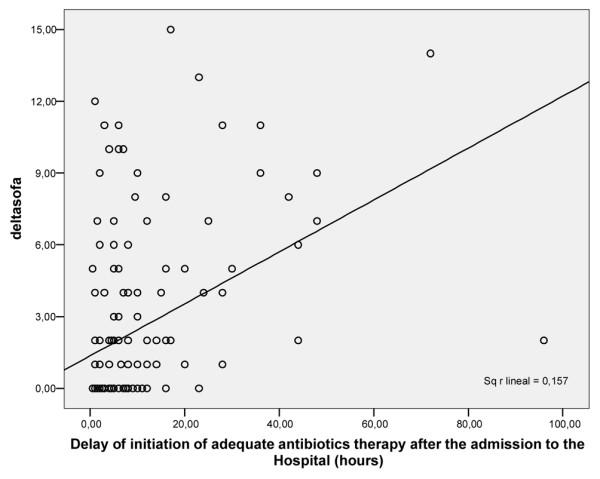
A group of 224 patients was enrolled in the present study. We did not find a significant association among any of the three polymorphisms and mortality or worsening inflammatory response. By multivariate logistic regression analysis, only two factors were independently associated with mortality, namely Acute Physiology and Chronic Health Evaluation (APACHE) II score and delayed initiation of adequate antibiotic therapy. In septic shock patients (n = 114), the delay in initiation of adequate antibiotic therapy was the only independent predictor of mortality. Risk factors for impairment in inflammatory response were APACHE II score, positive blood culture and delayed initiation of adequate antibiotic therapy.
CONCLUSION
This study emphasizes that prompt and adequate antibiotic therapy is the cornerstone of therapy in sepsis. The three polymorphisms evaluated in the present study appear not to influence the outcome of patients admitted to the hospital with sepsis.
引言
基因变异可能影响脓毒症患者的临床结局。本研究旨在评估在调整混杂变量后三种多态性对死亡率的影响,并评估脓毒症患者炎症反应进展的相关因素。
方法
起始队列研究纳入了所有因脓毒症入院的白种成年患者。记录脓毒症严重程度、微生物学信息和临床变量。通过聚合酶链反应(PCR)在所有患者中鉴定出三种多态性:肿瘤坏死因子(TNF)-α 308启动子多态性;TNF-β基因第一内含子中的多态性;以及白细胞介素-10 -1082启动子多态性。纳入研究的患者在入院后随访90天。
结果
本研究共纳入224例患者。我们未发现三种多态性中的任何一种与死亡率或炎症反应恶化之间存在显著关联。通过多因素逻辑回归分析,仅有两个因素与死亡率独立相关,即急性生理与慢性健康状况评分系统(APACHE)II评分和适当抗生素治疗的延迟启动。在感染性休克患者(n = 114)中,适当抗生素治疗启动的延迟是死亡率的唯一独立预测因素。炎症反应受损的危险因素为APACHE II评分、血培养阳性和适当抗生素治疗的延迟启动。
结论
本研究强调及时且适当的抗生素治疗是脓毒症治疗的基石。本研究评估的三种多态性似乎不影响因脓毒症入院患者的结局。
 Zotero 插件