
衰老的基因表达谱分析揭示了p53介导的转录程序的激活。
Gene expression profiling of aging reveals activation of a p53-mediated transcriptional program.
作者信息
Edwards Michael G, Anderson Rozalyn M, Yuan Ming, Kendziorski Christina M, Weindruch Richard, Prolla Tomas A
机构信息
Department of Genetics and Medical Genetics, University of Wisconsin, Madison, WI, USA.
出版信息
BMC Genomics. 2007 Mar 23;8:80. doi: 10.1186/1471-2164-8-80.
BACKGROUND
Aging has been associated with widespread changes at the gene expression level in multiple mammalian tissues. We have used high density oligonucleotide arrays and novel statistical methods to identify specific transcriptional classes that may uncover biological processes that play a central role in mammalian aging.
RESULTS
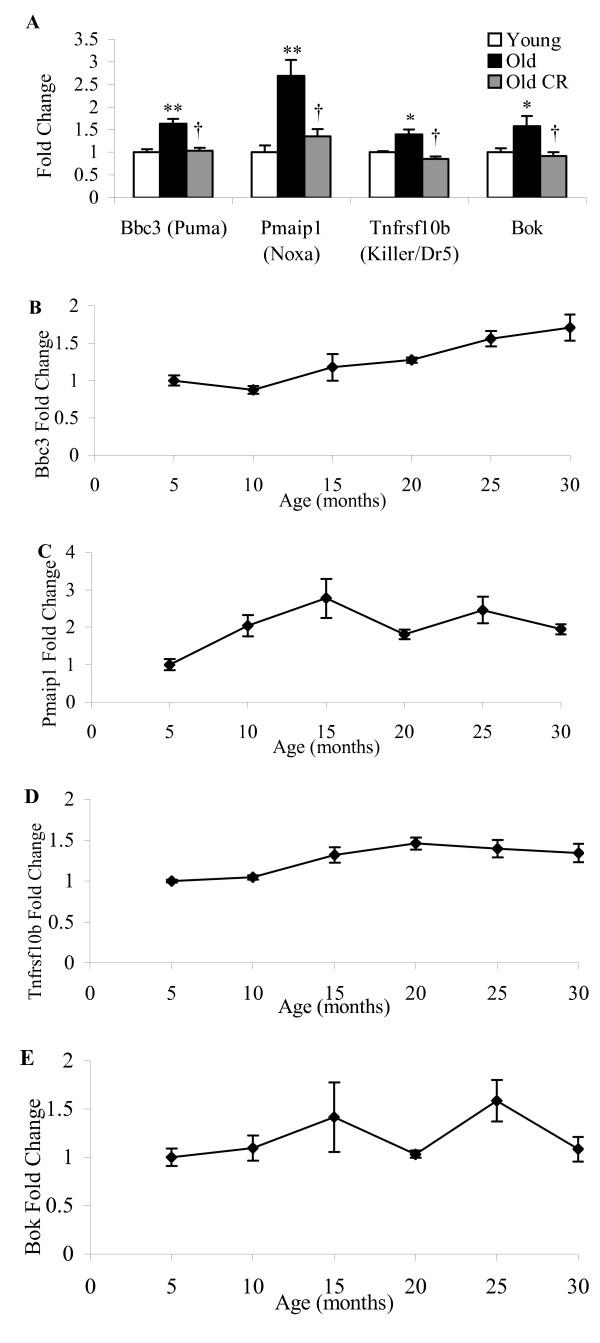
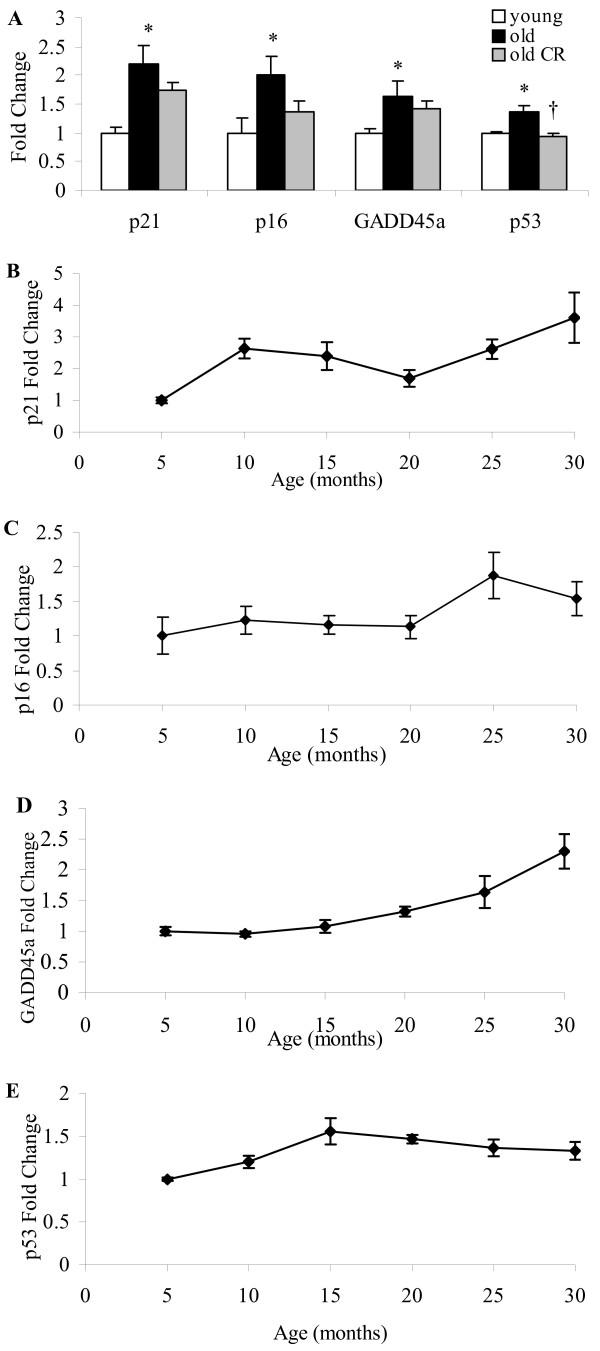
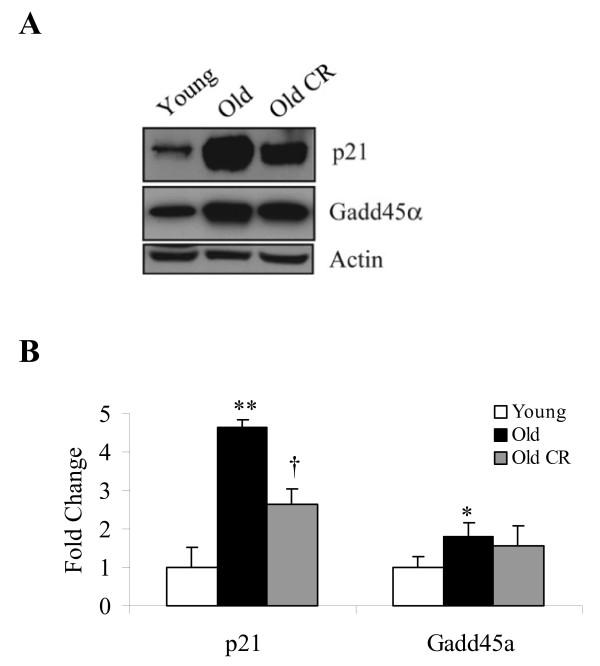
We identified 712 transcripts that are differentially expressed in young (5 month old) and old (25-month old) mouse skeletal muscle. Caloric restriction (CR) completely or partially reversed 87% of the changes in expression. Examination of individual genes revealed a transcriptional profile indicative of increased p53 activity in the older muscle. To determine whether the increase in p53 activity is associated with transcriptional activation of apoptotic targets, we performed RT-PCR on four well known mediators of p53-induced apoptosis: puma, noxa, tnfrsf10b and bok. Expression levels for these proapoptotic genes increased significantly with age (P < 0.05), while CR significantly lowered expression levels for these genes as compared to control fed old mice (P < 0.05). Age-related induction of p53-related genes was observed in multiple tissues, but was not observed in young SOD2+/- and GPX4+/- mice, suggesting that oxidative stress does not induce the expression of these genes. Western blot analysis confirmed that protein levels for both p21 and GADD45a, two established transcriptional targets of p53, were higher in the older muscle tissue.
CONCLUSION
These observations support a role for p53-mediated transcriptional program in mammalian aging and suggest that mechanisms other than reactive oxygen species are involved in the age-related transcriptional activation of p53 targets.
背景
衰老与多种哺乳动物组织中基因表达水平的广泛变化有关。我们使用高密度寡核苷酸阵列和新颖的统计方法来识别特定的转录类别,这些类别可能揭示在哺乳动物衰老过程中起核心作用的生物学过程。
结果
我们鉴定出712个在年轻(5个月大)和年老(25个月大)小鼠骨骼肌中差异表达的转录本。热量限制(CR)完全或部分逆转了87%的表达变化。对单个基因的检查显示,老年肌肉中p53活性增加的转录谱。为了确定p53活性的增加是否与凋亡靶点的转录激活有关,我们对p53诱导凋亡的四种著名介质进行了RT-PCR:puma、noxa、tnfrsf10b和bok。这些促凋亡基因的表达水平随年龄显著增加(P < 0.05),而与对照喂养的老年小鼠相比,CR显著降低了这些基因的表达水平(P < 0.05)。在多个组织中观察到与年龄相关的p53相关基因的诱导,但在年轻的SOD2+/-和GPX4+/-小鼠中未观察到,这表明氧化应激不会诱导这些基因的表达。蛋白质印迹分析证实,p53的两个既定转录靶点p21和GADD45a在老年肌肉组织中的蛋白质水平更高。
结论
这些观察结果支持p53介导的转录程序在哺乳动物衰老中的作用,并表明除活性氧物种外的其他机制参与了与年龄相关的p53靶点的转录激活。
 Zotero 插件