
T淋巴瘤中mir-106a微小RNA顺反子的逆转录病毒激活
Retroviral activation of the mir-106a microRNA cistron in T lymphoma.
作者信息
Lum Amy M, Wang Bruce B, Li Lauri, Channa Namitha, Bartha Gabor, Wabl Matthias
机构信息
Picobella, L.L.C., Burlingame, CA, 94010, USA.
出版信息
Retrovirology. 2007 Jan 25;4:5. doi: 10.1186/1742-4690-4-5.
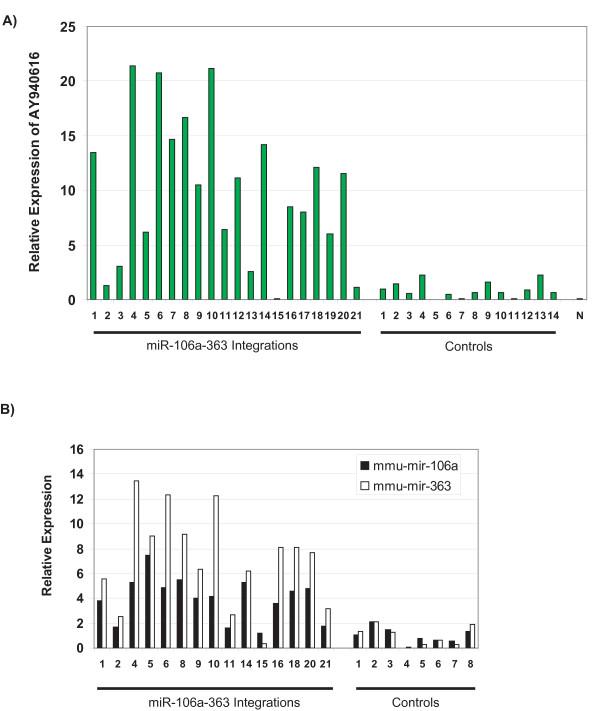
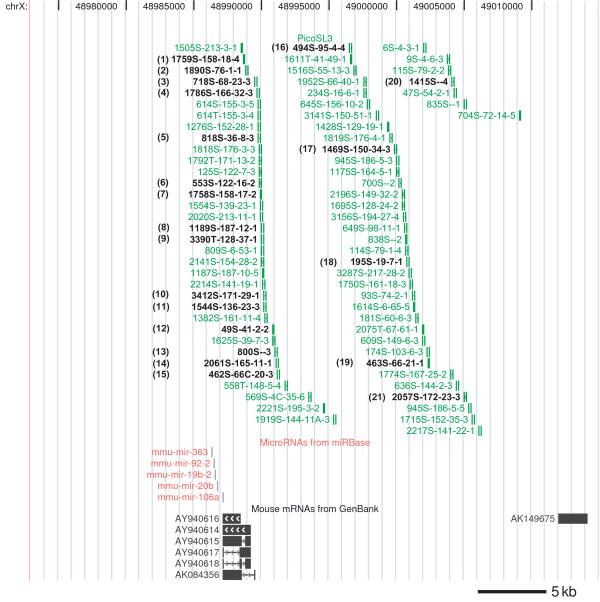
Retroviral insertion into a host genome is a powerful tool not only for the discovery of cancer genes, but also for the discovery of potential oncogenic noncoding RNAs. In a large-scale mouse T lymphocyte tumor screen we found a high density of integrations upstream of the mir-106a microRNA cistron. In tumors containing an integration, the primary transcript encoding the mir-106a cistron was overexpressed five to 20-fold compared with that of control tumors; concomitantly, the mature mir-106a and mir-363 microRNAs were highly overexpressed as well. These findings suggest the mir-106a cistron plays an important role in T cell tumorigenesis.
逆转录病毒插入宿主基因组不仅是发现癌症基因的有力工具,也是发现潜在致癌非编码RNA的有力工具。在一项大规模小鼠T淋巴细胞肿瘤筛查中,我们发现mir-106a微小RNA顺反子上游存在高密度的整合。在含有整合的肿瘤中,编码mir-106a顺反子的初级转录本与对照肿瘤相比过表达了5至20倍;同时,成熟的mir-106a和mir-363微小RNA也高度过表达。这些发现表明mir-106a顺反子在T细胞肿瘤发生中起重要作用。
 Zotero 插件