
非小细胞肺癌患者辅助性治疗性疫苗接种致淋巴细胞减少并采用自体外周血单个核细胞重建:首例临床经验及免疫反应证据
Adjuvant therapeutic vaccination in patients with non-small cell lung cancer made lymphopenic and reconstituted with autologous PBMC: first clinical experience and evidence of an immune response.
作者信息
Rüttinger Dominik, van den Engel Natasja K, Winter Hauke, Schlemmer Marcus, Pohla Heike, Grützner Stefanie, Wagner Beate, Schendel Dolores J, Fox Bernard A, Jauch K-W, Hatz Rudolf A
机构信息
Department of Surgery, Grosshadern Medical Center, Ludwig-Maximilians-University, Marchioninistrasse 15, 81377 Munich, Germany.
出版信息
J Transl Med. 2007 Sep 14;5:43. doi: 10.1186/1479-5876-5-43.
BACKGROUND
Given the considerable toxicity and modest benefit of adjuvant chemotherapy for non-small cell lung cancer (NSCLC), there is clearly a need for new treatment modalities in the adjuvant setting. Active specific immunotherapy may represent such an option. However, clinical responses have been rare so far. Manipulating the host by inducing lymphopenia before vaccination resulted in a magnification of the immune response in the preclinical setting. To evaluate feasibility and safety of an irradiated, autologous tumor cell vaccine given following induction of lymphopenia by chemotherapy and reinfusion of autologous peripheral blood mononuclear cells (PBMC), we are currently conducting a pilot-phase I clinical trial in patients with NSCLC following surgical resection. This paper reports on the first clinical experience and evidence of an immune response in patients suffering from NSCLC.
METHODS
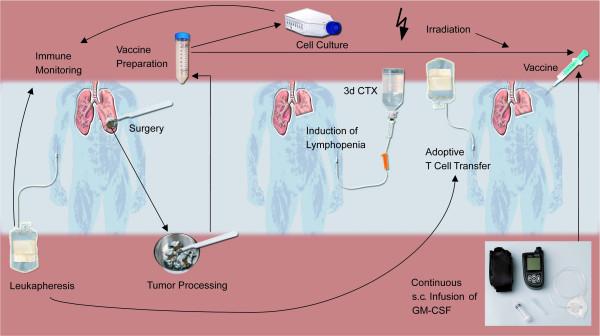
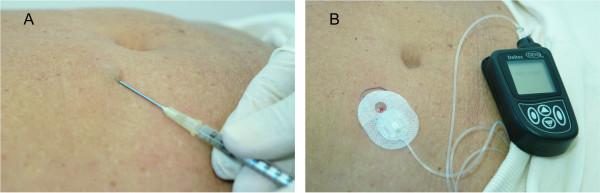
NSCLC patients stages I-IIIA are recruited. Vaccines are generated from their resected lung specimens. Patients undergo leukapheresis to harvest their PBMC prior to or following the surgical procedure. Furthermore, patients receive preparative chemotherapy (cyclophosphamide 350 mg/m2 and fludarabine 20 mg/m2 on 3 consecutive days) for induction of lymphopenia followed by reconstitution with their autologous PBMC. Vaccines are administered intradermally on day 1 following reconstitution and every two weeks for a total of up to five vaccinations. Granulocyte-macrophage-colony-stimulating-factor (GM-CSF) is given continuously (at a rate of 50 microg/24 h) at the site of vaccination via minipump for six consecutive days after each vaccination.
RESULTS
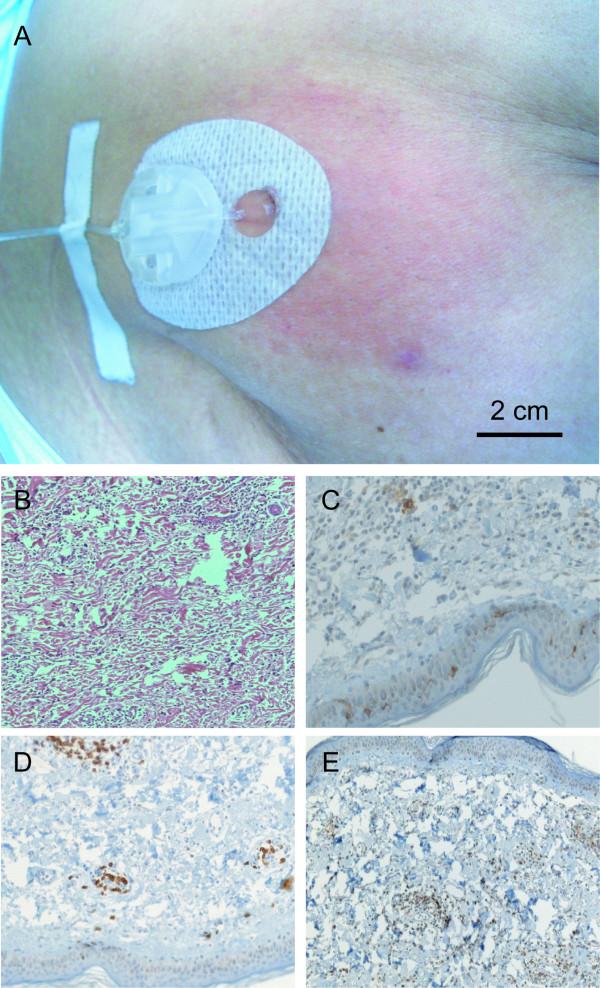
To date, vaccines were successfully manufactured for 4 of 4 patients. The most common toxicities were local injection-site reactions and mild constitutional symptoms. Immune responses to chemotherapy, reconstitution and vaccination are measured by vaccine site and delayed type hypersensitivity (DTH) skin reactions. One patient developed positive DTH skin tests so far. Immunohistochemical assessment of punch biopsies taken at the local vaccine site reaction revealed a dense lymphocyte infiltrate. Further immunohistochemical differentiation showed that CD1a+ cells had been attracted to the vaccine site as well as predominantly CD4+ lymphocytes. The 3-day combination chemotherapy consisting of cyclophosphamide and fludarabine induced a profound lymphopenia in all patients. Sequential FACS analysis revealed that different T cell subsets (CD4, CD8, CD4CD25) as well as granulocytes, B cells and NK cells were significantly reduced. Here, we report on clinical safety and feasibility of this vaccination approach during lymphoid recovery and demonstrate a patient example.
CONCLUSION
Thus far, all vaccines were well tolerated. The overall trial design seems safe and feasible. Vaccine site reactions associated with infusion of GM-CSF via mini-pump are consistent with the postulated mechanism of action. More detailed immune-monitoring is required to evaluate a potential systemic immune response. Further studies to exploit homeostasis-driven T cell proliferation for the induction of a specific anti-tumor immune response in this clinical setting are warranted.
背景
鉴于辅助化疗对非小细胞肺癌(NSCLC)具有相当大的毒性且获益有限,显然在辅助治疗方面需要新的治疗模式。主动特异性免疫疗法可能是一种选择。然而,迄今为止临床反应罕见。在临床前研究中,通过在接种疫苗前诱导淋巴细胞减少来调控宿主可增强免疫反应。为评估在化疗诱导淋巴细胞减少并回输自体外周血单个核细胞(PBMC)后给予照射的自体肿瘤细胞疫苗的可行性和安全性,我们目前正在对手术切除后的NSCLC患者进行一项I期临床试验。本文报告了NSCLC患者的首例临床经验及免疫反应证据。
方法
招募I-IIIA期NSCLC患者。疫苗由其切除的肺标本制备。患者在手术前或手术后进行白细胞分离术以采集PBMC。此外,患者接受预处理化疗(连续3天给予环磷酰胺350mg/m²和氟达拉滨20mg/m²)以诱导淋巴细胞减少,随后用自体PBMC进行重建。在重建后的第1天皮内接种疫苗,每两周接种一次,共接种多达5次。每次接种后,通过微型泵在接种部位连续6天持续给予粒细胞-巨噬细胞集落刺激因子(GM-CSF,速率为50μg/24小时)。
结果
迄今为止,4例患者中有4例成功制备了疫苗。最常见的毒性反应是局部注射部位反应和轻度全身症状。通过疫苗接种部位和迟发型超敏反应(DTH)皮肤反应来测量对化疗、重建和疫苗接种的免疫反应。到目前为止,有1例患者出现了阳性DTH皮肤试验。对局部疫苗接种部位反应处的打孔活检进行免疫组织化学评估显示有密集的淋巴细胞浸润。进一步的免疫组织化学鉴别表明,CD1a+细胞以及主要是CD4+淋巴细胞被吸引到疫苗接种部位。由环磷酰胺和氟达拉滨组成的3天联合化疗在所有患者中均诱导了严重的淋巴细胞减少。连续的流式细胞术分析显示不同的T细胞亚群(CD4、CD8、CD4CD25)以及粒细胞、B细胞和NK细胞均显著减少。在此,我们报告了这种疫苗接种方法在淋巴细胞恢复期间的临床安全性和可行性,并展示了一个患者实例。
结论
迄今为止,所有疫苗耐受性良好。总体试验设计似乎安全可行。与通过微型泵输注GM-CSF相关的疫苗接种部位反应与假定的作用机制一致。需要更详细的免疫监测来评估潜在的全身免疫反应。有必要进一步开展研究,利用内稳态驱动的T细胞增殖在这种临床环境中诱导特异性抗肿瘤免疫反应。

 Zotero 插件