
细菌中水平基因转移的调控作为DNA修复机制的“附带产物”
Horizontal gene transfer regulation in bacteria as a "spandrel" of DNA repair mechanisms.
作者信息
Fall Saliou, Mercier Anne, Bertolla Franck, Calteau Alexandra, Gueguen Laurent, Perrière Guy, Vogel Timothy M, Simonet Pascal
机构信息
Environmental Microbial Genomics Group, Laboratoire AMPERE UMR CNRS 5005, Ecole Centrale de Lyon et Université de Lyon, Ecully, France.
出版信息
PLoS One. 2007 Oct 24;2(10):e1055. doi: 10.1371/journal.pone.0001055.
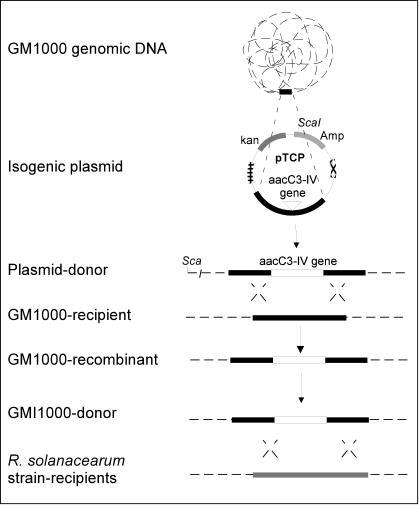
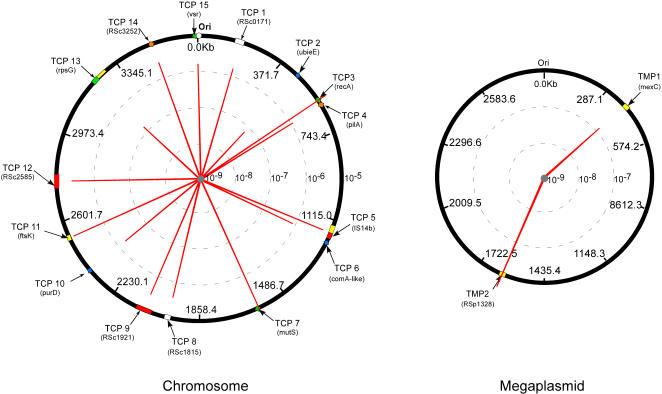
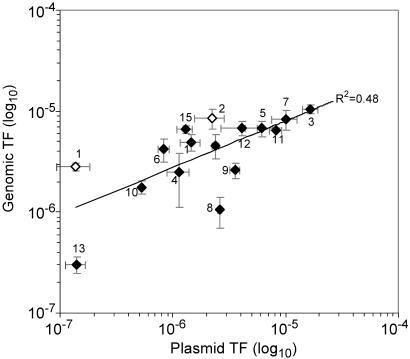
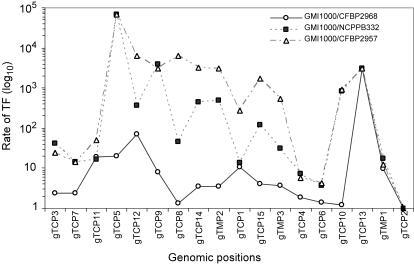
Horizontal gene transfer (HGT) is recognized as the major force for bacterial genome evolution. Yet, numerous questions remain about the transferred genes, their function, quantity and frequency. The extent to which genetic transformation by exogenous DNA has occurred over evolutionary time was initially addressed by an in silico approach using the complete genome sequence of the Ralstonia solanacearum GMI1000 strain. Methods based on phylogenetic reconstruction of prokaryote homologous genes families detected 151 genes (13.3%) of foreign origin in the R. solanacearum genome and tentatively identified their bacterial origin. These putative transfers were analyzed in comparison to experimental transformation tests involving 18 different genomic DNA positions in the genome as sites for homologous or homeologous recombination. Significant transformation frequency differences were observed among these positions tested regardless of the overall genomic divergence of the R. solanacearum strains tested as recipients. The genomic positions containing the putative exogenous DNA were not systematically transformed at the highest frequencies. The two genomic "hot spots", which contain recA and mutS genes, exhibited transformation frequencies from 2 to more than 4 orders of magnitude higher than positions associated with other genes depending on the recipient strain. These results support the notion that the bacterial cell is equipped with active mechanisms to modulate acquisition of new DNA in different genomic positions. Bio-informatics study correlated recombination "hot-spots" to the presence of Chi-like signature sequences with which recombination might be preferentially initiated. The fundamental role of HGT is certainly not limited to the critical impact that the very rare foreign genes acquired mainly by chance can have on the bacterial adaptation potential. The frequency to which HGT with homologous and homeologous DNA happens in the environment might have led the bacteria to hijack DNA repair mechanisms in order to generate genetic diversity without losing too much genomic stability.
水平基因转移(HGT)被认为是细菌基因组进化的主要驱动力。然而,关于转移基因、其功能、数量和频率仍存在许多问题。外源DNA在进化时间内发生遗传转化的程度最初是通过使用青枯雷尔氏菌GMI1000菌株的全基因组序列的计算机方法来解决的。基于原核生物同源基因家族系统发育重建的方法在青枯雷尔氏菌基因组中检测到151个外源基因(占13.3%),并初步确定了它们的细菌来源。将这些假定的转移与涉及基因组中18个不同基因组DNA位置作为同源或异源重组位点的实验转化测试进行了比较分析。无论作为受体测试的青枯雷尔氏菌菌株的总体基因组差异如何,在所测试的这些位置之间都观察到了显著的转化频率差异。含有假定外源DNA的基因组位置并非总是以最高频率被转化。包含recA和mutS基因的两个基因组“热点”,根据受体菌株的不同,其转化频率比与其他基因相关的位置高出2至4个数量级以上。这些结果支持了这样一种观点,即细菌细胞具备活跃机制来调节在不同基因组位置获取新DNA。生物信息学研究将重组“热点”与Chi样特征序列的存在相关联,重组可能优先通过这些序列启动。HGT的基本作用肯定不限于主要偶然获得的极罕见外源基因对细菌适应潜力可能产生的关键影响。同源和异源DNA在环境中发生HGT的频率可能导致细菌劫持DNA修复机制,以便在不损失太多基因组稳定性的情况下产生遗传多样性。


 Zotero 插件