
正在愈合的心肌会依次动员两个具有不同且互补功能的单核细胞亚群。
The healing myocardium sequentially mobilizes two monocyte subsets with divergent and complementary functions.
作者信息
Nahrendorf Matthias, Swirski Filip K, Aikawa Elena, Stangenberg Lars, Wurdinger Thomas, Figueiredo Jose-Luiz, Libby Peter, Weissleder Ralph, Pittet Mikael J
机构信息
Center for Systems Biology, Massachusetts General Hospital, Harvard Medical School, Charlestown, MA 02129, USA.
出版信息
J Exp Med. 2007 Nov 26;204(12):3037-47. doi: 10.1084/jem.20070885. Epub 2007 Nov 19.
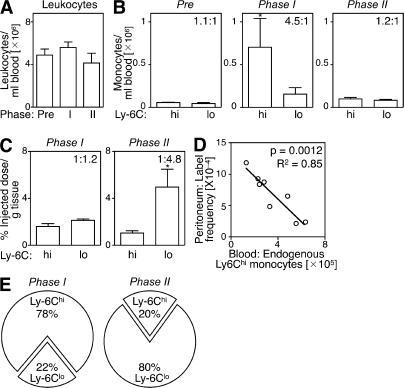
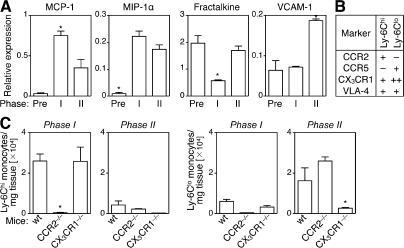
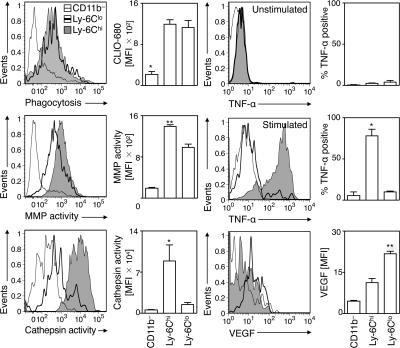
Healing of myocardial infarction (MI) requires monocytes/macrophages. These mononuclear phagocytes likely degrade released macromolecules and aid in scavenging of dead cardiomyocytes, while mediating aspects of granulation tissue formation and remodeling. The mechanisms that orchestrate such divergent functions remain unknown. In view of the heightened appreciation of the heterogeneity of circulating monocytes, we investigated whether distinct monocyte subsets contribute in specific ways to myocardial ischemic injury in mouse MI. We identify two distinct phases of monocyte participation after MI and propose a model that reconciles the divergent properties of these cells in healing. Infarcted hearts modulate their chemokine expression profile over time, and they sequentially and actively recruit Ly-6C(hi) and -6C(lo) monocytes via CCR2 and CX(3)CR1, respectively. Ly-6C(hi) monocytes dominate early (phase I) and exhibit phagocytic, proteolytic, and inflammatory functions. Ly-6C(lo) monocytes dominate later (phase II), have attenuated inflammatory properties, and express vascular-endothelial growth factor. Consequently, Ly-6C(hi) monocytes digest damaged tissue, whereas Ly-6C(lo) monocytes promote healing via myofibroblast accumulation, angiogenesis, and deposition of collagen. MI in atherosclerotic mice with chronic Ly-6C(hi) monocytosis results in impaired healing, underscoring the need for a balanced and coordinated response. These observations provide novel mechanistic insights into the cellular and molecular events that regulate the response to ischemic injury and identify new therapeutic targets that can influence healing and ventricular remodeling after MI.
心肌梗死(MI)的愈合需要单核细胞/巨噬细胞。这些单核吞噬细胞可能降解释放的大分子,协助清除死亡的心肌细胞,同时介导肉芽组织形成和重塑的各个方面。协调这些不同功能的机制尚不清楚。鉴于对循环单核细胞异质性的认识不断提高,我们研究了不同的单核细胞亚群是否以特定方式对小鼠MI中的心肌缺血损伤起作用。我们确定了MI后单核细胞参与的两个不同阶段,并提出了一个模型来解释这些细胞在愈合过程中的不同特性。梗死心脏随时间调节其趋化因子表达谱,并分别通过CCR2和CX(3)CR1依次主动募集Ly-6C(hi)和Ly-6C(lo)单核细胞。Ly-6C(hi)单核细胞在早期(I期)占主导地位,表现出吞噬、蛋白水解和炎症功能。Ly-6C(lo)单核细胞在后期(II期)占主导地位,炎症特性减弱,并表达血管内皮生长因子。因此,Ly-6C(hi)单核细胞消化受损组织,而Ly-6C(lo)单核细胞通过肌成纤维细胞积累、血管生成和胶原蛋白沉积促进愈合。患有慢性Ly-6C(hi)单核细胞增多症的动脉粥样硬化小鼠发生MI会导致愈合受损,强调了平衡和协调反应的必要性。这些观察结果为调节对缺血损伤反应的细胞和分子事件提供了新的机制见解,并确定了可影响MI后愈合和心室重塑的新治疗靶点。


 Zotero 插件