
蚁巢木生物活性成分的抗菌和抗氧化活性
Antimicrobial and antioxidative activities of bioactive constituents from Hydnophytum formicarum Jack.
作者信息
Prachayasittikul Supaluk, Buraparuangsang Prasit, Worachartcheewan Apilak, Isarankura-Na-Ayudhya Chartchalerm, Ruchirawat Somsak, Prachayasittikul Virapong
机构信息
Department of Chemistry, Faculty of Science, Srinakharinwirot University, Sukhumvit 23, Bangkok 10110, Thailand.
出版信息
Molecules. 2008 Apr 18;13(4):904-21. doi: 10.3390/molecules13040904.
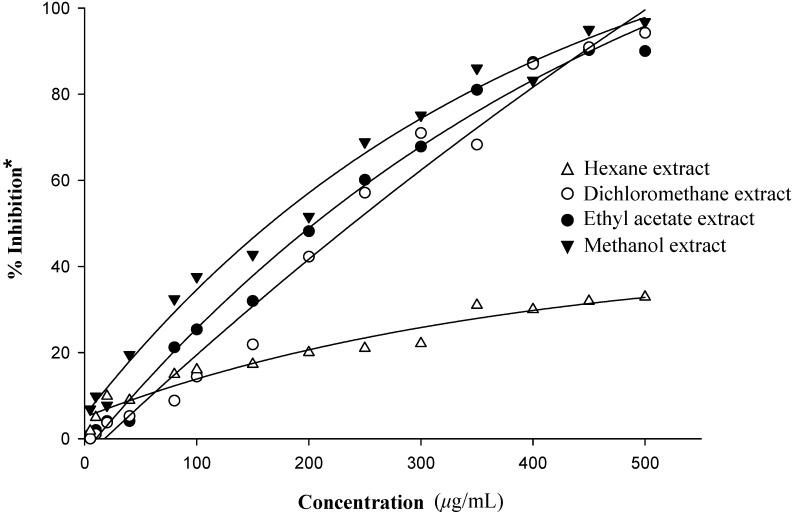
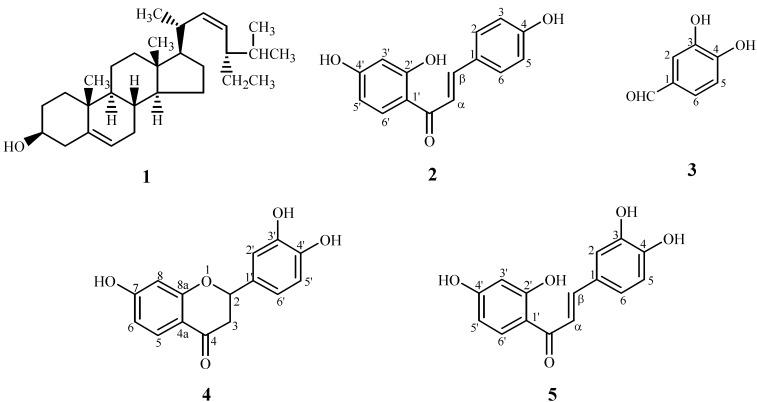
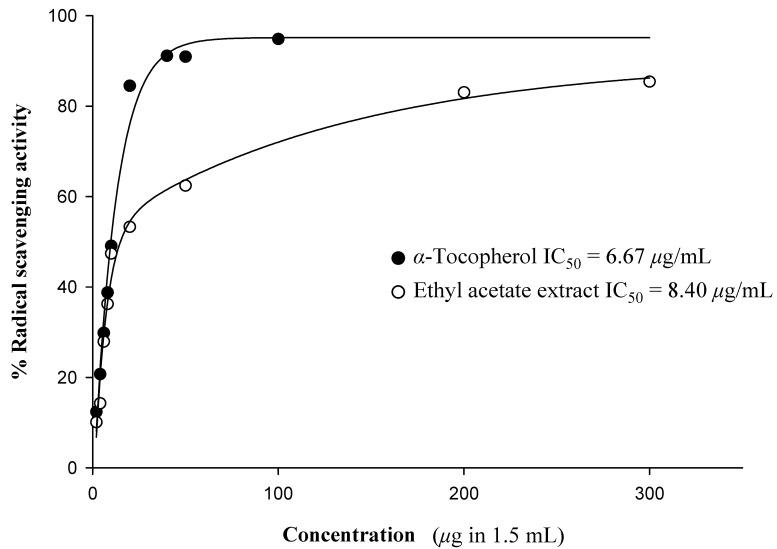
Hydnophytum formicarum Jack. (Rubiaceae) is a medicinal plant whose tubers possesses cardiovascular, anti-inflammatory and antiparasitic effects and have been used for the treatment of hepatitis, rheumatism and diarrhea. Herein we report the isolation of its active constituents and the testing of their antimicrobial activity against 27 strains of microorganisms using an agar dilution method and of their antioxidative activity using the DPPH and SOD assays. The results show that the crude hexane, dichloromethane, ethylacetate and methanol extracts exert such activities. Particularly, the crude ethyl acetate extract exhibits antigrowth activity against many Gram-positive and Gram-negative bacteria with MIC 256 microg/mL. Shewanella putrefaciens ATCC 8671 is completely inhibited at a lower MIC (128 microg/mL). Interestingly, Corynebacterium diphtheriae NCTC10356 is inhibited by all the tested extracts. Significantly, the ethyl acetate extract is also the most potent antioxidant, showing 83.31% radical scavenging activity with IC50 8.40 microg/mL in the DPPH assay. The other extracts display weak to moderate antioxidative activities, ranging from 28.60-56.80% radical scavenging. The SOD assay shows that methanol extract exhibits the highest activity (74.19% inhibition of superoxide radical). The dichloromethane and ethyl acetate extracts display comparable SOD activity. The promising bioactivities of the crude ethyl acetate extract guided the first isolation of bioactive flavonoid and phenolic compounds: isoliquiritigenin (2), protocatechualdehyde(3), butin (4) and butein (5) from this species. Their structures have been fully established by 1D and 2D NMR. In addition, stigmasterol was isolated from the crude hexane and dichloromethane extracts. The antimicrobial and cytotoxic activities of compounds 3-5 were evaluated. The tested compounds were inactive against HuCCA-1 and KB cell lines,showing ED50> 10 microg/mL. Protocatechualdehyde (3) completely inhibits the growth of Plesiomonas shigelloides with MIC <or=60 microg/mL. As a result, we propose that Hydnophytum formicarum Jack. can serve as a new source enriched with potent antioxidative and antimicrobial agents.
蚁巢木(茜草科)是一种药用植物,其块茎具有心血管、抗炎和抗寄生虫作用,已被用于治疗肝炎、风湿病和腹泻。在此,我们报告了其活性成分的分离,以及使用琼脂稀释法对27种微生物菌株进行抗菌活性测试,并用DPPH和SOD测定法对其抗氧化活性进行测试。结果表明,正己烷、二氯甲烷、乙酸乙酯和甲醇粗提物具有这些活性。特别是,乙酸乙酯粗提物对许多革兰氏阳性和革兰氏阴性细菌具有抗菌活性,MIC为256μg/mL。腐败希瓦氏菌ATCC 8671在较低的MIC(128μg/mL)下被完全抑制。有趣的是,所有测试提取物均能抑制白喉棒状杆菌NCTC10356。值得注意的是,乙酸乙酯提取物也是最有效的抗氧化剂,在DPPH测定中显示出83.31%的自由基清除活性,IC50为8.40μg/mL。其他提取物表现出弱至中等的抗氧化活性,自由基清除率在28.60 - 56.80%之间。SOD测定表明,甲醇提取物表现出最高活性(对超氧自由基的抑制率为74.19%)。二氯甲烷和乙酸乙酯提取物表现出相当的SOD活性。乙酸乙酯粗提物有前景的生物活性指导了从该物种中首次分离出生物活性黄酮类化合物和酚类化合物:异甘草素(2)、原儿茶醛(3)、紫铆因(4)和紫铆亭(5)。它们的结构已通过一维和二维核磁共振完全确定。此外,从正己烷和二氯甲烷粗提物中分离出了豆甾醇。评估了化合物3 - 5的抗菌和细胞毒性活性。测试的化合物对HuCCA - 1和KB细胞系无活性,ED50>10μg/mL。原儿茶醛(3)对类志贺邻单胞菌的生长有完全抑制作用,MIC≤60μg/mL。因此,我们认为蚁巢木可作为富含强效抗氧化剂和抗菌剂的新来源。
 Zotero 插件