
氧化应激调节脂肪细胞载脂蛋白E并抑制其在肥胖症中的表达。
Oxidative stress regulates adipocyte apolipoprotein e and suppresses its expression in obesity.
作者信息
Espiritu Doris Joy, Mazzone Theodore
机构信息
Department of Medicine, University of Illinois, Chicago, Illinois, USA.
出版信息
Diabetes. 2008 Nov;57(11):2992-8. doi: 10.2337/db08-0592. Epub 2008 Aug 4.
OBJECTIVE
Endogenous expression of apolipoprotein E (apoE) has a significant impact on adipocyte lipid metabolism and is markedly suppressed in obesity. Adipose tissue oxidant stress is emerging as an important mediator of adipocyte dysfunction. These studies were undertaken to evaluate the role of oxidant stress for regulation of adipocyte apoE.
RESEARCH DESIGN AND METHODS
ApoE gene and protein expression in 3T3-L1 adipocytes or mature adipocytes and adipose tissue from C57/BL6 mice was evaluated after induction of oxidant stress. The response of adipose tissue and adipocytes from obese compared with lean mice to antioxidants was also assessed.
RESULTS
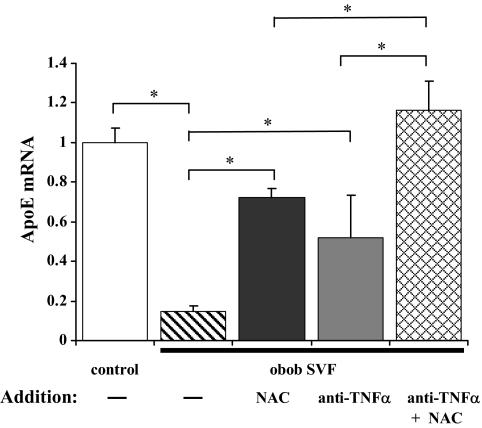
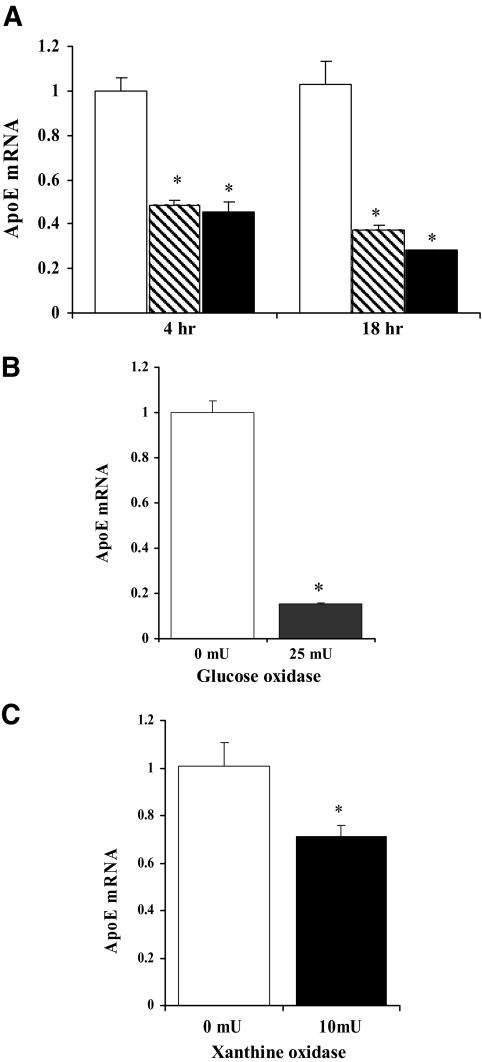
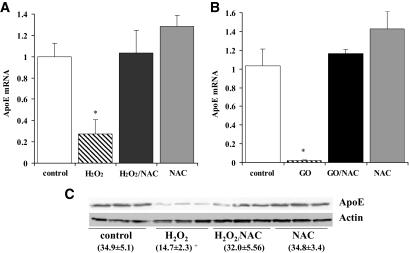
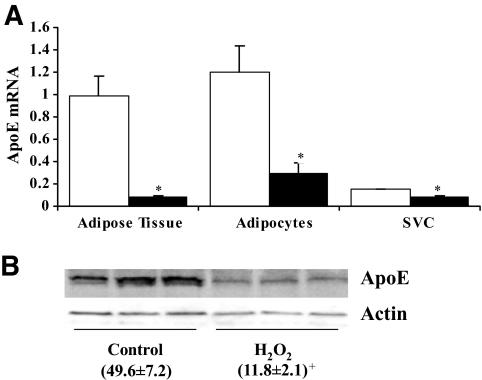
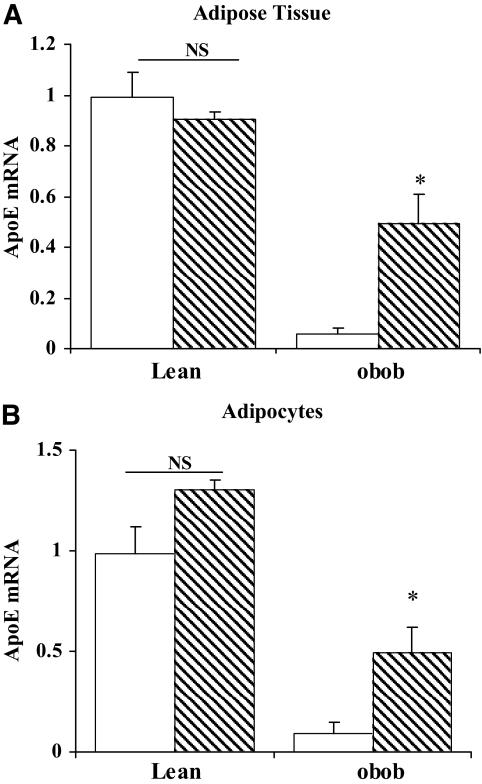
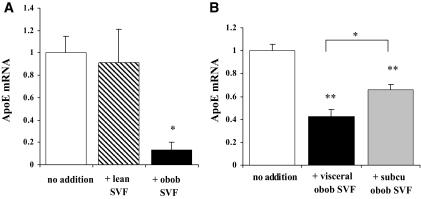
Oxidant stress in 3T3-L1 cells or adipocytes and adipose tissue from lean mice significantly reduced apoE mRNA and protein level. Inclusion of an antioxidant eliminated this reduction. Oxidant stress was accompanied by activation of the nuclear factor-kappaB (NF-kappaB) transcription complex, and its effect on apoE was eliminated by an NF-kappaB activation inhibitor. Treatment of freshly isolated adipose tissue or mature adipocytes from obese mice with antioxidant increased apoE expression but had no effect on cells or tissue from lean mice. Incubation of freshly isolated adipocytes from lean mice with stromovascular cells from obese mice significantly suppressed adipocyte apoE compared with incubation with stromovascular cells from lean mice, but this suppression was reversed by inclusion of antioxidant or a neutralizing antibody to tumor necrosis factor-alpha.
CONCLUSIONS
Oxidant stress significantly modulates adipose tissue and adipocyte apoE expression. Furthermore, oxidant stress contributes to suppression of adipocyte apoE in obesity. This suppression depends on interaction between adipose tissue stromovascular cells and adipocytes.
目的
载脂蛋白E(apoE)的内源性表达对脂肪细胞脂质代谢有显著影响,且在肥胖状态下明显受到抑制。脂肪组织氧化应激正成为脂肪细胞功能障碍的重要介导因素。开展这些研究以评估氧化应激在调节脂肪细胞apoE中的作用。
研究设计与方法
在诱导氧化应激后,评估3T3-L1脂肪细胞、成熟脂肪细胞以及C57/BL6小鼠脂肪组织中apoE基因和蛋白的表达。还评估了肥胖小鼠与瘦小鼠的脂肪组织和脂肪细胞对抗氧化剂的反应。
结果
3T3-L1细胞、瘦小鼠的脂肪细胞和脂肪组织中的氧化应激显著降低了apoE mRNA和蛋白水平。加入抗氧化剂可消除这种降低。氧化应激伴随着核因子-κB(NF-κB)转录复合物的激活,其对apoE的作用可被NF-κB激活抑制剂消除。用抗氧化剂处理肥胖小鼠新鲜分离的脂肪组织或成熟脂肪细胞可增加apoE表达,但对瘦小鼠的细胞或组织无影响。与用瘦小鼠的血管基质细胞共同培养相比,用肥胖小鼠的血管基质细胞共同培养瘦小鼠新鲜分离的脂肪细胞可显著抑制脂肪细胞apoE,但加入抗氧化剂或肿瘤坏死因子-α中和抗体可逆转这种抑制。
结论
氧化应激显著调节脂肪组织和脂肪细胞中apoE的表达。此外,氧化应激导致肥胖状态下脂肪细胞apoE受到抑制。这种抑制取决于脂肪组织血管基质细胞与脂肪细胞之间的相互作用。

 Zotero 插件