
p53对癌基因诱导的衰老反应的特征分析。
Characterization of the p53 response to oncogene-induced senescence.
作者信息
Ruiz Lidia, Traskine Magali, Ferrer Irene, Castro Estrella, Leal Juan F M, Kaufman Marcelline, Carnero Amancio
机构信息
Experimental Therapeutics Programme, Centro Nacional De Investigaciones Oncológicas, Madrid, Spain.
出版信息
PLoS One. 2008 Sep 18;3(9):e3230. doi: 10.1371/journal.pone.0003230.
BACKGROUND
P53 activation can trigger various outcomes, among them reversible growth arrest or cellular senescence. It is a live debate whether these outcomes are influenced by quantitative or qualitative mechanisms. Furthermore, the relative contribution of p53 to Ras-induced senescence is also matter of controversy.
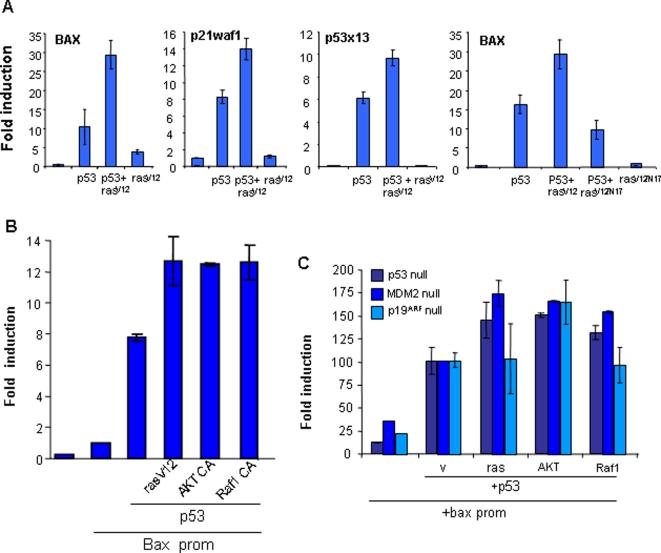
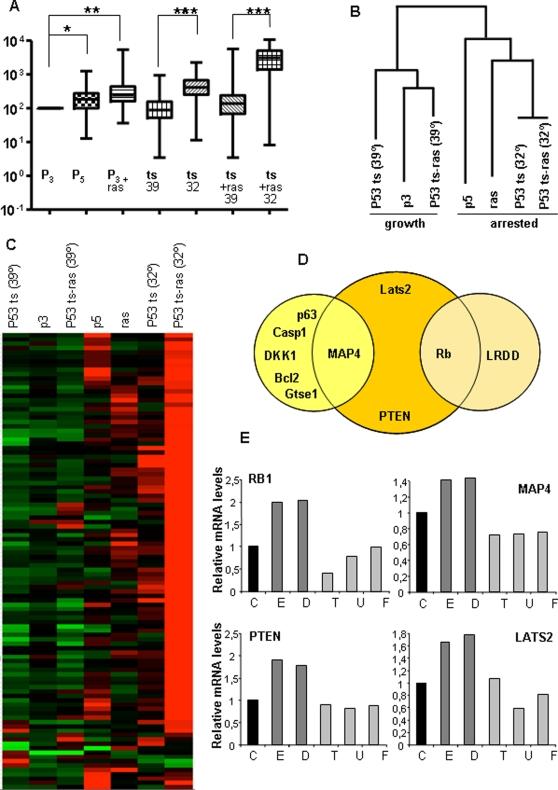
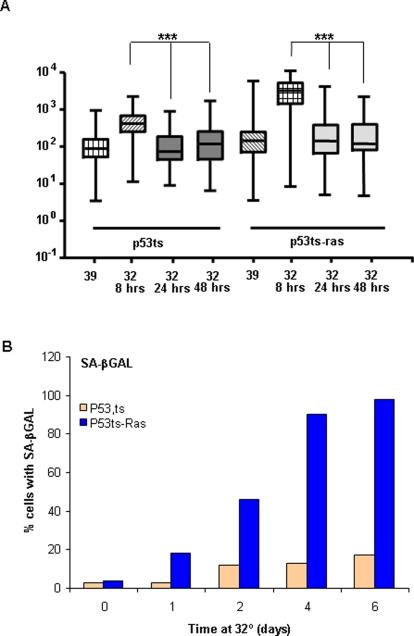
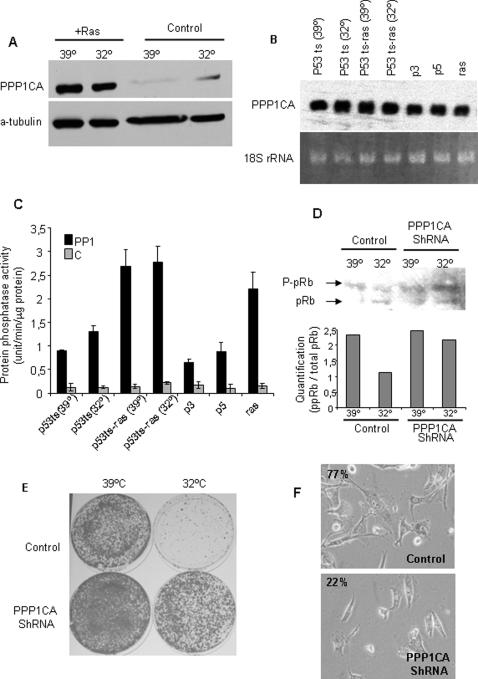
METHODOLOGY/PRINCIPAL FINDINGS: This study compared situations in which different signals drove senescence with increasing levels of p53 activation. The study revealed that the levels of p53 activation do not determine the outcome of the response. This is further confirmed by the clustering of transcriptional patterns into two broad groups: p53-activated or p53-inactivated, i.e., growth and cellular arrest/senescence. Furthermore, while p53-dependent transcription decreases after 24 hrs in the presence of active p53, senescence continues. Maintaining cells in the arrested state for long periods does not switch reversible arrest to cellular senescence. Together, these data suggest that a Ras-dependent, p53-independent, second signal is necessary to induce senescence. This study tested whether PPP1CA (the catalytic subunit of PP1alpha), recently identified as contributing to Ras-induced senescence, might be this second signal. PPP1CA is induced by Ras; its inactivation inhibits Ras-induced senescence, presumably by inhibiting pRb dephosphorylation. Finally, PPP1CA seems to strongly co-localize with pRb only during senescence.
CONCLUSIONS
The levels of p53 activation do not determine the outcome of the response. Rather, p53 activity seems to act as a necessary but not sufficient condition for senescence to arise. Maintaining cells in the arrested state for long periods does not switch reversible arrest to cellular senescence. PPP1CA is induced by Ras; its inactivation inhibits Ras-induced senescence, presumably by inhibiting pRb dephosphorylation. Finally, PPP1CA seems to strongly co-localize with pRb only during senescence, suggesting that PP1alpha activation during senescence may be the second signal contributing to the irreversibility of the senescent phenotype.
背景
p53激活可引发多种结果,其中包括可逆性生长停滞或细胞衰老。这些结果是受定量机制还是定性机制影响,仍是一个活跃的争论话题。此外,p53对Ras诱导的衰老的相对贡献也存在争议。
方法/主要发现:本研究比较了不同信号驱动衰老且p53激活水平不断增加的情况。研究表明,p53激活水平并不能决定反应的结果。转录模式聚类为两个宽泛的组进一步证实了这一点:p53激活组或p53失活组,即生长和细胞停滞/衰老组。此外,虽然在有活性p53存在的情况下,24小时后p53依赖性转录会下降,但衰老仍会持续。长时间将细胞维持在停滞状态并不会将可逆性停滞转变为细胞衰老。总之,这些数据表明,一个依赖Ras、不依赖p53的第二信号对于诱导衰老来说是必要的。本研究测试了最近被确定为有助于Ras诱导衰老的PPP1CA(PP1α的催化亚基)是否可能是这个第二信号。PPP1CA由Ras诱导;其失活抑制Ras诱导的衰老,大概是通过抑制pRb去磷酸化来实现的。最后,PPP1CA似乎仅在衰老期间与pRb强烈共定位。
结论
p53激活水平并不能决定反应的结果。相反,p53活性似乎是衰老发生的必要但不充分条件。长时间将细胞维持在停滞状态并不会将可逆性停滞转变为细胞衰老。PPP1CA由Ras诱导;其失活抑制Ras诱导的衰老,大概是通过抑制pRb去磷酸化来实现的。最后,PPP1CA似乎仅在衰老期间与pRb强烈共定位,这表明衰老期间PP1α的激活可能是导致衰老表型不可逆性的第二信号。



 Zotero 插件