
通过铁介导的氧化应激研究α-突触核蛋白在帕金森病中的生理和病理作用;一个假定的铁反应元件的作用。
Physiological and pathological role of alpha-synuclein in Parkinson's disease through iron mediated oxidative stress; the role of a putative iron-responsive element.
机构信息
Department of Psychiatry-Neuroscience, Massachusetts General Hospital, Harvard Medical School, Charlestown, 02129, USA.
出版信息
Int J Mol Sci. 2009 Mar;10(3):1226-60. doi: 10.3390/ijms10031226. Epub 2009 Mar 17.
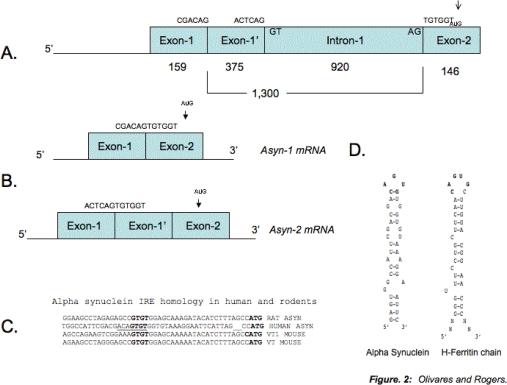
Parkinson's disease (PD) is the second most common progressive neurodegenerative disorder after Alzheimer's disease (AD) and represents a large health burden to society. Genetic and oxidative risk factors have been proposed as possible causes, but their relative contribution remains unclear. Dysfunction of alpha-synuclein (alpha-syn) has been associated with PD due to its increased presence, together with iron, in Lewy bodies. Brain oxidative damage caused by iron may be partly mediated by alpha-syn oligomerization during PD pathology. Also, alpha-syn gene dosage can cause familial PD and inhibition of its gene expression by blocking translation via a newly identified Iron Responsive Element-like RNA sequence in its 5'-untranslated region may provide a new PD drug target.
帕金森病(PD)是仅次于阿尔茨海默病(AD)的第二常见进行性神经退行性疾病,给社会带来了巨大的健康负担。遗传和氧化风险因素被认为是可能的原因,但它们的相对贡献仍不清楚。由于其在路易小体中的存在增加以及与铁结合,α-突触核蛋白(α-syn)的功能障碍与 PD 有关。铁引起的脑氧化损伤可能部分是由 PD 病理过程中α-syn 寡聚化介导的。此外,α-syn 基因剂量可以导致家族性 PD,并且通过在其 5'非翻译区中发现的新的铁反应元件样 RNA 序列来阻断翻译可以抑制其基因表达,这可能为 PD 药物治疗提供新的靶点。
 Zotero 插件