
海水中双酚A、双酚F和双酚S的生物降解
Biodegradation of bisphenol A, bisphenol F and bisphenol S in seawater.
作者信息
Danzl Erica, Sei Kazunari, Soda Satoshi, Ike Michihiko, Fujita Masanori
机构信息
Division of Sustainable Energy and Environmental Engineering, Graduate School of Engineering, Osaka University, Suita, Osaka, Japan.
出版信息
Int J Environ Res Public Health. 2009 Apr;6(4):1472-84. doi: 10.3390/ijerph6041472. Epub 2009 Apr 17.
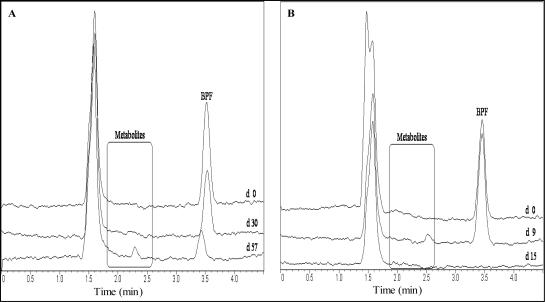
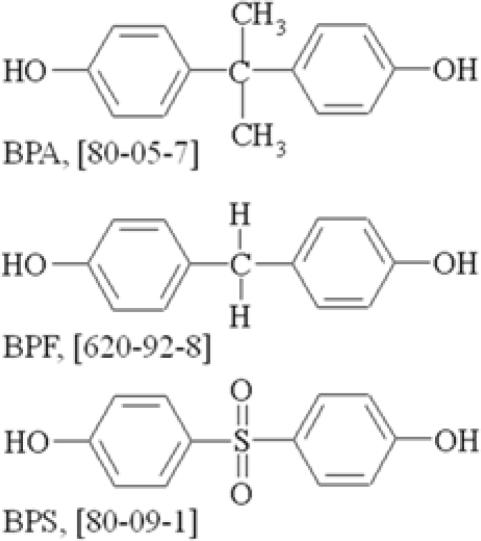
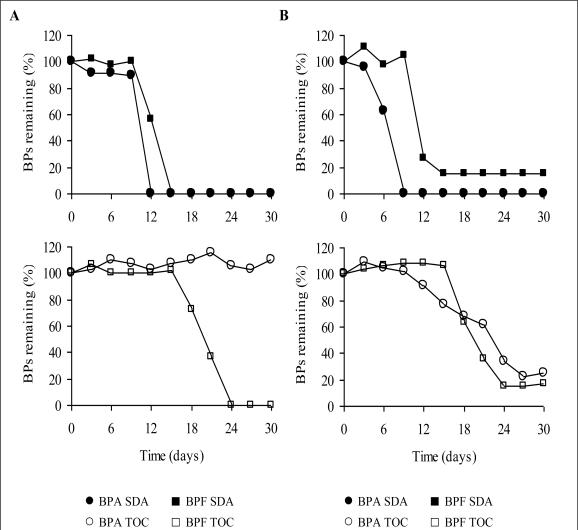
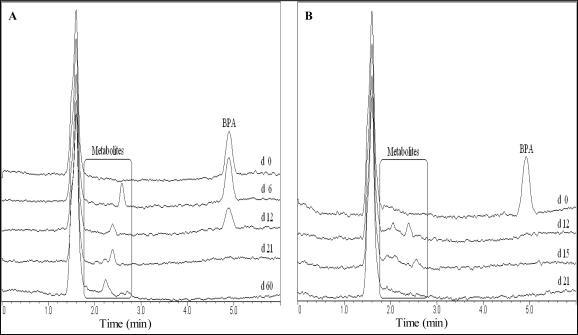
A group of compounds structurally similar to bis(4-hydroxyphenyl)propane (bisphenol A, BPA) are called bisphenols (BPs), and some of them can partially replace BPA in industrial applications. The production and consumption of BPs other than BPA, especially those of bis(4-hydroxyphenyl)methane (bisphenol F, BPF) and bis(4-hydroxyphenyl)sulfone (bisphenol S, BPS), have increased recently, leading to their detection as contaminants in the aquatic environment. The three compounds tested 100% positive for estrus response in 1936 and concerns about their health risks have been increasing. Abundant data on degradation of bisphenols (BPs) has been published, but results for biodegradation of BPs in seawater are lacking. However, several research groups have focused on this topic recently. In this study, the biodegradation behaviors of three BPs, namely BPA, BPF and BPS, in seawater were investigated using TOC Handai (TOC, potential test) and river (sea) die-away (SDA, simulation test) methods, which are both a kind of river-die-away test. The main difference between the tests is that indigenous microcosms remain in the sampled raw seawater for the SDA experiments, but they are removed through filtration and dispersed into artificial seawater for the TOC experiments. The BPs, except for BPS, were degraded using both methods. The SDA method produced better biodegradation results than the TOC method in terms of degradation time (both lag and degradation periods). Biodegradation efficiencies were measured at 75-100% using the SDA method and 13-63% using the TOC method. BPF showed better degradation efficiency than BPA, BPF was > 92% and BPA 83% depleted according to the SDA tests. BPS degradation was not observed. As a conclusion, the biodegradability of the three BPs in seawater could be ranked as BPF > BPA >> BPS. BPF is more biodegradable than BPA in seawater and BPS is more likely to accumulate in the aquatic environment. BPS poses a lower risk to human health and to the environment than BPA or BPF but it is not amenable to biodegradation and might be persistent and become an ecological burden. Thus other degradation methods need to be found for the removal of BPS in the environment.
一类结构与双(4 - 羟苯基)丙烷(双酚A,BPA)相似的化合物被称为双酚(BPs),其中一些在工业应用中可以部分替代BPA。除BPA之外的双酚类化合物,尤其是双(4 - 羟苯基)甲烷(双酚F,BPF)和双(4 - 羟苯基)砜(双酚S,BPS)的生产和消费量最近有所增加,导致它们在水环境中被检测为污染物。这三种化合物在1936年的发情反应测试中100%呈阳性,人们对其健康风险的担忧也与日俱增。关于双酚(BPs)降解的大量数据已经发表,但缺乏双酚类化合物在海水中生物降解的结果。然而,最近有几个研究小组关注了这个话题。在本研究中,使用TOC阪大(TOC,潜在测试)和河流(海洋)衰减(SDA,模拟测试)方法研究了三种双酚,即BPA、BPF和BPS在海水中的生物降解行为,这两种方法都是河流衰减测试的一种。测试之间的主要区别在于,对于SDA实验,原生微生物群落保留在采集的原始海水中,但在TOC实验中,它们通过过滤去除并分散到人工海水中。除BPS外,其他双酚类化合物在两种方法中均有降解。就降解时间(滞后期和降解期)而言,SDA方法比TOC方法产生了更好的生物降解结果。使用SDA方法测得的生物降解效率为75 - 100%,使用TOC方法测得的生物降解效率为13 - 63%。BPF的降解效率优于BPA,根据SDA测试,BPF的去除率> 92%,BPA为83%。未观察到BPS的降解。综上所述,三种双酚在海水中的生物降解性排序为BPF > BPA >> BPS。在海水中,BPF比BPA更易生物降解,而BPS更有可能在水环境中积累。与BPA或BPF相比,BPS对人类健康和环境构成的风险较低,但它不易生物降解,可能会持续存在并成为生态负担。因此,需要寻找其他降解方法来去除环境中的BPS。
 Zotero 插件