
锥虫寄生虫中转录RNA基因的基因组织与序列分析
Gene organization and sequence analyses of transfer RNA genes in Trypanosomatid parasites.
作者信息
Padilla-Mejía Norma E, Florencio-Martínez Luis E, Figueroa-Angulo Elisa E, Manning-Cela Rebeca G, Hernández-Rivas Rosaura, Myler Peter J, Martínez-Calvillo Santiago
机构信息
Unidad de Biomedicina, Facultad de Estudios Superiores Iztacala, Universidad Nacional Autónoma de México, Av de los Barrios 1, Col Los Reyes Iztacala, Tlalnepantla, Edo de México, Mexico.
出版信息
BMC Genomics. 2009 May 18;10:232. doi: 10.1186/1471-2164-10-232.
BACKGROUND
The protozoan pathogens Leishmania major, Trypanosoma brucei and Trypanosoma cruzi (the Tritryps) are parasites that produce devastating human diseases. These organisms show very unusual mechanisms of gene expression, such as polycistronic transcription. We are interested in the study of tRNA genes, which are transcribed by RNA polymerase III (Pol III). To analyze the sequences and genomic organization of tRNA genes and other Pol III-transcribed genes, we have performed an in silico analysis of the Tritryps genome sequences.
RESULTS
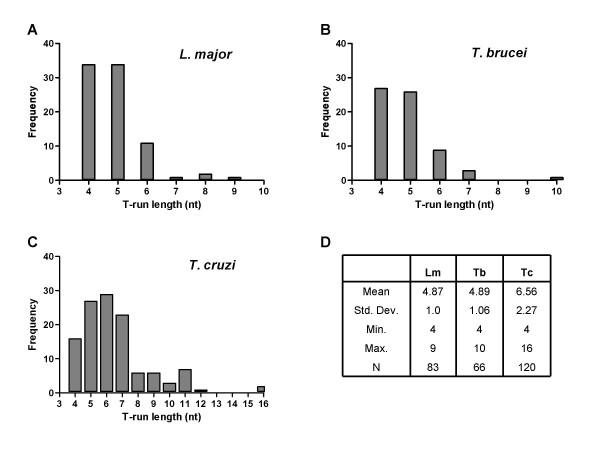
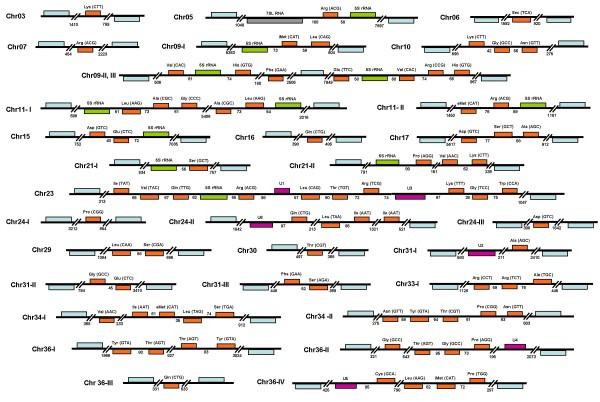
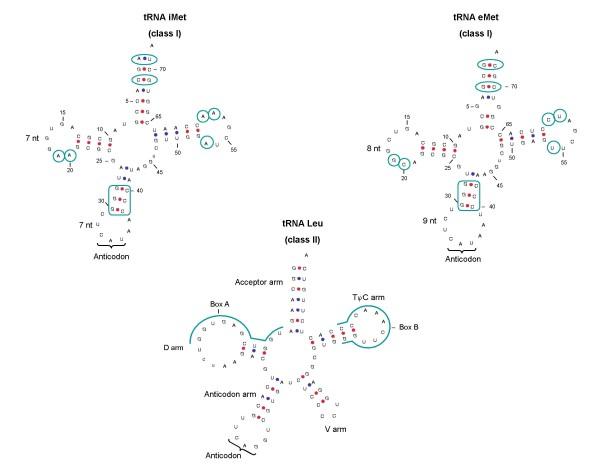
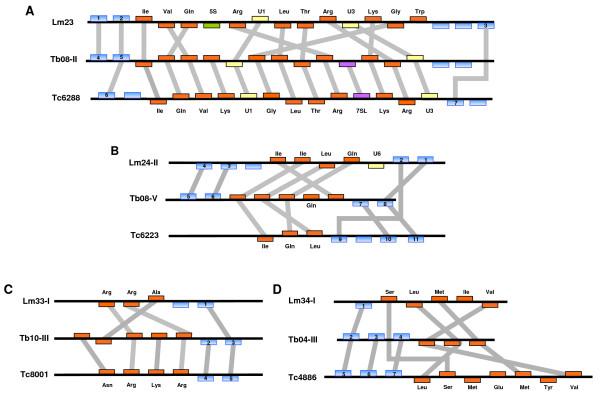
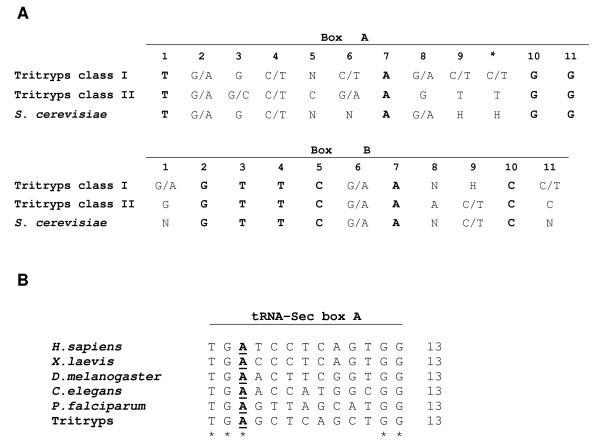
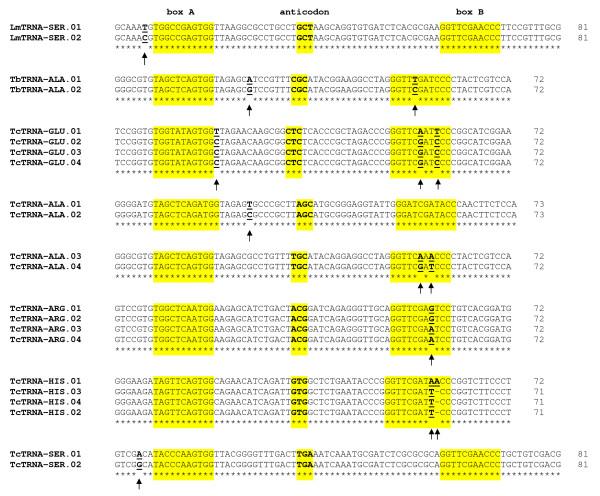
Our analysis indicated the presence of 83, 66 and 120 genes in L. major, T. brucei and T. cruzi, respectively. These numbers include several previously unannotated selenocysteine (Sec) tRNA genes. Most tRNA genes are organized into clusters of 2 to 10 genes that may contain other Pol III-transcribed genes. The distribution of genes in the L. major genome does not seem to be totally random, like in most organisms. While the majority of the tRNA clusters do not show synteny (conservation of gene order) between the Tritryps, a cluster of 13 Pol III genes that is highly syntenic was identified. We have determined consensus sequences for the putative promoter regions (Boxes A and B) of the Tritryps tRNA genes, and specific changes were found in tRNA-Sec genes. Analysis of transcription termination signals of the tRNAs (clusters of Ts) showed differences between T. cruzi and the other two species. We have also identified several tRNA isodecoder genes (having the same anticodon, but different sequences elsewhere in the tRNA body) in the Tritryps.
CONCLUSION
A low number of tRNA genes is present in Tritryps. The overall weak synteny that they show indicates a reduced importance of genome location of Pol III genes compared to protein-coding genes. The fact that some of the differences between isodecoder genes occur in the internal promoter elements suggests that differential control of the expression of some isoacceptor tRNA genes in Tritryps is possible. The special characteristics found in Boxes A and B from tRNA-Sec genes from Tritryps indicate that the mechanisms that regulate their transcription might be different from those of other tRNA genes.
背景
原生动物病原体硕大利什曼原虫、布氏锥虫和克氏锥虫(这三种锥虫)是会引发严重人类疾病的寄生虫。这些生物体展现出非常独特的基因表达机制,比如多顺反子转录。我们对由RNA聚合酶III(Pol III)转录的tRNA基因的研究感兴趣。为了分析tRNA基因以及其他由Pol III转录的基因的序列和基因组组织,我们对这三种锥虫的基因组序列进行了电子分析。
结果
我们的分析表明,硕大利什曼原虫、布氏锥虫和克氏锥虫分别存在83个、66个和120个基因。这些数字包括几个先前未注释的硒代半胱氨酸(Sec)tRNA基因。大多数tRNA基因被组织成2到10个基因的簇,这些簇可能包含其他由Pol III转录的基因。硕大利什曼原虫基因组中基因的分布似乎不像大多数生物体那样完全随机。虽然大多数tRNA簇在这三种锥虫之间不显示同线性(基因顺序的保守性),但鉴定出了一组13个高度同线性的Pol III基因。我们已经确定了这三种锥虫tRNA基因假定启动子区域(A盒和B盒)的共有序列,并且在tRNA-Sec基因中发现了特定变化。对tRNA转录终止信号(T簇)的分析表明,克氏锥虫与其他两个物种之间存在差异。我们还在这三种锥虫中鉴定出了几个tRNA同功受体基因(具有相同的反密码子,但tRNA主体其他位置的序列不同)。
结论
这三种锥虫中存在的tRNA基因数量较少。它们所显示的整体较弱的同线性表明,与蛋白质编码基因相比,Pol III基因的基因组定位重要性降低。同功受体基因之间的一些差异出现在内部启动子元件中,这一事实表明,这三种锥虫中某些同功受体tRNA基因的表达可能存在差异调控。从这三种锥虫的tRNA-Sec基因的A盒和B盒中发现的特殊特征表明,调节它们转录的机制可能与其他tRNA基因不同。

 Zotero 插件