
中东地区卵巢癌中的PIK3CA基因改变
PIK3CA alterations in Middle Eastern ovarian cancers.
作者信息
Abubaker Jehad, Bavi Prashant, Al-Haqawi Wael, Jehan Zeenath, Munkarah Adnan, Uddin Shahab, Al-Kuraya Khawla S
机构信息
Department of Human Cancer Genomic Research, Research Center, King Faisal Specialist Hospital and Research Center, Riyadh, Saudi Arabia.
出版信息
Mol Cancer. 2009 Jul 28;8:51. doi: 10.1186/1476-4598-8-51.
BACKGROUND
PI3K/AKTsignaling pathway plays an important role in cell growth, proliferation, and tumorgenesis of various malignancies. This signaling pathway has been shown to be frequently altered in several human cancers including ovarian cancers. However the role of this oncogenic signaling pathway has not been explored in the Middle Eastern epithelial ovarian cancer (EOC). Therefore, we investigated PI3K/AKT genetic alterations such as PIK3CA amplification, PIK3CA mutation, PTEN protein loss and their relationships with various clinicopathological characteristics in 156 EOCs.
RESULTS
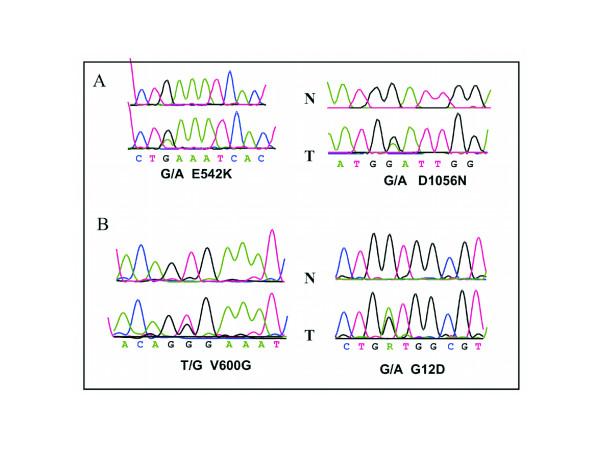
Fluorescence in situ hybridization (FISH) technique and DNA sequencing were used to analyze PIK3CA amplification and mutation respectively. Expression of PIK3CA protein expression (p110 alpha), PTEN, p-AKT and Ki-67 was analyzed by immunohistochemistry. PIK3CA amplification was seen in 54 of 152 (35.5%) EOC cases analyzed; PIK3CA gene mutations in 6/153 EOC (3.9%); KRAS mutations in 3/154 EOC (1.9%), BRAF mutations in 3/156 EOC (1.9%), p53 mutation in 50/154 EOC (32.5%), and loss of PTEN protein expression in 33/144 EOC (22.9%). p110 alpha overexpression was associated with increased phosphorylation of AKT-Ser 473 and with the proliferation marker Ki-67.
CONCLUSION
Our data showed mutual exclusivity between the molecular event of PIK3CA amplification and mutations in PIK3CA, KRAS, BRAF genes, which suggests that each of these alterations may individually be sufficient to drive ovarian tumor pathogenesis independently. High prevalence of genetic alterations in PI3K/AKT pathway in a Middle Eastern ovarian carcinoma provides genetic evidence supporting the notion that dysregulated PI3K/AKT pathways play an important role in the pathogenesis of ovarian cancers.
背景
PI3K/AKT信号通路在多种恶性肿瘤的细胞生长、增殖及肿瘤发生过程中发挥重要作用。该信号通路在包括卵巢癌在内的多种人类癌症中常发生改变。然而,这一致癌信号通路在中东地区上皮性卵巢癌(EOC)中的作用尚未得到研究。因此,我们调查了156例EOC中PI3K/AKT基因改变,如PIK3CA扩增、PIK3CA突变、PTEN蛋白缺失及其与各种临床病理特征的关系。
结果
分别采用荧光原位杂交(FISH)技术和DNA测序分析PIK3CA扩增和突变情况。通过免疫组化分析PIK3CA蛋白表达(p110α)、PTEN、p-AKT和Ki-67的表达。在152例分析的EOC病例中,54例(35.5%)出现PIK3CA扩增;153例EOC中有6例(3.9%)发生PIK3CA基因突变;154例EOC中有3例(1.9%)发生KRAS突变,156例EOC中有3例(1.9%)发生BRAF突变,154例EOC中有50例(32.5%)发生p53突变,144例EOC中有33例(22.9%)出现PTEN蛋白表达缺失。p110α过表达与AKT-Ser 473磷酸化增加及增殖标志物Ki-67相关。
结论
我们的数据显示PIK3CA扩增与PIK3CA、KRAS、BRAF基因突变的分子事件之间存在相互排斥性,这表明这些改变中的每一种可能单独足以独立驱动卵巢肿瘤发病机制。中东地区卵巢癌中PI3K/AKT通路基因改变的高发生率提供了遗传证据,支持PI3K/AKT通路失调在卵巢癌发病机制中起重要作用这一观点。


 Zotero 插件