
恶性疟原虫基因组中的基因拷贝数变异
Gene copy number variation throughout the Plasmodium falciparum genome.
作者信息
Cheeseman Ian H, Gomez-Escobar Natalia, Carret Celine K, Ivens Alasdair, Stewart Lindsay B, Tetteh Kevin K A, Conway David J
机构信息
Department of Infectious & Tropical Diseases, London School of Hygiene & Tropical Medicine, Keppel Street, London, WC1E 7HT, UK.
出版信息
BMC Genomics. 2009 Aug 4;10:353. doi: 10.1186/1471-2164-10-353.
BACKGROUND
Gene copy number variation (CNV) is responsible for several important phenotypes of the malaria parasite Plasmodium falciparum, including drug resistance, loss of infected erythrocyte cytoadherence and alteration of receptor usage for erythrocyte invasion. Despite the known effects of CNV, little is known about its extent throughout the genome.
RESULTS
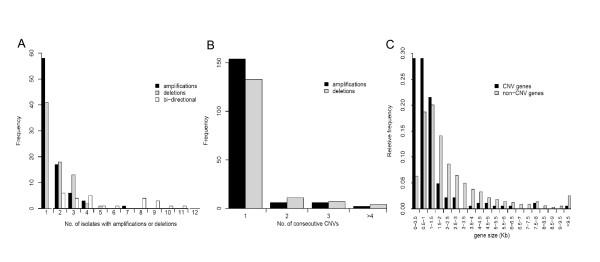
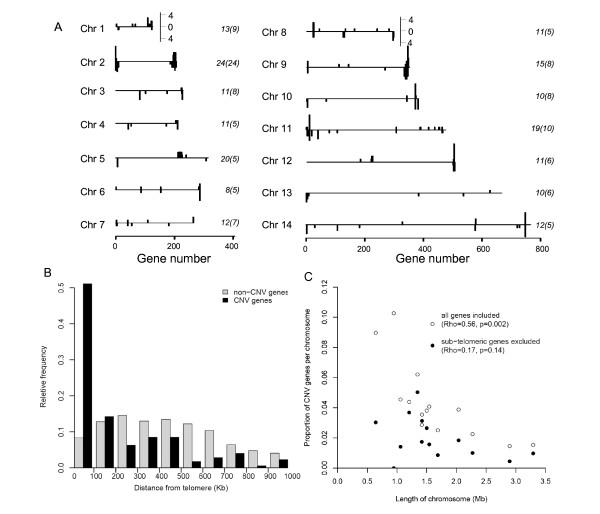
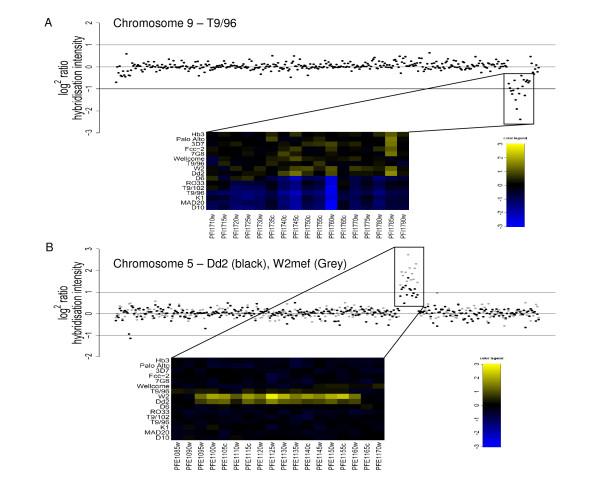
We performed a whole-genome survey of CNV genes in P. falciparum using comparative genome hybridisation of a diverse set of 16 laboratory culture-adapted isolates to a custom designed high density Affymetrix GeneChip array. Overall, 186 genes showed hybridisation signals consistent with deletion or amplification in one or more isolate. There is a strong association of CNV with gene length, genomic location, and low orthology to genes in other Plasmodium species. Sub-telomeric regions of all chromosomes are strongly associated with CNV genes independent from members of previously described multigene families. However, approximately 40% of CNV genes were located in more central regions of the chromosomes. Among the previously undescribed CNV genes, several that are of potential phenotypic relevance are identified.
CONCLUSION
CNV represents a major form of genetic variation within the P. falciparum genome; the distribution of gene features indicates the involvement of highly non-random mutational and selective processes. Additional studies should be directed at examining CNV in natural parasite populations to extend conclusions to clinical settings.
背景
基因拷贝数变异(CNV)与恶性疟原虫的几种重要表型有关,包括耐药性、感染红细胞细胞黏附丧失以及红细胞入侵受体使用的改变。尽管已知CNV的影响,但对其在整个基因组中的范围了解甚少。
结果
我们使用16种适应实验室培养的不同分离株与定制设计的高密度Affymetrix基因芯片阵列进行比较基因组杂交,对恶性疟原虫中的CNV基因进行了全基因组调查。总体而言,186个基因显示出与一个或多个分离株中的缺失或扩增一致的杂交信号。CNV与基因长度、基因组位置以及与其他疟原虫物种中基因的低同源性密切相关。所有染色体的亚端粒区域与CNV基因密切相关,独立于先前描述的多基因家族成员。然而,约40%的CNV基因位于染色体的更中心区域。在先前未描述的CNV基因中,鉴定出了几个具有潜在表型相关性的基因。
结论
CNV代表恶性疟原虫基因组内遗传变异的主要形式;基因特征的分布表明高度非随机的突变和选择过程的参与。应开展更多研究以检查自然寄生虫群体中的CNV,从而将结论扩展至临床环境。
 Zotero 插件