
TinkerCell:用于合成生物学的模块化 CAD 工具。
TinkerCell: modular CAD tool for synthetic biology.
机构信息
Department of Bioengineering, University of Washington, Foege Building, Seattle, WA 98195-5061, USA.
出版信息
J Biol Eng. 2009 Oct 29;3:19. doi: 10.1186/1754-1611-3-19.
BACKGROUND
Synthetic biology brings together concepts and techniques from engineering and biology. In this field, computer-aided design (CAD) is necessary in order to bridge the gap between computational modeling and biological data. Using a CAD application, it would be possible to construct models using available biological "parts" and directly generate the DNA sequence that represents the model, thus increasing the efficiency of design and construction of synthetic networks.
RESULTS
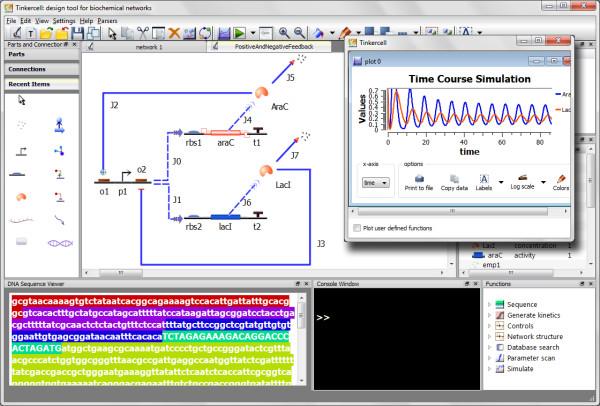
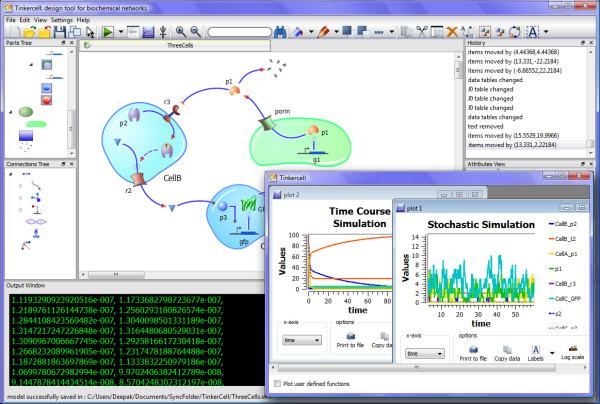
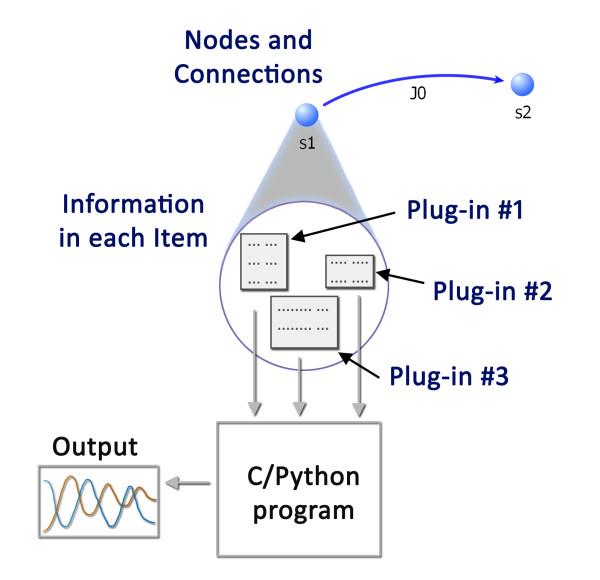
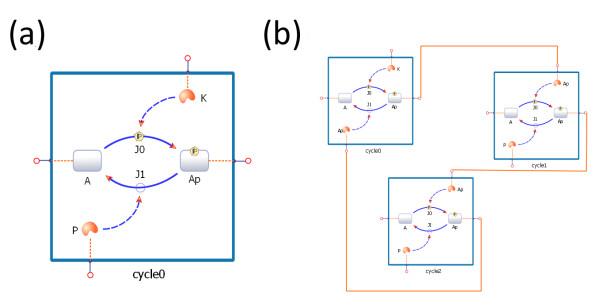
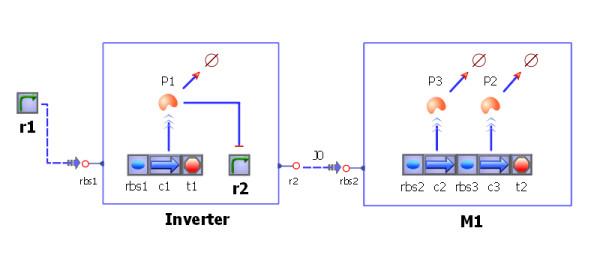
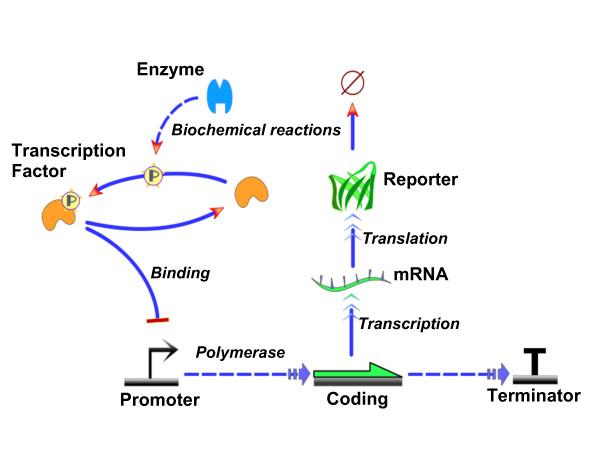
An application named TinkerCell has been developed in order to serve as a CAD tool for synthetic biology. TinkerCell is a visual modeling tool that supports a hierarchy of biological parts. Each part in this hierarchy consists of a set of attributes that define the part, such as sequence or rate constants. Models that are constructed using these parts can be analyzed using various third-party C and Python programs that are hosted by TinkerCell via an extensive C and Python application programming interface (API). TinkerCell supports the notion of a module, which are networks with interfaces. Such modules can be connected to each other, forming larger modular networks. TinkerCell is a free and open-source project under the Berkeley Software Distribution license. Downloads, documentation, and tutorials are available at http://www.tinkercell.com.
CONCLUSION
An ideal CAD application for engineering biological systems would provide features such as: building and simulating networks, analyzing robustness of networks, and searching databases for components that meet the design criteria. At the current state of synthetic biology, there are no established methods for measuring robustness or identifying components that fit a design. The same is true for databases of biological parts. TinkerCell's flexible modeling framework allows it to cope with changes in the field. Such changes may involve the way parts are characterized or the way synthetic networks are modeled and analyzed computationally. TinkerCell can readily accept third-party algorithms, allowing it to serve as a platform for testing different methods relevant to synthetic biology.
背景
合成生物学融合了工程学和生物学的概念和技术。在这个领域,计算机辅助设计(CAD)是连接计算模型和生物数据的必要手段。通过使用 CAD 应用程序,可以使用现有的生物“部件”构建模型,并直接生成代表模型的 DNA 序列,从而提高合成网络设计和构建的效率。
结果
为了充当合成生物学的 CAD 工具,开发了一个名为 TinkerCell 的应用程序。TinkerCell 是一个可视化建模工具,支持生物部件的层次结构。该层次结构中的每个部件都由一组定义部件的属性组成,例如序列或速率常数。使用这些部件构建的模型可以使用各种第三方 C 和 Python 程序进行分析,这些程序通过 TinkerCell 广泛的 C 和 Python 应用程序编程接口(API)进行托管。TinkerCell 支持模块的概念,即具有接口的网络。这些模块可以相互连接,形成更大的模块化网络。TinkerCell 是一个遵循伯克利软件发行版许可的免费开源项目。下载、文档和教程可在 http://www.tinkercell.com 上获得。
结论
用于工程生物学系统的理想 CAD 应用程序将提供以下功能:构建和模拟网络、分析网络的鲁棒性以及在数据库中搜索符合设计标准的组件。在合成生物学的当前状态下,没有用于测量鲁棒性或识别符合设计的组件的既定方法。生物部件数据库也是如此。TinkerCell 灵活的建模框架使其能够应对该领域的变化。这些变化可能涉及部件的特征描述方式或合成网络的计算建模和分析方式。TinkerCell 可以轻松接受第三方算法,使其成为测试与合成生物学相关的不同方法的平台。


 Zotero 插件