
表达同源的酪氨酸羟化酶编码基因 th1 和 th2 揭示了斑马鱼幼虫和幼体大脑中多巴胺能和去甲肾上腺素能神经元的全部组成。
Expression of the paralogous tyrosine hydroxylase encoding genes th1 and th2 reveals the full complement of dopaminergic and noradrenergic neurons in zebrafish larval and juvenile brain.
机构信息
Department of Developmental Biology, Institute of Biology I, University of Freiburg, D-79104 Freiburg, Germany.
出版信息
J Comp Neurol. 2010 Feb 15;518(4):423-38. doi: 10.1002/cne.22213.
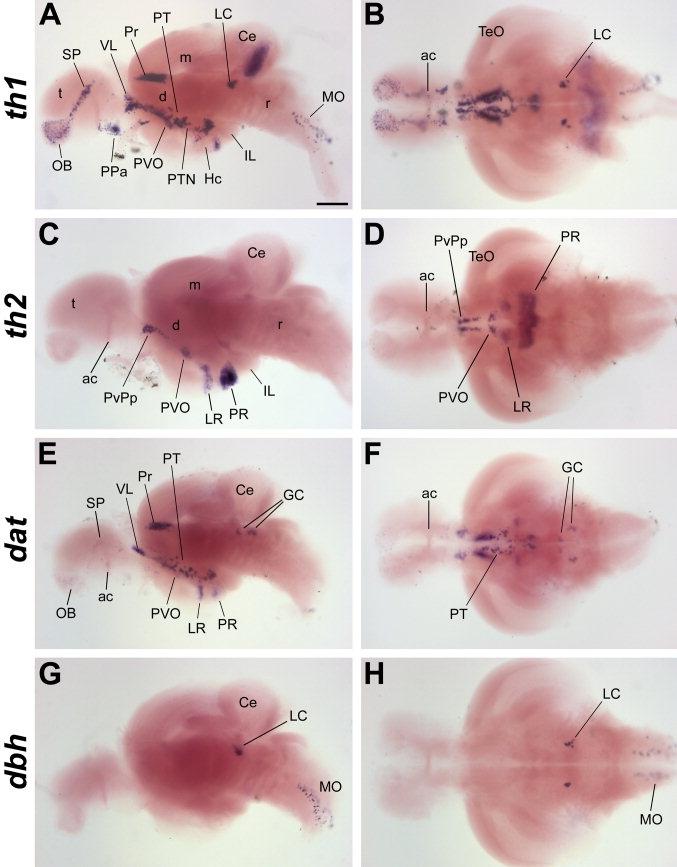
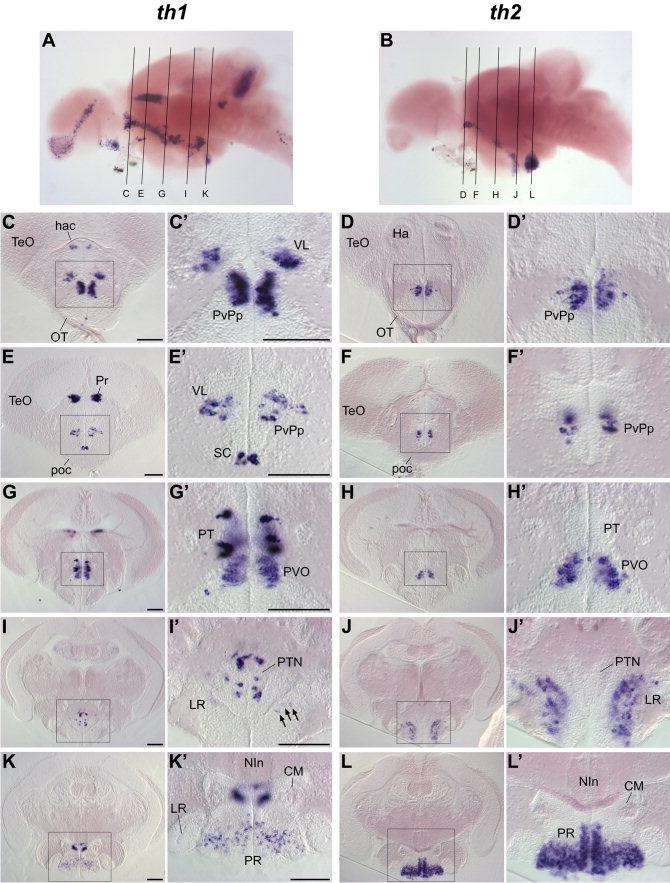
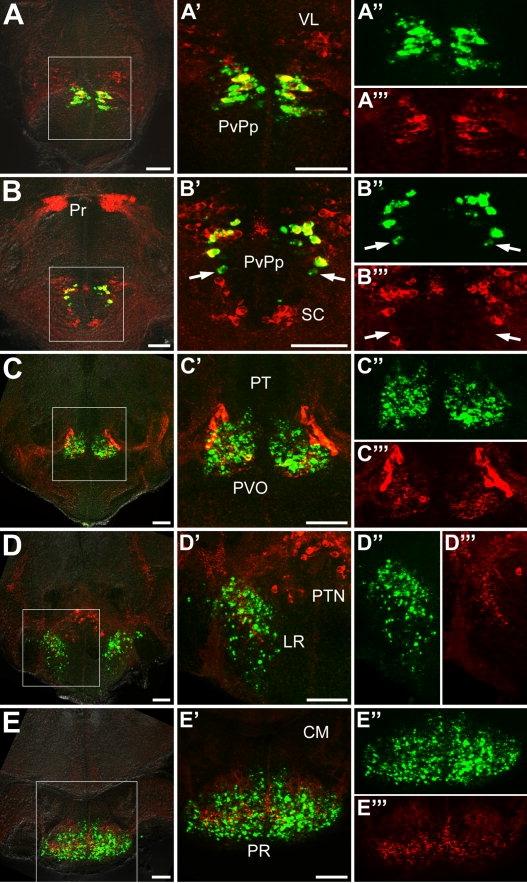
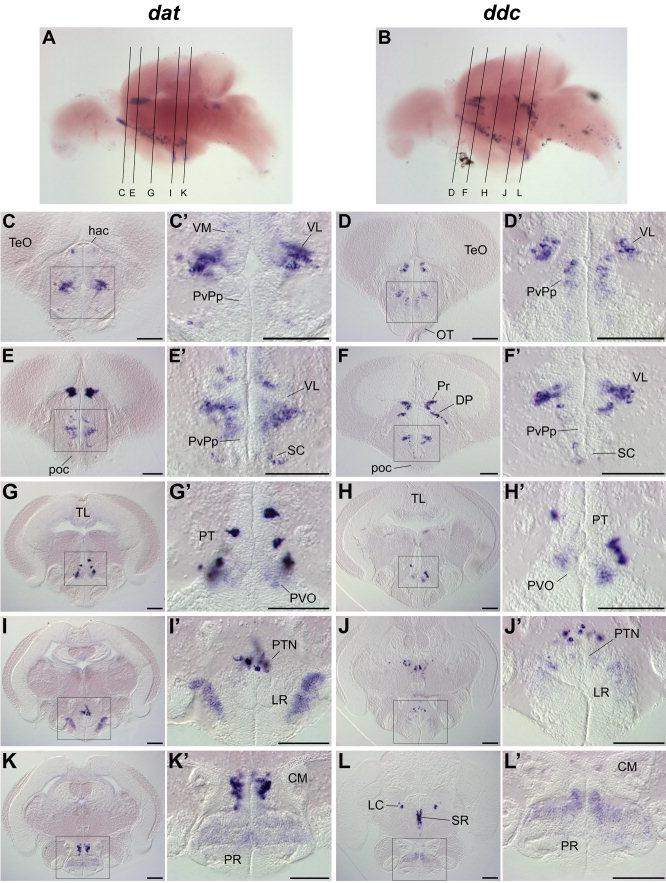
The development of dopaminergic and noradrenergic neurons has received much attention based on their modulatory effect on many behavioral circuits and their involvement in neurodegenerative diseases. The zebrafish (Danio rerio) has emerged as a new model organism with which to study development and function of catecholaminergic systems. Tyrosine hydroxylase is the entry enzyme into catecholamine biosynthesis and is frequently used as a marker for catecholaminergic neurons. A genome duplication at the base of teleost evolution resulted in two paralogous zebrafish tyrosine hydroxylase-encoding genes, th1 and th2, the expression of which has been described previously only for th1. Here we investigate the expression of th2 in the brain of embryonic and juvenile zebrafish. We optimized whole-mount in situ hybridization protocols to detect gene expression in the anatomical three-dimensional context of whole juvenile brains. To confirm whether th2-expressing cells may indeed use dopamine as a neurotransmitter, we also included expression of dopamine beta hydroxylase, dopa decarboxylase, and dopamine transporter in our analysis. Our data provide the first complete account of catecholaminergic neurons in the zebrafish embryonic and juvenile brain. We identified four major th2-expressing neuronal groups that likely use dopamine as transmitter in the zebrafish diencephalon, including neurons of the posterior preoptic nucleus, the paraventricular organ, and the nuclei of the lateral and posterior recesses in the caudal hypothalamus. th2 expression in the latter two groups resolves a previously reported discrepancy, in which strong dopamine but little tyrosine hydroxylase immunoreactivity had been detected in the caudal hypothalamus. Our data also confirm that there are no mesencephalic DA neurons in zebrafish.
多巴胺能和去甲肾上腺素能神经元的发育受到了广泛关注,因为它们对许多行为回路具有调节作用,并且与神经退行性疾病有关。斑马鱼(Danio rerio)作为一种新的模式生物,已经被用于研究儿茶酚胺能系统的发育和功能。酪氨酸羟化酶是儿茶酚胺生物合成的起始酶,常被用作儿茶酚胺能神经元的标志物。在硬骨鱼进化的基础上发生了一次基因组加倍,产生了两种斑马鱼酪氨酸羟化酶编码基因的同源基因 th1 和 th2,之前仅对 th1 的表达进行了描述。在这里,我们研究了 th2 在胚胎和幼年斑马鱼大脑中的表达。我们优化了全胚胎原位杂交方案,以在整个幼年大脑的解剖三维结构中检测基因表达。为了确认 th2 表达的细胞是否确实可以使用多巴胺作为神经递质,我们还在分析中包括了多巴胺β羟化酶、多巴脱羧酶和多巴胺转运体的表达。我们的数据提供了斑马鱼胚胎和幼年大脑中儿茶酚胺能神经元的首个完整描述。我们确定了四个主要的 th2 表达神经元群,它们可能在斑马鱼间脑使用多巴胺作为递质,包括后前视核、室旁核以及下丘脑尾侧外侧和后侧隐窝核中的神经元。后两个核团中的 th2 表达解决了之前报道的差异,其中在下丘脑尾侧检测到强烈的多巴胺,但酪氨酸羟化酶免疫反应性很少。我们的数据还证实了斑马鱼中没有中脑 DA 神经元。


 Zotero 插件