
体内慢性淋巴细胞白血病抵抗氟达拉滨的相关基因和 microRNAs 的鉴定。
Determination of genes and microRNAs involved in the resistance to fludarabine in vivo in chronic lymphocytic leukemia.
机构信息
Laboratory of Experimental Hemato-Oncology, CRP-Santé, Luxembourg, Luxembourg.
出版信息
Mol Cancer. 2010 May 20;9:115. doi: 10.1186/1476-4598-9-115.
BACKGROUND
Chronic lymphocytic leukemia (CLL) cells are often affected by genomic aberrations targeting key regulatory genes. Although fludarabine is the standard first line therapy to treat CLL, only few data are available about the resistance of B cells to this purine nucleoside analog in vivo. Here we sought to increase our understanding of fludarabine action and describe the mechanisms leading to resistance in vivo. We performed an analysis of genomic aberrations, gene expression profiles, and microRNAs expression in CLL blood B lymphocytes isolated during the course of patients' treatment with fludarabine.
RESULTS
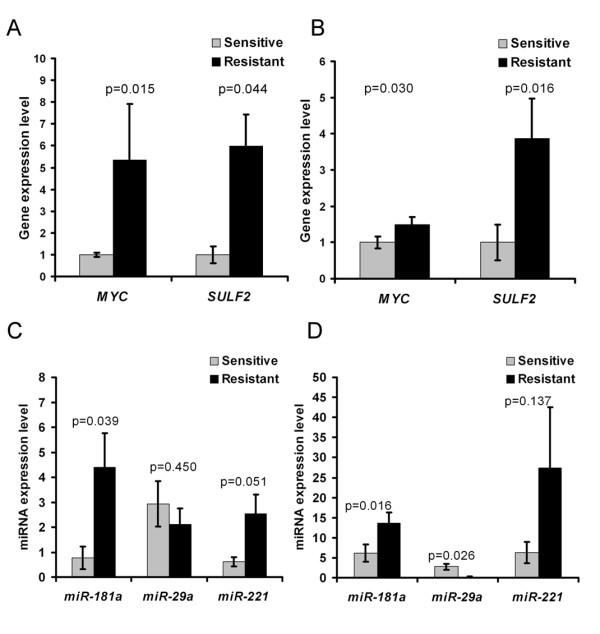
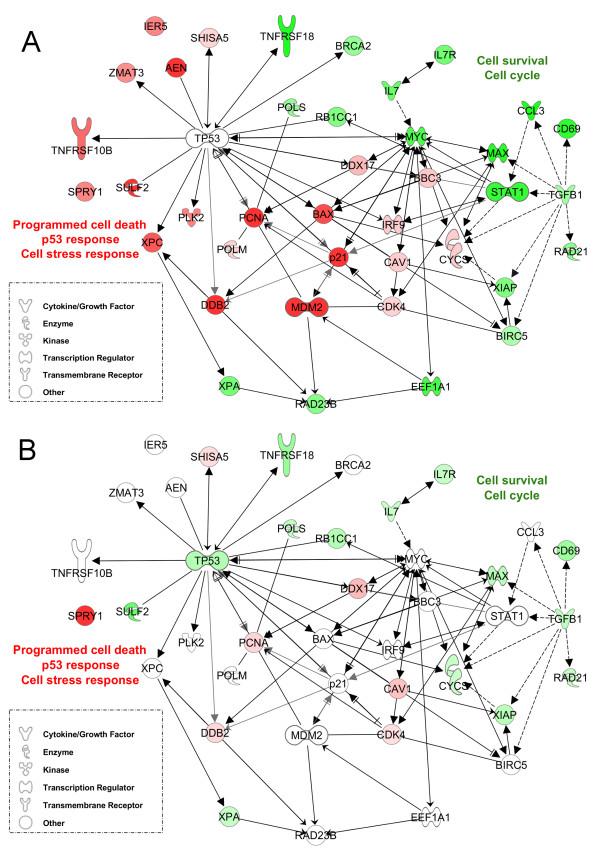
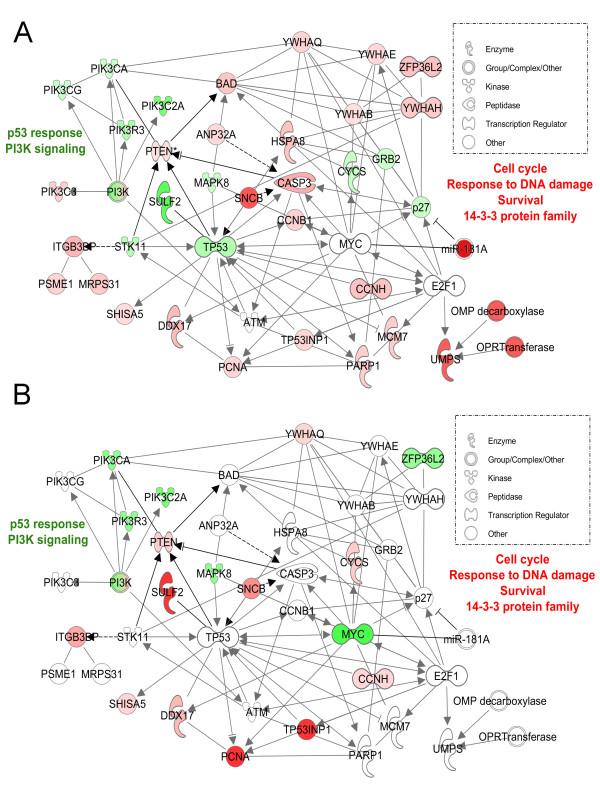
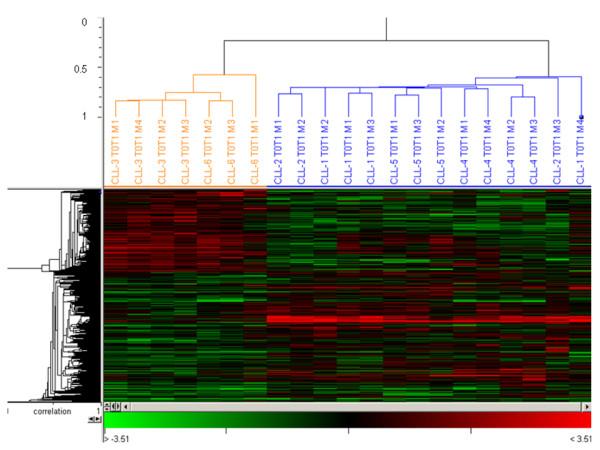
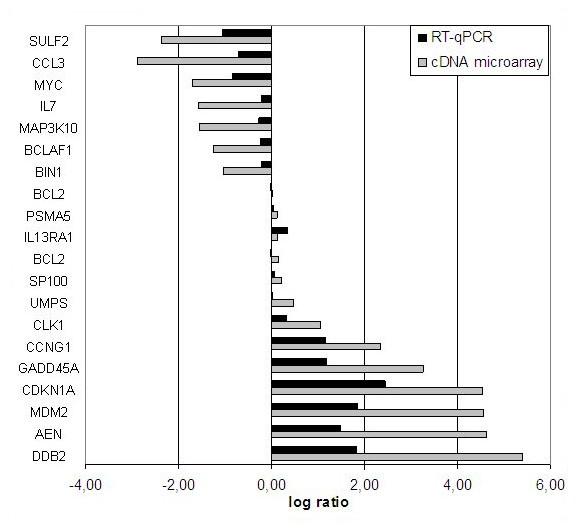
In sensitive patients, the differentially expressed genes we identified were mainly involved in p53 signaling, DNA damage response, cell cycle and cell death. In resistant patients, uncommon genomic abnormalities were observed and the resistance toward fludarabine could be characterized based on the expression profiles of genes implicated in lymphocyte proliferation, DNA repair, and cell growth and survival. Of particular interest in some patients was the amplification of MYC (8q) observed both at the gene and transcript levels, together with alterations of myc-transcriptional targets, including genes and miRNAs involved in the regulation of cell cycle and proliferation. Differential expression of the sulfatase SULF2 and of miR-29a, -181a, and -221 was also observed between resistant and sensitive patients before treatment. These observations were further confirmed on a validation cohort of CLL patients treated with fludarabine in vitro.
CONCLUSION
In the present study we identified genes and miRNAs that may predict clinical resistance of CLL to fludarabine, and describe an interesting oncogenic mechanism in CLL patients resistant to fludarabine by which the complete MYC-specific regulatory network was altered (DNA and RNA levels, and transcriptional targets). These results should prove useful for understanding and overcoming refractoriness to fludarabine and also for predicting the clinical outcome of CLL patients before or early during their treatment.
背景
慢性淋巴细胞白血病(CLL)细胞常受到靶向关键调控基因的基因组异常的影响。虽然氟达拉滨是治疗 CLL 的标准一线治疗药物,但关于体内 B 细胞对这种嘌呤核苷类似物的耐药性的数据很少。在这里,我们试图增加对氟达拉滨作用的理解,并描述体内耐药的机制。我们对接受氟达拉滨治疗过程中分离的 CLL 血液 B 淋巴细胞进行了基因组异常、基因表达谱和 microRNA 表达分析。
结果
在敏感患者中,我们鉴定的差异表达基因主要涉及 p53 信号转导、DNA 损伤反应、细胞周期和细胞死亡。在耐药患者中观察到罕见的基因组异常,并且可以根据涉及淋巴细胞增殖、DNA 修复以及细胞生长和存活的基因表达谱来表征对氟达拉滨的耐药性。在一些患者中,8q 上 MYC(8q)的扩增,以及 myc-转录靶基因的改变,包括参与细胞周期和增殖调控的基因和 microRNA,引起了特别关注。在治疗前,耐药和敏感患者之间还观察到了磺基转移酶 SULF2 和 miR-29a、-181a 和 -221 的差异表达。这些观察结果在体外接受氟达拉滨治疗的 CLL 患者的验证队列中得到了进一步证实。
结论
在本研究中,我们鉴定了可能预测 CLL 对氟达拉滨临床耐药的基因和 microRNA,并描述了一种有趣的 CLL 患者耐药机制,其中完整的 MYC 特异性调控网络发生改变(DNA 和 RNA 水平以及转录靶标)。这些结果对于理解和克服对氟达拉滨的耐药性以及在 CLL 患者治疗前或早期预测其临床结局将非常有用。
 Zotero 插件