
SmgGDS 的剪接变体控制小 GTP 酶的类异戊二烯基化和膜定位。
Splice variants of SmgGDS control small GTPase prenylation and membrane localization.
机构信息
Department of Pharmacology and Toxicology, Medical College of Wisconsin, Milwaukee, Wisconsin 53226, USA.
出版信息
J Biol Chem. 2010 Nov 12;285(46):35255-66. doi: 10.1074/jbc.M110.129916. Epub 2010 Aug 13.
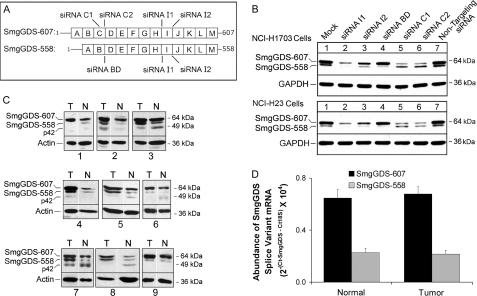
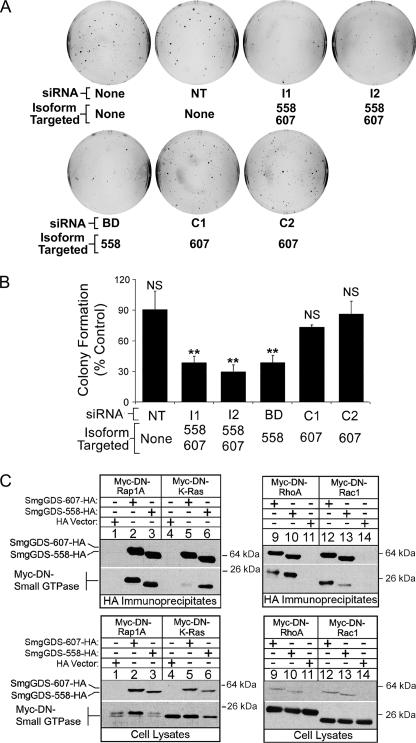
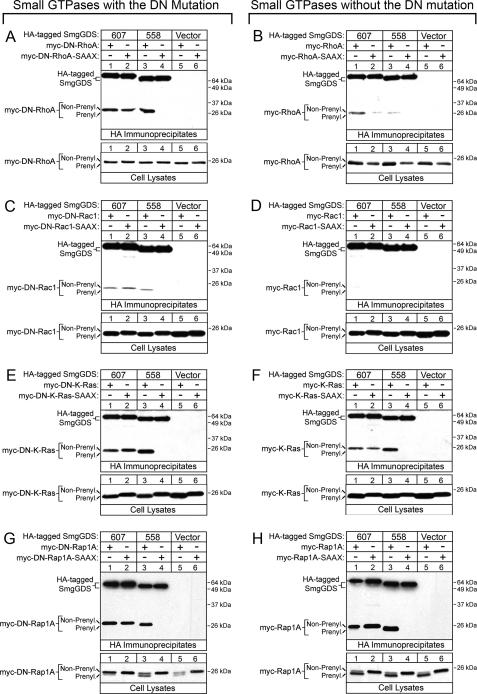
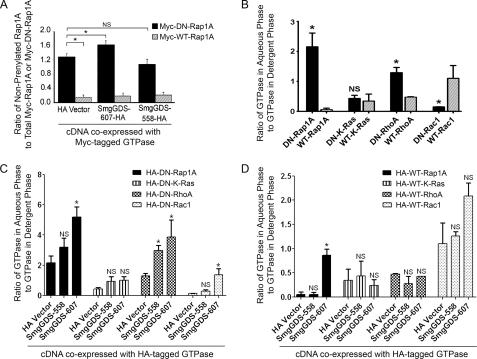
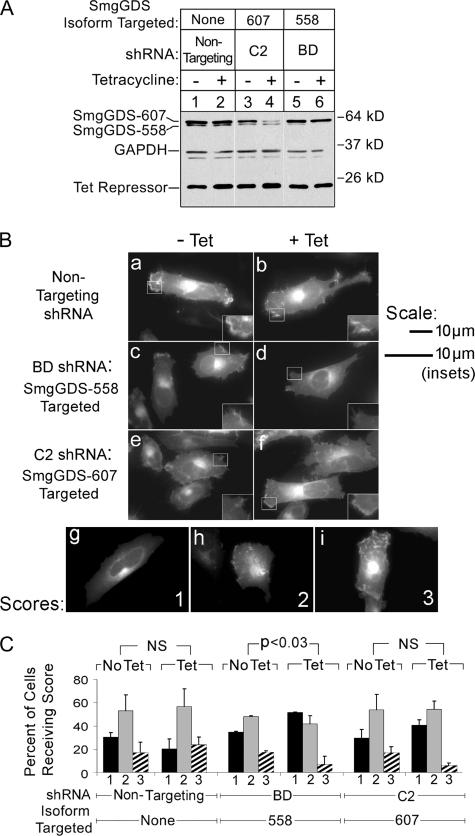
Ras and Rho small GTPases possessing a C-terminal polybasic region (PBR) are vital signaling proteins whose misregulation can lead to cancer. Signaling by these proteins depends on their ability to bind guanine nucleotides and their prenylation with a geranylgeranyl or farnesyl isoprenoid moiety and subsequent trafficking to cellular membranes. There is little previous evidence that cellular signals can restrain nonprenylated GTPases from entering the prenylation pathway, leading to the general belief that PBR-possessing GTPases are prenylated as soon as they are synthesized. Here, we present evidence that challenges this belief. We demonstrate that insertion of the dominant negative mutation to inhibit GDP/GTP exchange diminishes prenylation of Rap1A and RhoA, enhances prenylation of Rac1, and does not detectably alter prenylation of K-Ras. Our results indicate that the entrance and passage of these small GTPases through the prenylation pathway is regulated by two splice variants of SmgGDS, a protein that has been reported to promote GDP/GTP exchange by PBR-possessing GTPases and to be up-regulated in several forms of cancer. We show that the previously characterized 558-residue SmgGDS splice variant (SmgGDS-558) selectively associates with prenylated small GTPases and facilitates trafficking of Rap1A to the plasma membrane, whereas the less well characterized 607-residue SmgGDS splice variant (SmgGDS-607) associates with nonprenylated GTPases and regulates the entry of Rap1A, RhoA, and Rac1 into the prenylation pathway. These results indicate that guanine nucleotide exchange and interactions with SmgGDS splice variants can regulate the entrance and passage of PBR-possessing small GTPases through the prenylation pathway.
Ras 和 Rho 小 GTPases 拥有 C 末端多碱性区域 (PBR),是至关重要的信号蛋白,其调节异常可导致癌症。这些蛋白质的信号依赖于它们结合鸟嘌呤核苷酸的能力以及它们与香叶基香叶基或法尼基异戊二烯部分的 prenylation,随后运输到细胞膜。以前几乎没有证据表明细胞信号可以阻止非 prenylated GTPases 进入 prenylation 途径,导致普遍认为 PBR 拥有的 GTPases 一旦合成就被 prenylated。在这里,我们提供了挑战这一信念的证据。我们证明,插入显性负突变以抑制 GDP/GTP 交换会减少 Rap1A 和 RhoA 的 prenylation,增强 Rac1 的 prenylation,并且不会明显改变 K-Ras 的 prenylation。我们的结果表明,这些小 GTPases 通过 prenylation 途径的进入和通过受到 SmgGDS 的两种剪接变体的调节,SmgGDS 是一种已被报道通过 PBR 拥有的 GTPases 促进 GDP/GTP 交换并在几种形式的癌症中上调的蛋白质。我们表明,以前表征的 558 个残基 SmgGDS 剪接变体 (SmgGDS-558) 选择性地与 prenylated small GTPases 结合,并促进 Rap1A 向质膜的运输,而不太好表征的 607 个残基 SmgGDS 剪接变体 (SmgGDS-607) 与 nonprenylated GTPases 结合并调节 Rap1A、RhoA 和 Rac1 进入 prenylation 途径。这些结果表明,鸟嘌呤核苷酸交换和与 SmgGDS 剪接变体的相互作用可以调节 PBR 拥有的 small GTPases 通过 prenylation 途径的进入和通过。

 Zotero 插件