
一条依赖CD36的信号通路会加剧巨噬细胞和脂肪组织的炎症反应,并损害胰岛素信号传导。
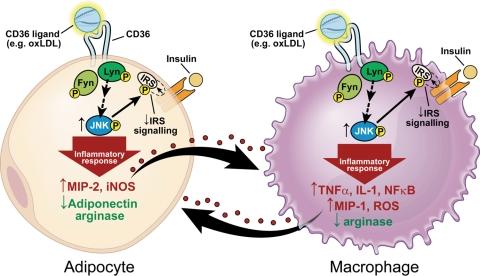
A CD36-dependent pathway enhances macrophage and adipose tissue inflammation and impairs insulin signalling.
作者信息
Kennedy David J, Kuchibhotla Sai, Westfall Kristen M, Silverstein Roy L, Morton Richard E, Febbraio Maria
机构信息
Department of Cell Biology, Lerner Research Institute, Cleveland Clinic, Cleveland, OH 44195, USA.
出版信息
Cardiovasc Res. 2011 Feb 15;89(3):604-13. doi: 10.1093/cvr/cvq360. Epub 2010 Nov 18.
AIMS
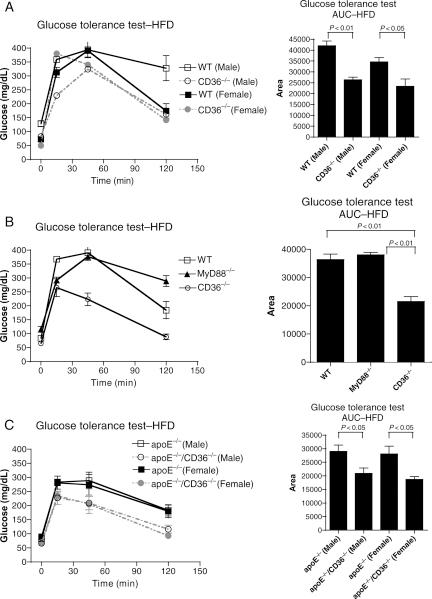
Obesity and hyperlipidaemia are associated with insulin resistance (IR); however, the mechanisms responsible remain incompletely understood. Pro-atherogenic hyperlipidaemic states are characterized by inflammation, oxidant stress, and pathophysiologic oxidized lipids, including ligands for the scavenger receptor CD36. Here we tested the hypothesis that the absence of CD36 protects mice from IR associated with diet-induced obesity and hyperlipidaemia.
METHODS AND RESULTS
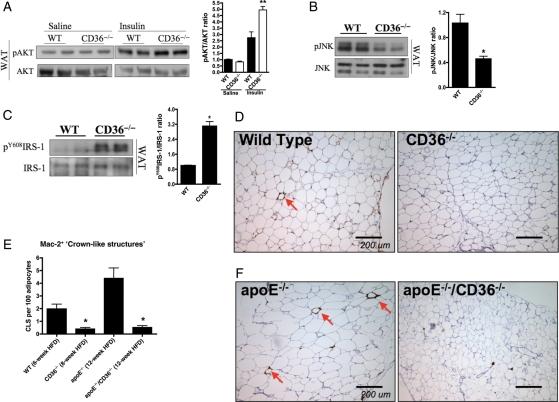
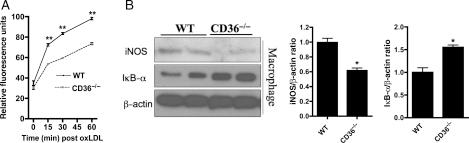
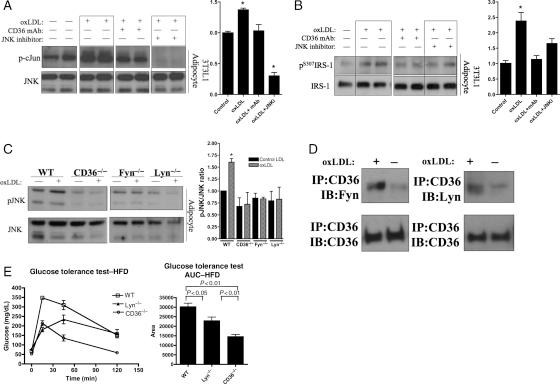
Adipose tissue from CD36(-/-) mice demonstrated a less inflammatory phenotype and improved insulin signalling in vivo and at the level of the adipocyte and macrophage. The pathophysiologic ligand oxidized low-density lipoprotein (oxLDL) activated c-Jun N-terminal kinase (JNK) and disrupted insulin signalling in both adipocytes and macrophages in a CD36-dependent manner. Macrophages isolated from CD36(-/-) mice after high-fat diet feeding elicited less JNK activation and inhibition of insulin signalling in adipocytes after co-culture compared with wild-type macrophages.
CONCLUSION
These data suggest that a CD36-dependent inflammatory paracrine loop between adipocytes and macrophages facilitates chronic inflammation and contributes to IR common in obesity and dyslipidaemia.
目的
肥胖和高脂血症与胰岛素抵抗(IR)相关;然而,其潜在机制仍未完全明确。促动脉粥样硬化性高脂血症状态的特征为炎症、氧化应激以及病理生理性氧化脂质,包括清道夫受体CD36的配体。在此,我们验证了如下假说:缺乏CD36可使小鼠免受饮食诱导的肥胖和高脂血症相关的胰岛素抵抗影响。
方法与结果
CD36基因敲除(-/-)小鼠的脂肪组织在体内以及脂肪细胞和巨噬细胞水平均表现出炎症表型减轻且胰岛素信号转导改善。病理生理性配体氧化型低密度脂蛋白(oxLDL)以CD36依赖的方式激活c-Jun氨基末端激酶(JNK)并破坏脂肪细胞和巨噬细胞中的胰岛素信号转导。与野生型巨噬细胞相比,高脂饮食喂养后的CD36(-/-)小鼠分离出的巨噬细胞在共培养后引起的JNK激活较少,对脂肪细胞中胰岛素信号转导的抑制也较少。
结论
这些数据表明,脂肪细胞和巨噬细胞之间依赖CD36的炎症旁分泌环促进了慢性炎症,并导致肥胖和血脂异常中常见的胰岛素抵抗。

 Zotero 插件