
先天性心脏病节律紊乱的实用逐步处理方法
Practical stepwise approach to rhythm disturbances in congenital heart diseases.
作者信息
Huh June
机构信息
Department of Pediatrics, Cardiac and Vascular Center, Samsung Medical Center, Sungkyunkwan University School of Medicine, Seoul, Korea.
出版信息
Korean J Pediatr. 2010 Jun;53(6):680-7. doi: 10.3345/kjp.2010.53.6.680. Epub 2010 Jun 23.
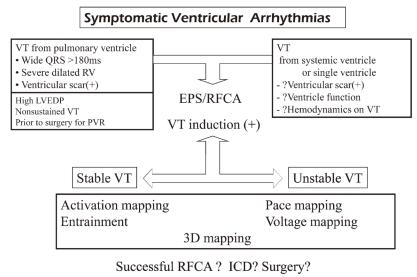
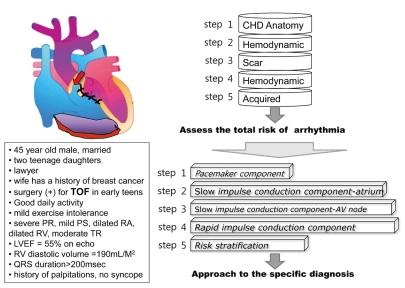
Patients with congenital heart diseases (CHD) are confronted with early- and late-onset complications, such as conduction disorders, arrhythmias, myocardial dysfunction, altered coronary flow, and ischemia, throughout their lifetime despite successful hemodynamic and/or anatomical correction. Rhythm disturbance is a well-known and increasingly frequent cause of morbidity and mortality in patients with CHD. Predisposing factors to rhythm disturbances include underlying cardiac defects, hemodynamic changes as part of the natural history, surgical repair and related scarring, and residual hemodynamic abnormalities. Acquired factors such as aging, hypertension, diabetes, obesity, and others may also contribute to arrhythmogenesis in CHD. The first step in evaluating arrhythmias in CHD is to understand the complex anatomy and to find predisposing factors and hemodynamic abnormalities. A practical stepwise approach can lead to diagnosis and prompt appropriate interventions. Electrophysiological assessment and management should be done with integrated care of the underlying heart defects and hemodynamic abnormalities. Catheter ablation and arrhythmia surgery have been increasingly applied, showing increasing success rates with technological advancement despite complicated arrhythmia circuits in complex anatomy and the difficulty of access. Correction of residual hemodynamic abnormalities may be critical in the treatment of arrhythmia in patients with CHD.
先天性心脏病(CHD)患者即使在血流动力学和/或解剖结构成功矫正后,一生中仍面临早发和迟发并发症,如传导障碍、心律失常、心肌功能障碍、冠状动脉血流改变和缺血。心律失常是CHD患者发病率和死亡率的一个众所周知且日益常见的原因。心律失常的诱发因素包括潜在的心脏缺陷、作为自然病程一部分的血流动力学变化、手术修复及相关瘢痕形成,以及残留的血流动力学异常。诸如衰老、高血压、糖尿病、肥胖等后天因素也可能促使CHD患者发生心律失常。评估CHD患者心律失常的第一步是了解复杂的解剖结构,并找出诱发因素和血流动力学异常。一种实用的逐步方法可导致诊断并迅速进行适当干预。电生理评估和管理应结合对潜在心脏缺陷和血流动力学异常的综合治疗来进行。导管消融和心律失常手术的应用越来越多,尽管复杂解剖结构中的心律失常路径复杂且难以接近,但随着技术进步成功率不断提高。纠正残留的血流动力学异常可能是治疗CHD患者心律失常的关键。

 Zotero 插件