
巨噬细胞和桔小实蝇感染模型反映了天然存在的类鼻疽伯克霍尔德菌、泰国伯克霍尔德菌和俄克拉荷马伯克霍尔德菌分离株的毒力。
Macrophage and Galleria mellonella infection models reflect the virulence of naturally occurring isolates of B. pseudomallei, B. thailandensis and B. oklahomensis.
机构信息
Biosciences, College of Life and Environmental Sciences, Geoffrey Pope Building, University of Exeter, Stocker Road, Exeter, Devon, EX4 4QD, UK.
出版信息
BMC Microbiol. 2011 Jan 17;11(1):11. doi: 10.1186/1471-2180-11-11.
BACKGROUND
Burkholderia pseudomallei is the causative agent of melioidosis, a tropical disease of humans with a variable and often fatal outcome. In murine models of infection, different strains exhibit varying degrees of virulence. In contrast, two related species, B. thailandensis and B. oklahomensis, are highly attenuated in mice. Our aim was to determine whether virulence in mice is reflected in macrophage or wax moth larvae (Galleria mellonella) infection models.
RESULTS
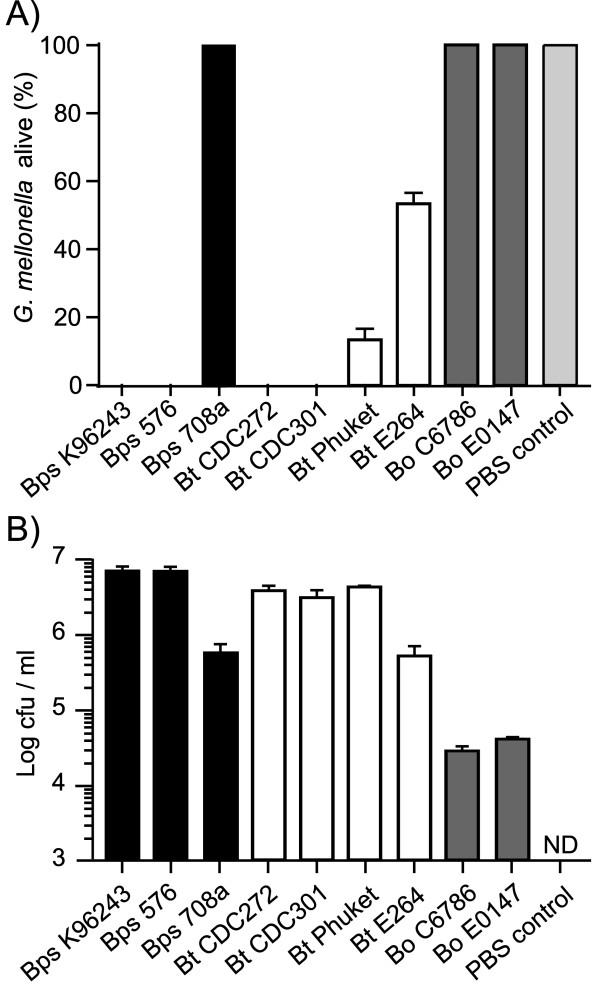
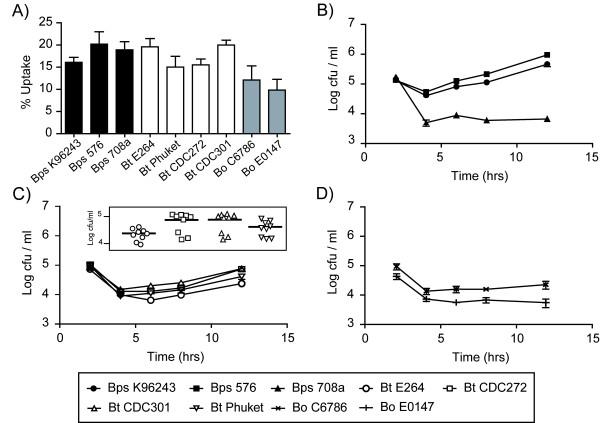
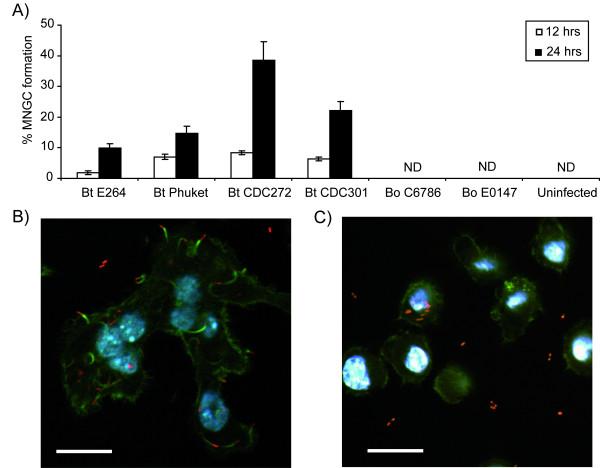
B. pseudomallei strains 576 and K96243, which have low median lethal dose (MLD) values in mice, were able to replicate and induce cellular damage in macrophages and caused rapid death of G. mellonella. In contrast, B. pseudomallei strain 708a, which is attenuated in mice, showed reduced replication in macrophages, negligible cellular damage and was avirulent in G. mellonella larvae. B. thailandensis isolates were less virulent than B. pseudomallei in all of the models tested. However, we did record strain dependent differences. B. oklahomensis isolates were the least virulent isolates. They showed minimal ability to replicate in macrophages, were unable to evoke actin-based motility or to form multinucleated giant cells and were markedly attenuated in G. mellonella compared to B. thailandensis.
CONCLUSIONS
We have shown that the alternative infection models tested here, namely macrophages and Galleria mellonella, are able to distinguish between strains of B. pseudomallei, B. thailandensis and B. oklahomensis and that these differences reflect the observed virulence in murine infection models. Our results indicate that B. oklahomensis is the least pathogenic of the species investigated. They also show a correlation between isolates of B. thailandensis associated with human infection and virulence in macrophage and Galleria infection models.
背景
类鼻疽伯克霍尔德菌是类鼻疽病的病原体,这是一种人类热带病,具有多变且常致命的结果。在感染的小鼠模型中,不同菌株表现出不同程度的毒力。相比之下,两种相关的物种,即 B. thailandensis 和 B. oklahomensis,在小鼠中高度减毒。我们的目的是确定在小鼠中的毒力是否反映在巨噬细胞或黄蜡螟幼虫(Galleria mellonella)感染模型中。
结果
B. pseudomallei 菌株 576 和 K96243 在小鼠中的中位致死剂量(MLD)值较低,能够在巨噬细胞中复制并诱导细胞损伤,并导致 G. mellonella 迅速死亡。相比之下,在小鼠中减毒的 B. pseudomallei 菌株 708a 在巨噬细胞中的复制能力降低,几乎没有细胞损伤,并且在 G. mellonella 幼虫中无毒性。B. thailandensis 分离株在所有测试的模型中都比 B. pseudomallei 毒性低。然而,我们确实记录了菌株依赖性差异。B. oklahomensis 分离株是最不毒力的分离株。它们在巨噬细胞中的复制能力最小,无法引起肌动蛋白依赖性运动或形成多核巨细胞,并且与 B. thailandensis 相比,在 G. mellonella 中明显减毒。
结论
我们已经表明,这里测试的替代感染模型,即巨噬细胞和黄蜡螟幼虫,能够区分 B. pseudomallei、B. thailandensis 和 B. oklahomensis 菌株,并且这些差异反映了在小鼠感染模型中观察到的毒力。我们的结果表明,B. oklahomensis 是研究的物种中致病性最低的。它们还显示了与人类感染相关的 B. thailandensis 分离株与巨噬细胞和 Galleria 感染模型中的毒力之间的相关性。

 Zotero 插件