
日本脑炎病毒感染中宿主反应的转录组特征。
Transcriptomic profile of host response in Japanese encephalitis virus infection.
机构信息
Division of Virology, Defence Research and Development Establishment, Jhansi Road, Gwalior-474002, India.
出版信息
Virol J. 2011 Mar 4;8:92. doi: 10.1186/1743-422X-8-92.
BACKGROUND
Japanese encephalitis (JE) is one of the leading causes of acute encephalopathy with the highest mortality rate of 30-50%. The purpose of this study was to understand complex biological processes of host response during the progression of the disease. Virus was subcutaneously administered in mice and brain was used for whole genome expression profiling by cDNA microarray.
RESULTS
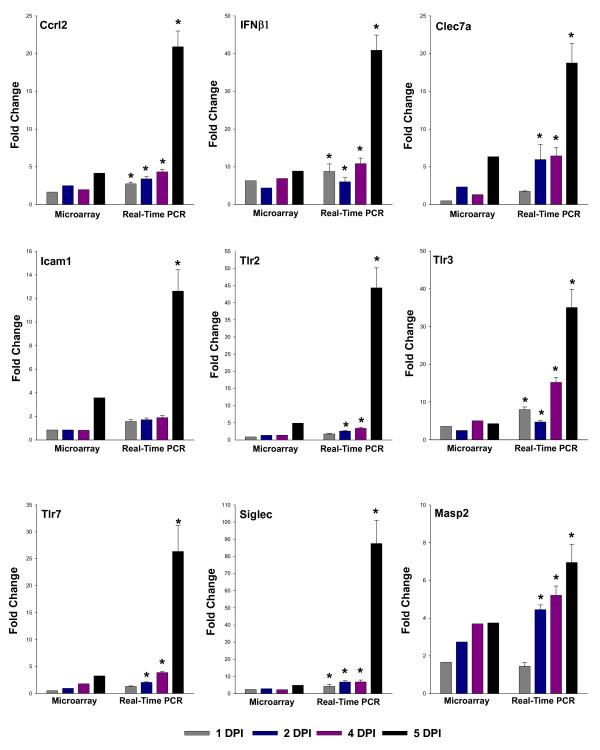
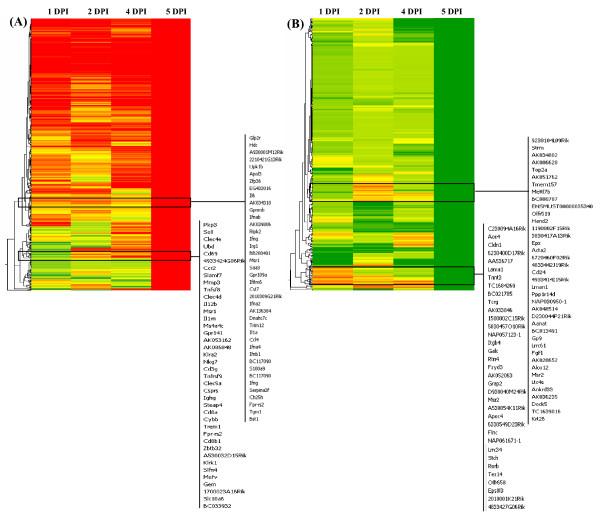
The comparison between viral replication efficiency and disease progression confirms the active role of host response in immunopathology and disease severity. The histopathological analysis confirms the severe damage in the brain in a time dependent manner. Interestingly, the transcription profile reveals significant and differential expression of various pattern recognition receptors, chemotactic genes and the activation of inflammasome. The increased leukocyte infiltration and aggravated CNS inflammation may be the cause of disease severity.
CONCLUSION
This is the first report that provides a detailed picture of the host transcriptional response in a natural route of exposure and opens up new avenues for potential therapeutic and prophylactic strategies against Japanese encephalitis virus.
背景
日本脑炎(JE)是急性脑病的主要病因之一,死亡率最高可达 30-50%。本研究旨在了解疾病进展过程中宿主反应的复杂生物学过程。病毒通过皮下注射到小鼠体内,然后用 cDNA 微阵列对大脑进行全基因组表达谱分析。
结果
病毒复制效率与疾病进展的比较证实了宿主反应在免疫病理学和疾病严重程度中的积极作用。组织病理学分析证实了大脑随时间推移而发生的严重损伤。有趣的是,转录谱揭示了各种模式识别受体、趋化基因的显著差异表达和炎症小体的激活。白细胞浸润增加和中枢神经系统炎症加重可能是疾病严重程度的原因。
结论
这是首次在自然暴露途径中提供宿主转录反应详细情况的报告,为针对日本脑炎病毒的潜在治疗和预防策略开辟了新途径。


 Zotero 插件