
低危至中危局限性前列腺癌单纯施行立体定向体部放射治疗(SBRT)后,生化和临床性腺功能减退症的发病率较低。
Low incidence of new biochemical and clinical hypogonadism following hypofractionated stereotactic body radiation therapy (SBRT) monotherapy for low- to intermediate-risk prostate cancer.
机构信息
Department of Radiation Medicine, Georgetown University Hospital, Washington, DC, USA.
出版信息
J Hematol Oncol. 2011 Mar 27;4:12. doi: 10.1186/1756-8722-4-12.
BACKGROUND
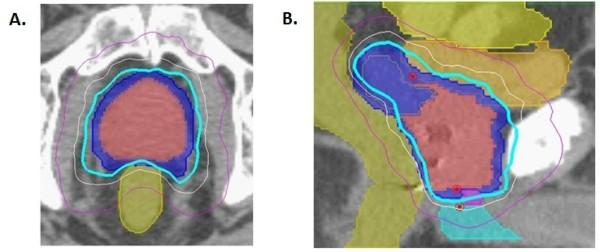
The CyberKnife is an appealing delivery system for hypofractionated stereotactic body radiation therapy (SBRT) because of its ability to deliver highly conformal radiation therapy to moving targets. This conformity is achieved via 100s of non-coplanar radiation beams, which could potentially increase transitory testicular irradiation and result in post-therapy hypogonadism. We report on our early experience with CyberKnife SBRT for low- to intermediate-risk prostate cancer patients and assess the rate of inducing biochemical and clinical hypogonadism.
METHODS
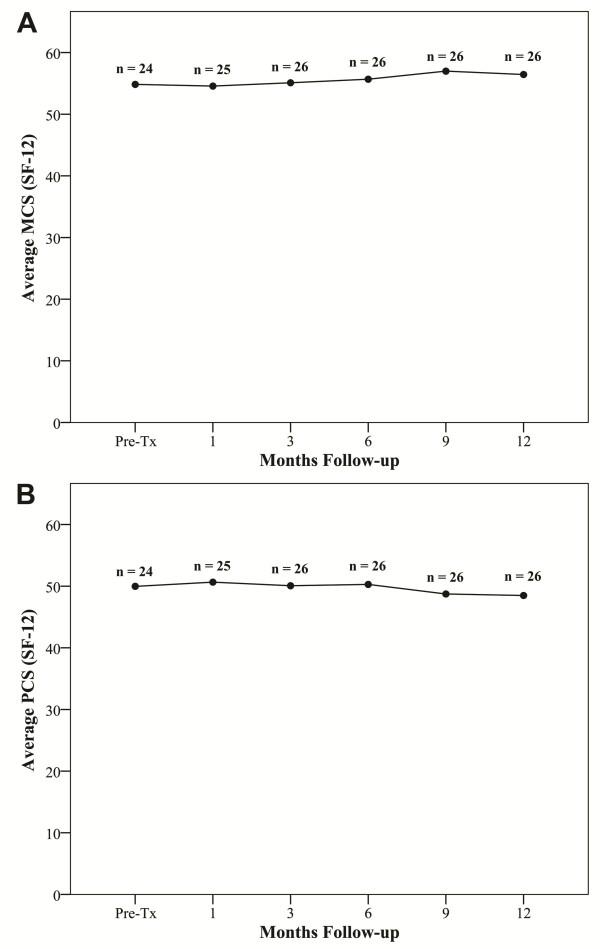
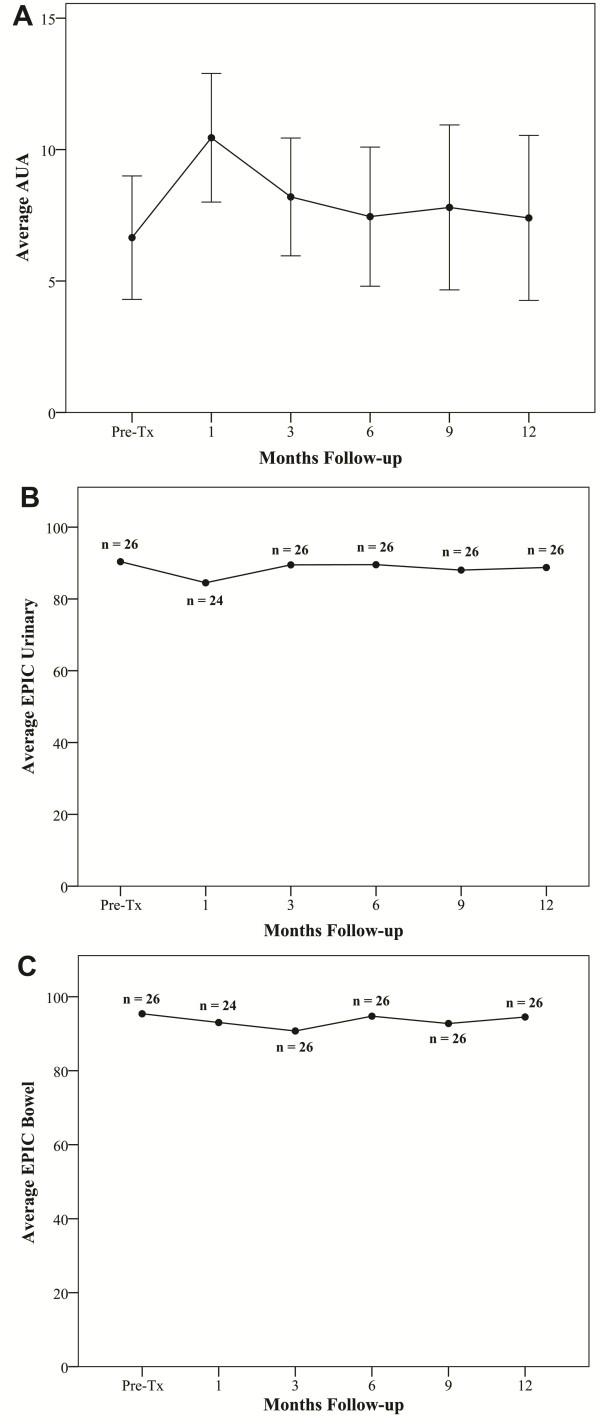
Twenty-six patients were treated with hypofractionated SBRT to a dose of 36.25 Gy in 5 fractions. All patients had histologically confirmed low- to intermediate-risk prostate adenocarcinoma (clinical stage ≤ T2b, Gleason score ≤ 7, PSA ≤ 20 ng/ml). PSA and total testosterone levels were obtained pre-treatment, 1 month post-treatment and every 3 months thereafter, for 1 year. Biochemical hypogonadism was defined as a total serum testosterone level below 8 nmol/L. Urinary and gastrointestinal toxicity was assessed using Common Toxicity Criteria v3; quality of life was assessed using the American Urological Association Symptom Score, Sexual Health Inventory for Men and Expanded Prostate Cancer Index Composite questionnaires.
RESULTS
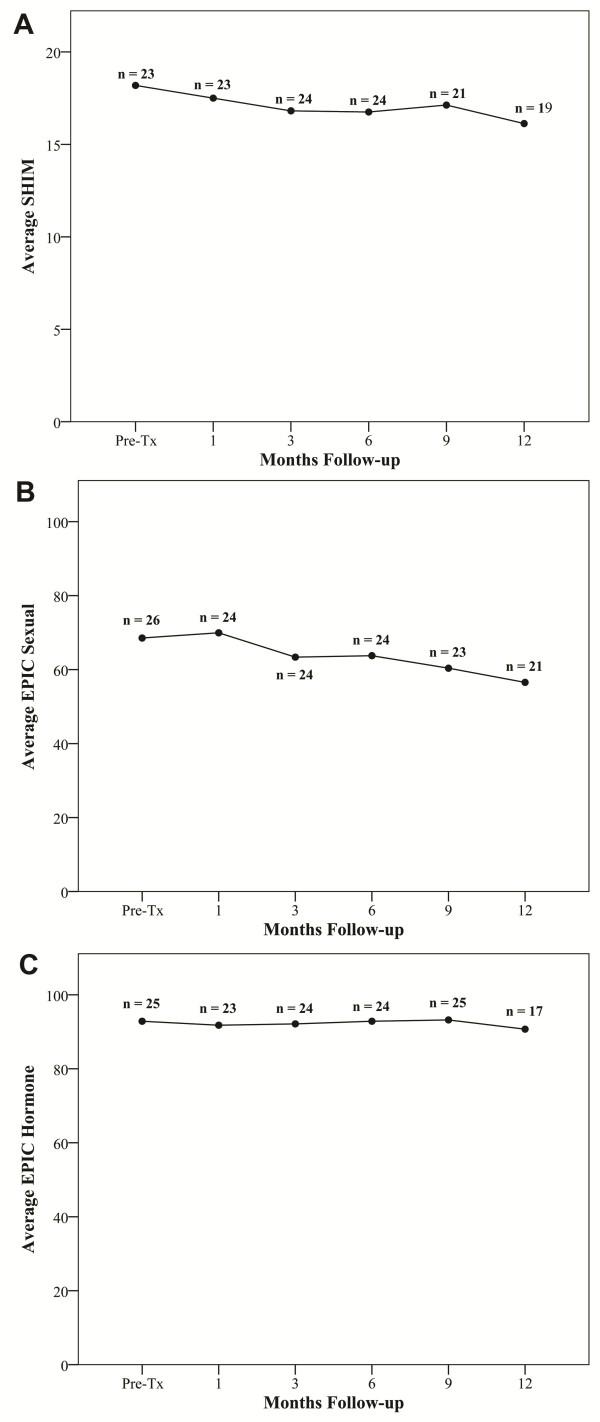
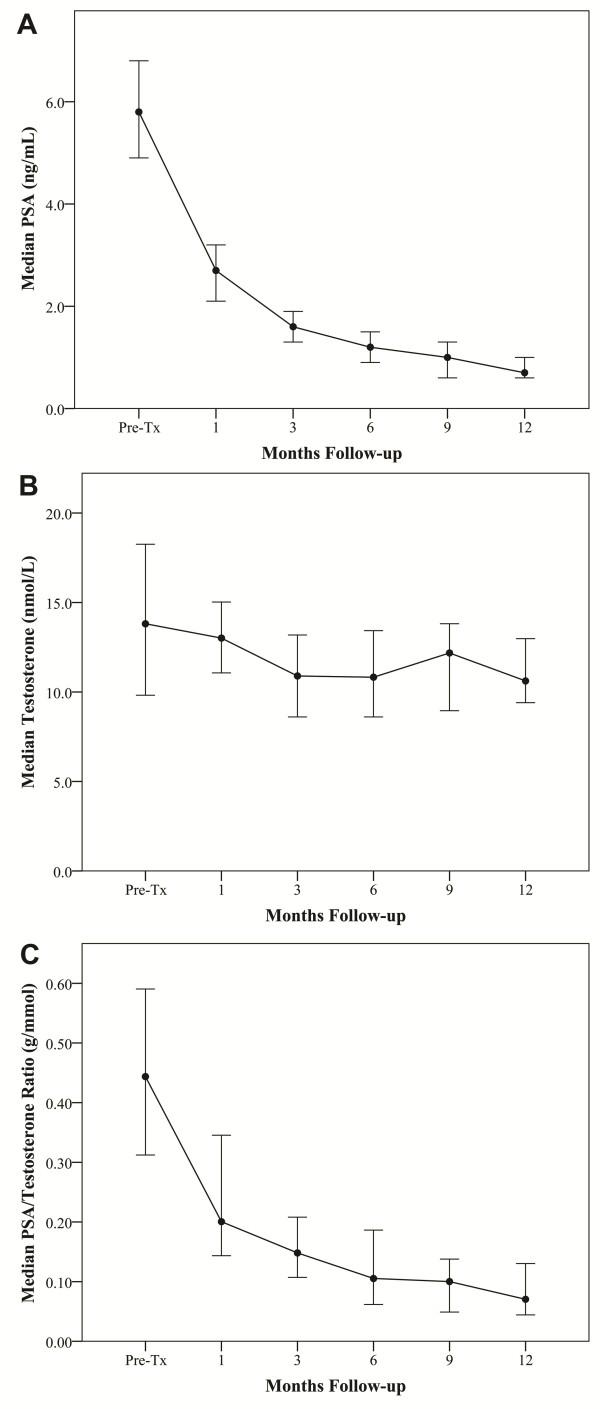
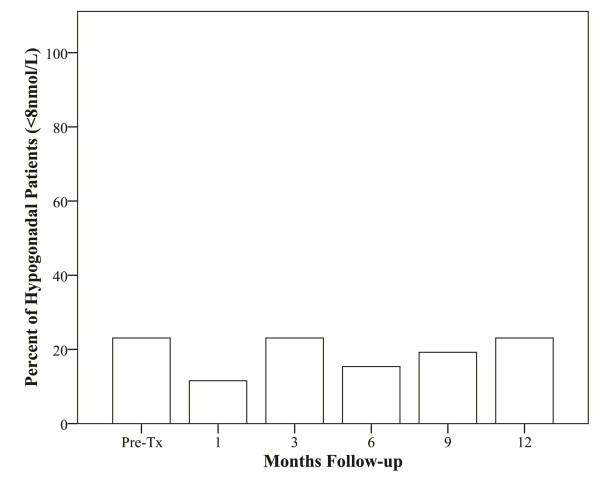
All 26 patients completed the treatment with a median 15 months (range, 13-19 months) follow-up. Median pre-treatment PSA was 5.75 ng/ml (range, 2.3-10.3 ng/ml), and a decrease to a median of 0.7 ng/ml (range, 0.2-1.8 ng/ml) was observed by one year post-treatment. The median pre-treatment total serum testosterone level was 13.81 nmol/L (range, 5.55 - 39.87 nmol/L). Post-treatment testosterone levels slowly decreased with the median value at one year follow-up of 10.53 nmol/L, significantly lower than the pre-treatment value (p < 0.013). The median absolute fall was 3.28 nmol/L and the median percent fall was 23.75%. There was no increase in biochemical hypogonadism at one year post-treatment. Average EPIC sexual and hormonal scores were not significantly changed by one year post-treatment.
CONCLUSIONS
Hypofractionated SBRT offers the radiobiological benefit of a large fraction size and is well-tolerated by men with low- to intermediate-risk prostate cancer. Early results are encouraging with an excellent biochemical response. The rate of new biochemical and clinical hypogonadism was low one year after treatment.
背景
CyberKnife 是一种有吸引力的分次立体定向体部放射治疗(SBRT)的输送系统,因为它能够为移动的靶标提供高度适形的放射治疗。这种一致性是通过 100 多个非共面的放射线束来实现的,这可能会增加短暂的睾丸照射,并导致治疗后性腺功能减退。我们报告了我们在使用 CyberKnife SBRT 治疗低至中危前列腺癌患者方面的早期经验,并评估了诱导生化和临床性腺功能减退的发生率。
方法
26 例患者接受低分割 SBRT 治疗,剂量为 36.25 Gy,分 5 次。所有患者均经组织学证实为低至中危前列腺腺癌(临床分期≤T2b,Gleason 评分≤7,PSA≤20ng/ml)。在治疗前、治疗后 1 个月以及此后每 3 个月一次,共 1 年,均获得 PSA 和总睾酮水平。生化性腺功能减退定义为总血清睾酮水平低于 8nmol/L。使用通用毒性标准 v3 评估尿和胃肠道毒性;使用美国泌尿外科学会症状评分、男性性功能健康问卷和扩展前列腺癌指数综合问卷评估生活质量。
结果
所有 26 例患者均完成治疗,中位随访时间为 15 个月(范围,13-19 个月)。中位治疗前 PSA 为 5.75ng/ml(范围,2.3-10.3ng/ml),治疗后 1 年降至中位 0.7ng/ml(范围,0.2-1.8ng/ml)。中位治疗前总血清睾酮水平为 13.81nmol/L(范围,5.55-39.87nmol/L)。治疗后,睾酮水平逐渐下降,1 年随访时中位数为 10.53nmol/L,明显低于治疗前(p<0.013)。中位数绝对下降 3.28nmol/L,中位数下降百分比为 23.75%。治疗后 1 年,生化性腺功能减退无增加。治疗后 1 年,平均 EPIC 性和激素评分无明显变化。
结论
低分割 SBRT 提供了大分割剂量的放射生物学益处,并且可以很好地耐受低至中危前列腺癌患者。早期结果令人鼓舞,生化反应良好。治疗后 1 年新发生生化和临床性腺功能减退的发生率较低。
 Zotero 插件