
HIV-1 整合酶抑制剂耐药性及其临床意义。
HIV-1 integrase inhibitor resistance and its clinical implications.
机构信息
Infectious Diseases Unit, University of Barcelona, Spain.
出版信息
J Infect Dis. 2011 May 1;203(9):1204-14. doi: 10.1093/infdis/jir025.
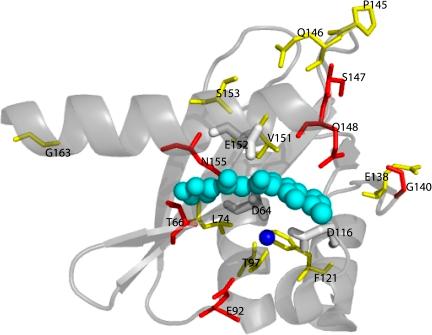
With the approval in 2007 of the first integrase inhibitor (INI), raltegravir, clinicians became better able to suppress virus replication in patients infected with human immunodeficiency virus type 1 (HIV-1) who were harboring many of the most highly drug-resistant viruses. Raltegravir also provided clinicians with additional options for first-line therapy and for the simplification of regimens in patients with stable virological suppression. Two additional INIs in advanced clinical development-elvitegravir and S/GSK1349572-may prove equally versatile. However, the INIs have a relatively low genetic barrier to resistance in that 1 or 2 mutations are capable of causing marked reductions in susceptibility to raltegravir and elvitegravir, the most well-studied INIs. This perspective reviews the genetic mechanisms of INI resistance and their implications for initial INI therapy, the treatment of antiretroviral-experienced patients, and regimen simplification.
2007 年,首个整合酶抑制剂(INI)拉替拉韦(raltegravir)获得批准,使得临床医生能够更好地抑制携带多种高度耐药病毒的感染人类免疫缺陷病毒 1 型(HIV-1)患者的病毒复制。拉替拉韦也为临床医生提供了更多的一线治疗选择,并为病毒学抑制稳定的患者简化治疗方案。两种处于临床开发后期的其他 INI——艾维雷格(elvitegravir)和 S/GSK1349572——可能同样多才多艺。然而,由于 1 或 2 种突变就能够导致对拉替拉韦和艾维雷格(研究最充分的 INI)的敏感性显著降低,因此 INI 的耐药性遗传屏障相对较低。这一观点回顾了 INI 耐药的遗传机制及其对初始 INI 治疗、抗逆转录病毒治疗经验患者的治疗和方案简化的影响。
 Zotero 插件