
来自荷兰 Q 热爆发中反刍动物的贝氏柯克斯体的分子流行病学研究。
Molecular epidemiology of Coxiella burnetii from ruminants in Q fever outbreak, the Netherlands.
机构信息
Central Veterinary Institute, part of Wageningen UR, Lelystad, the Netherlands.
出版信息
Emerg Infect Dis. 2011 Apr;17(4):668-75. doi: 10.3201/eid1704.101562.
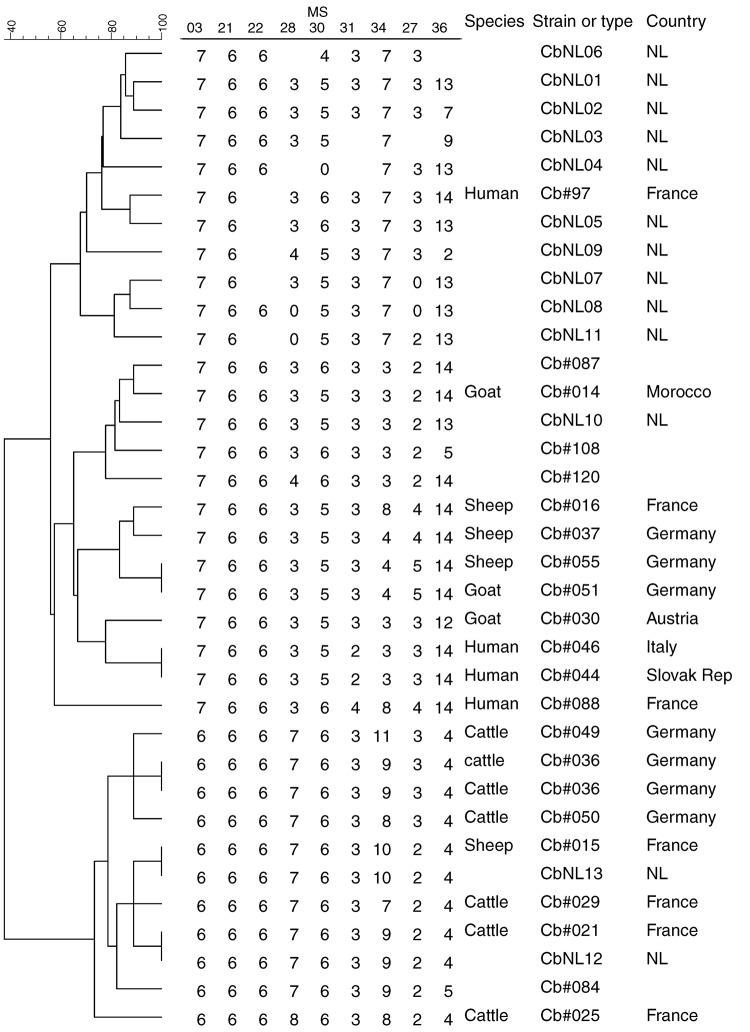
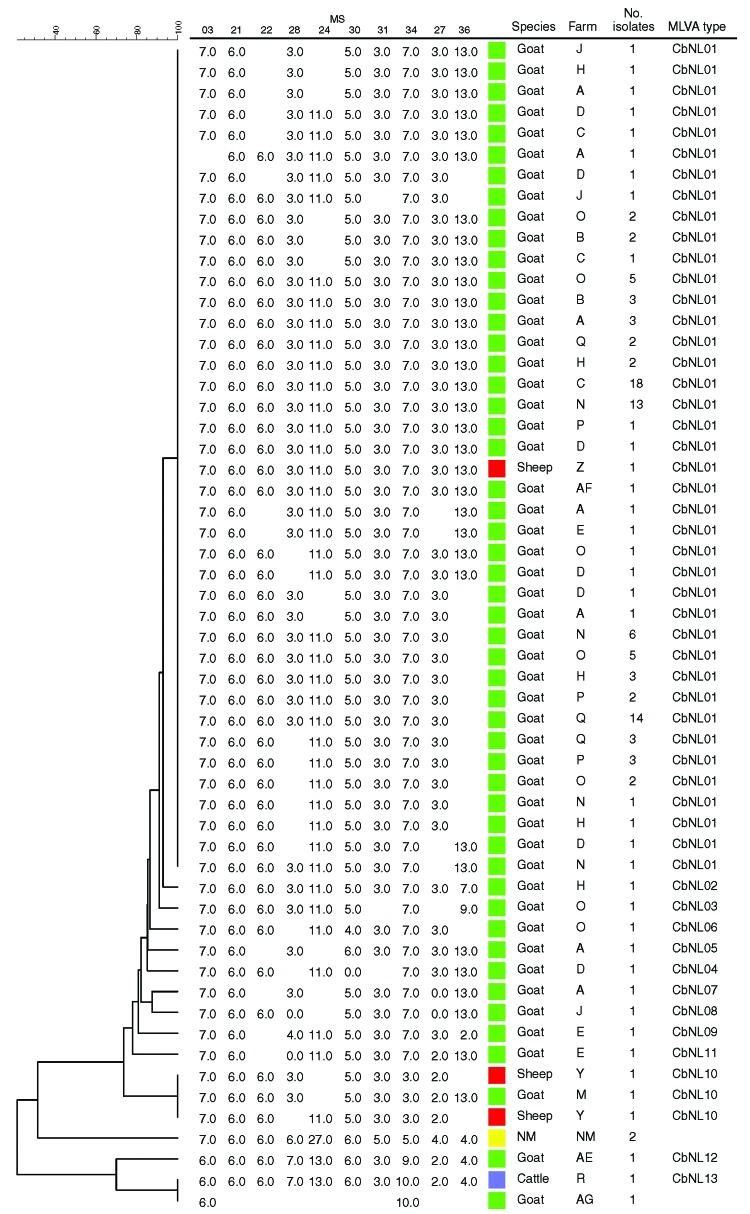
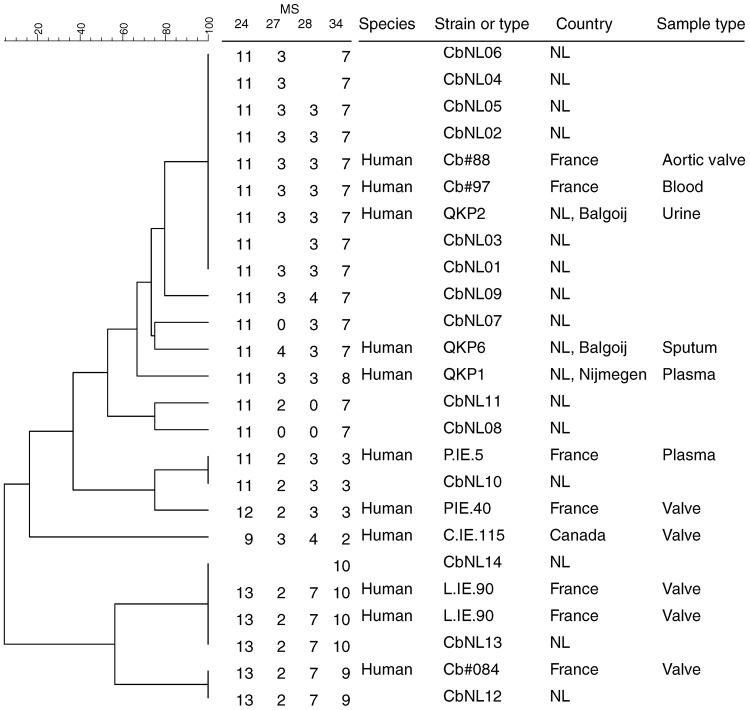
Q fever is a zoonosis caused by the bacterium Coxiella burnetii. One of the largest reported outbreaks of Q fever in humans occurred in the Netherlands starting in 2007; epidemiologic investigations identified small ruminants as the source. To determine the genetic background of C. burnetii in domestic ruminants responsible for the human Q fever outbreak, we genotyped 126 C. burnetii-positive samples from ruminants by using a 10-loci multilocus variable-number tandem-repeat analyses panel and compared them with internationally known genotypes. One unique genotype predominated in dairy goat herds and 1 sheep herd in the human Q fever outbreak area in the south of the Netherlands. On the basis of 4 loci, this genotype is similar to a human genotype from the Netherlands. This finding strengthens the probability that this genotype of C. burnetii is responsible for the human Q fever epidemic in the Netherlands.
Q 热是由柯克斯体引起的一种动物源性传染病。2007 年,荷兰发生了有记录以来最大规模的人类 Q 热疫情之一;流行病学调查确定小反刍动物是疫情的源头。为了确定与人类 Q 热疫情有关的家畜小反刍动物中导致 Q 热的贝氏柯克斯体的遗传背景,我们使用 10 个基因座多位点可变数目串联重复分析面板对来自小反刍动物的 126 个贝氏柯克斯体阳性样本进行了基因分型,并将其与国际知名基因型进行了比较。在荷兰南部人类 Q 热疫情地区,一种独特的基因型在奶牛山羊群和 1 个绵羊群中占主导地位。基于 4 个基因座,这种基因型与来自荷兰的一种人类基因型相似。这一发现增加了这种贝氏柯克斯体基因型导致荷兰人类 Q 热流行的可能性。

 Zotero 插件