
通过斑点印迹分析测量端粒 DNA 含量。
Measurement of telomere DNA content by dot blot analysis.
机构信息
The Center for Human Development and Aging, University of Medicine and Dentistry of New Jersey, New Jersey Medical School, Newark, NJ 07103, USA.
出版信息
Nucleic Acids Res. 2011 Jul;39(12):e84. doi: 10.1093/nar/gkr235. Epub 2011 Apr 27.
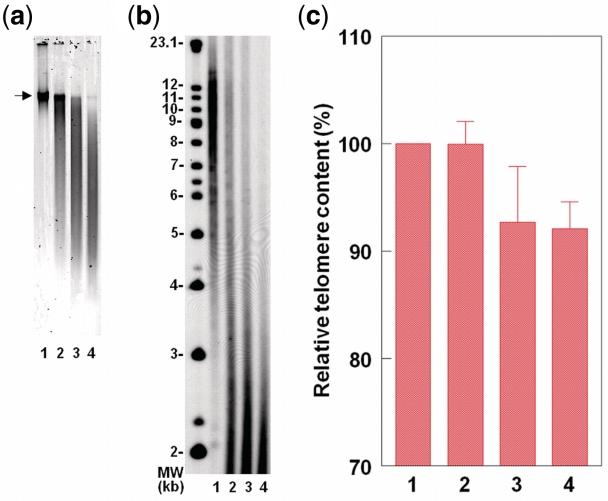
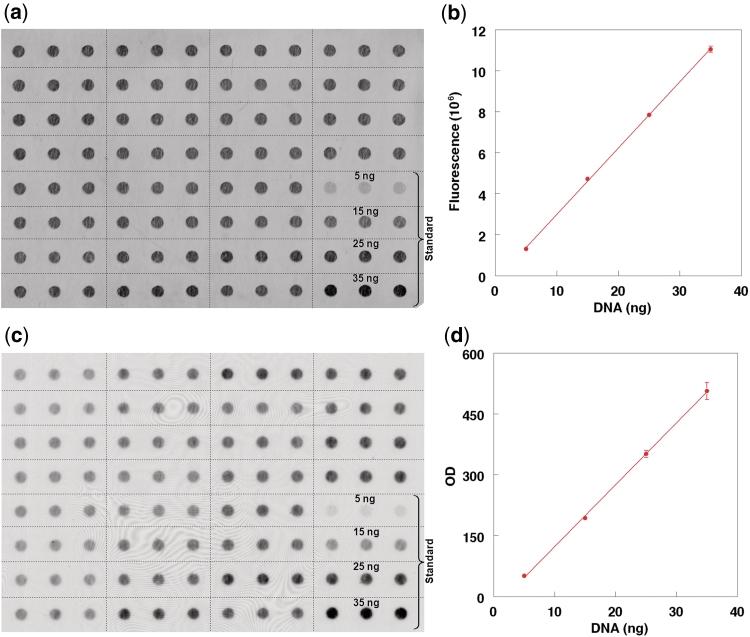
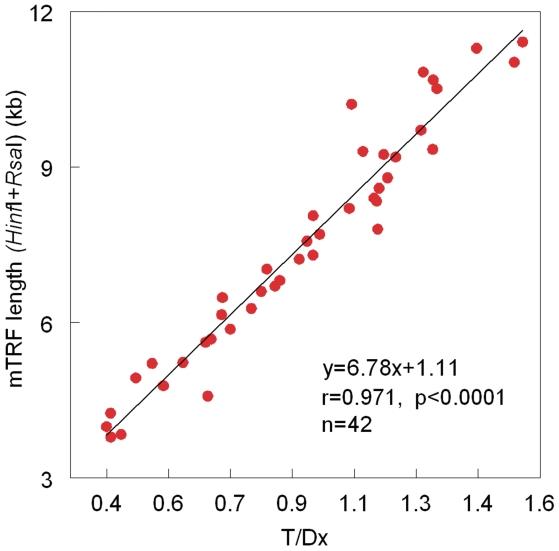
Telomeres play a central role in human cancer, cardiovascular aging and possibly longevity. However, present methods to measure telomere length are fraught with shortcomings that limit their use. Here, we describe a novel method to measure the relative telomere DNA content by dot blot analysis. In each dot, the DNA content is measured by a DNA stain (Dx) and the telomeric DNA content is measured with a telomeric probe (T). The T normalized for Dx (T/Dx) of each dot is a measure of telomere content. The method requires ∼20 ng of DNA per assay. Moreover, the T/Dx data are highly correlated linearly with mean telomere lengths derived from Southern blots of the terminal restriction fragments (r > 0.96, P < 0.0001). The method is also simple to use, has a relatively low interassay coefficient of variation (<6%), retains its precision in moderately degraded DNA and can be forged for high throughput analysis. The method might help researchers and clinicians alike in understanding risks for and extent of human diseases.
端粒在人类癌症、心血管衰老和可能的长寿中起着核心作用。然而,目前测量端粒长度的方法存在许多缺陷,限制了它们的应用。在这里,我们描述了一种通过斑点印迹分析测量相对端粒 DNA 含量的新方法。在每个斑点中,通过 DNA 染料 (Dx) 测量 DNA 含量,并用端粒探针 (T) 测量端粒 DNA 含量。每个斑点的 T 相对于 Dx (T/Dx) 是端粒含量的度量。该方法每分析需要约 20ng 的 DNA。此外,T/Dx 数据与来自末端限制性片段的 Southern 印迹得出的平均端粒长度高度线性相关(r > 0.96,P < 0.0001)。该方法也易于使用,具有相对较低的批间变异系数(<6%),在中等降解的 DNA 中保留其精度,并可用于高通量分析。该方法可能有助于研究人员和临床医生了解人类疾病的风险和程度。
 Zotero 插件