
枯草芽孢杆菌生物膜形成的主调控因子 SinR 的结构与组织。
Structure and organisation of SinR, the master regulator of biofilm formation in Bacillus subtilis.
机构信息
Structural Biology Laboratory, Department of Chemistry, University of York, York YO10 5YW, UK.
出版信息
J Mol Biol. 2011 Aug 19;411(3):597-613. doi: 10.1016/j.jmb.2011.06.004. Epub 2011 Jun 25.
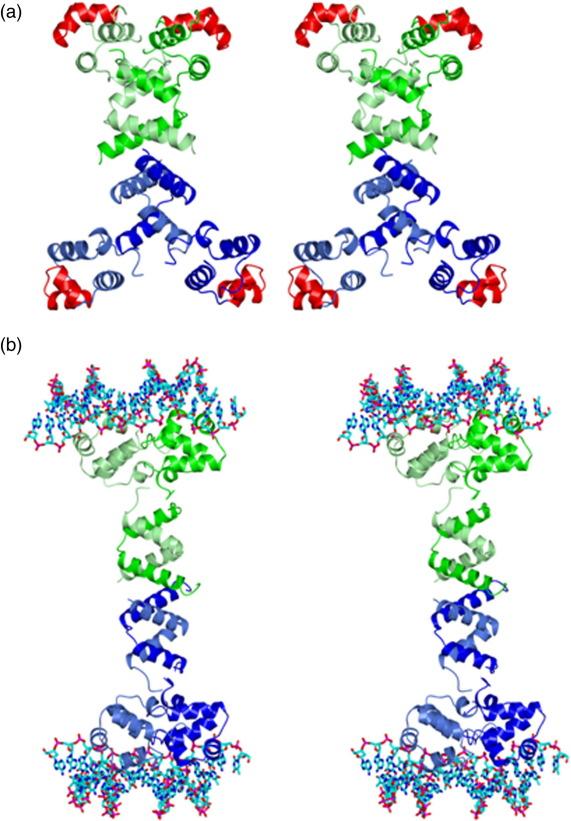
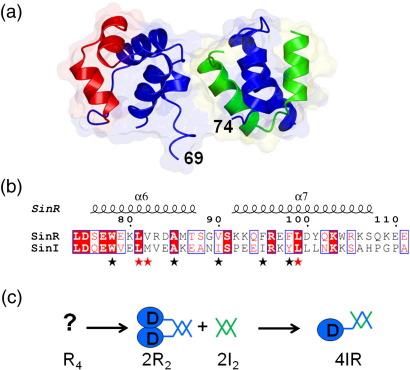
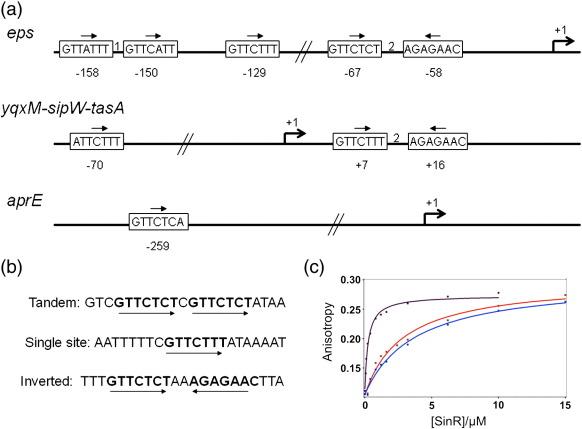
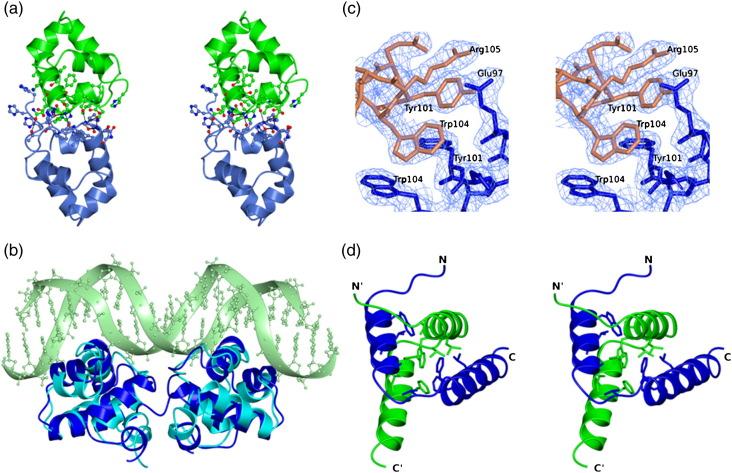
sinR encodes a tetrameric repressor of genes required for biofilm formation in Bacillus subtilis. sinI, which is transcribed under Spo0A control, encodes a dimeric protein that binds to SinR to form a SinR-SinI heterodimer in which the DNA-binding functions of SinR are abrogated and repression of biofilm genes is relieved. The heterodimer-forming surface comprises residues conserved between SinR and SinI. Each forms a pair of α-helices that hook together to form an intermolecular four-helix bundle. Here, we are interested in the assembly of the SinR tetramer and its binding to DNA. Size-exclusion chromatography with multi-angle laser light scattering and crystallographic analysis reveal that a DNA-binding fragment of SinR (residues 1-69) is a monomer, while a SinI-binding fragment (residues 74-111) is a tetramer arranged as a dimer of dimers. The SinR(74-111) chain forms two α-helices with the organisation of the dimer similar to that observed in the SinR-SinI complex. The tetramer is formed through interactions of residues at the C-termini of the four chains. A model of the intact SinR tetramer in which the DNA binding domains surround the tetramerisation core was built. Fluorescence anisotropy and surface plasmon resonance experiments showed that SinR binds to an oligonucleotide duplex, 5'-TTTGTTCTCTAAAGAGAACTTA-3', containing a pair of SinR consensus sequences in inverted orientation with a K(d) of 300 nM. The implications of these data for promoter binding and the curious quaternary structural transitions of SinR upon binding to (i) SinI and (ii) the SinR-like protein SlrR, which "repurposes" SinR as a repressor of autolysin and motility genes, are discussed.
sinR 编码枯草芽孢杆菌生物膜形成所需基因的四聚体阻遏物。sinI 在 Spo0A 控制下转录,编码一种二聚体蛋白,该蛋白与 SinR 结合形成 SinR-SinI 异二聚体,其中 SinR 的 DNA 结合功能被废除,生物膜基因的抑制作用得到缓解。异二聚体形成表面包含 SinR 和 SinI 之间保守的残基。每个都形成一对α-螺旋,钩在一起形成一个分子间四螺旋束。在这里,我们对 SinR 四聚体的组装及其与 DNA 的结合感兴趣。多角度激光散射和晶体学分析的分子筛层析表明,SinR 的 DNA 结合片段(残基 1-69)是一个单体,而 SinI 结合片段(残基 74-111)是一个四聚体,排列为二聚体的二聚体。SinR(74-111)链形成两个α-螺旋,二聚体的组织与在 SinR-SinI 复合物中观察到的相似。四聚体通过四条链的 C 末端残基之间的相互作用形成。构建了一个完整的 SinR 四聚体模型,其中 DNA 结合域围绕四聚体核心。荧光各向异性和表面等离子体共振实验表明,SinR 与含有一对反向排列的 SinR 共有序列的寡核苷酸双链体,5'-TTTGTTCTCTAAAGAGAACTTA-3',结合,K(d)为 300 nM。这些数据对启动子结合的影响以及 SinR 与(i)SinI 和(ii)类似 SinR 的蛋白 SlrR 结合时的奇特四级结构转变的影响进行了讨论,SlrR 将 SinR“重新用作”自溶酶和运动基因的抑制剂。

 Zotero 插件