
体重不足女性的心理健康受损:不满身体和饮食失调行为是否起作用?
Mental health impairment in underweight women: do body dissatisfaction and eating-disordered behavior play a role?
机构信息
School of Sociology, Australian National University, Canberra, Australia.
出版信息
BMC Public Health. 2011 Jul 10;11:547. doi: 10.1186/1471-2458-11-547.
BACKGROUND
We sought to evaluate the hypothesis that mental health impairment in underweight women, where this occurs, is due to an association between low body weight and elevated levels of body dissatisfaction and/or eating-disordered behaviour.
METHODS
Subgroups of underweight and normal-weight women recruited from a large, general population sample were compared on measures of body dissatisfaction, eating-disordered behaviour and mental health.
RESULTS
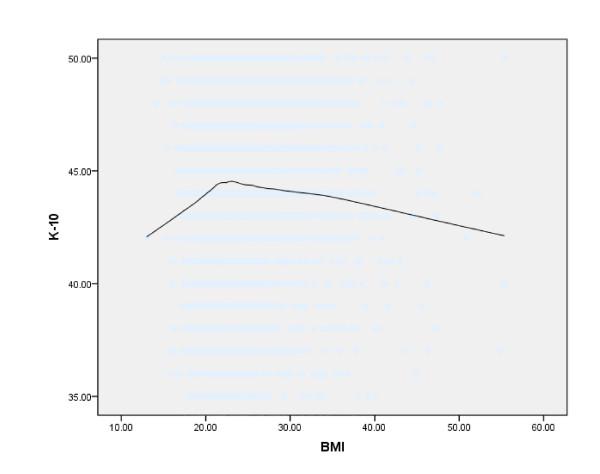
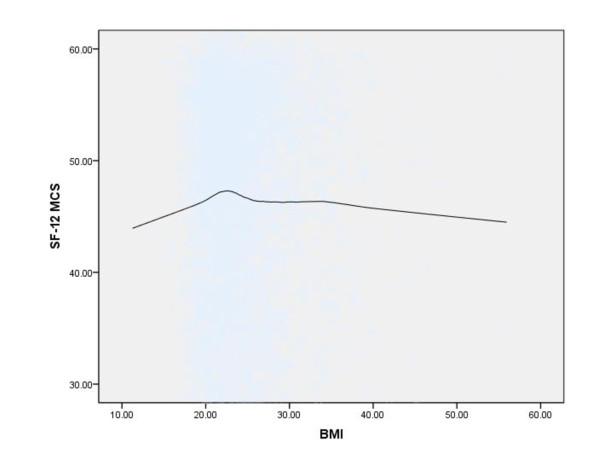
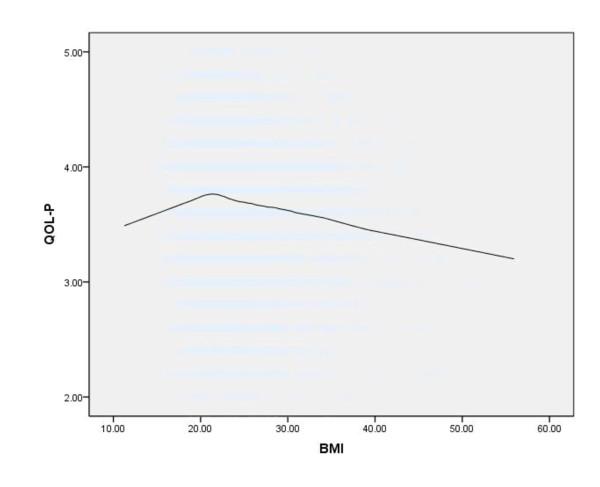
Underweight women had significantly greater impairment in mental health than normal-weight women, even after controlling for between-group differences in demographic characteristics and physical health. However, there was no evidence that higher levels of body dissatisfaction or eating-disordered behaviour accounted for this difference. Rather, underweight women had significantly lower levels of body dissatisfaction and eating-disordered behaviour than normal-weight women.
CONCLUSIONS
The findings suggest that mental health impairment in underweight women, where this occurs, is unlikely to be due to higher levels of body dissatisfaction or eating-disordered behaviour. Rather, lower levels of body dissatisfaction and eating-disordered behaviour among underweight women may counterbalance, to some extent, impairment due to other factors.
背景
我们试图验证这样一个假设,即体重过轻的女性出现心理健康受损的情况,是由于低体重与较高的身体不满和/或饮食失调行为水平之间存在关联。
方法
从一个大型的一般人群样本中招募了体重过轻和体重正常的女性亚组,比较了她们在身体不满、饮食失调行为和心理健康方面的测量结果。
结果
即使在控制了组间在人口统计学特征和身体健康方面的差异后,体重过轻的女性的心理健康受损程度仍显著大于体重正常的女性。然而,没有证据表明更高水平的身体不满或饮食失调行为解释了这种差异。相反,体重过轻的女性的身体不满和饮食失调行为水平显著低于体重正常的女性。
结论
研究结果表明,体重过轻的女性出现心理健康受损的情况,这可能不是由于更高水平的身体不满或饮食失调行为所致。相反,体重过轻的女性较低水平的身体不满和饮食失调行为可能在某种程度上抵消了其他因素造成的损害。
 Zotero 插件