
了解沃伯格效应和基质窖蛋白-1作为致命肿瘤微环境标志物的预后价值。
Understanding the Warburg effect and the prognostic value of stromal caveolin-1 as a marker of a lethal tumor microenvironment.
机构信息
The Jefferson Stem Cell Biology and Regenerative Medicine Center, Philadelphia, PA 19107, USA.
出版信息
Breast Cancer Res. 2011 Jul 8;13(4):213. doi: 10.1186/bcr2892.
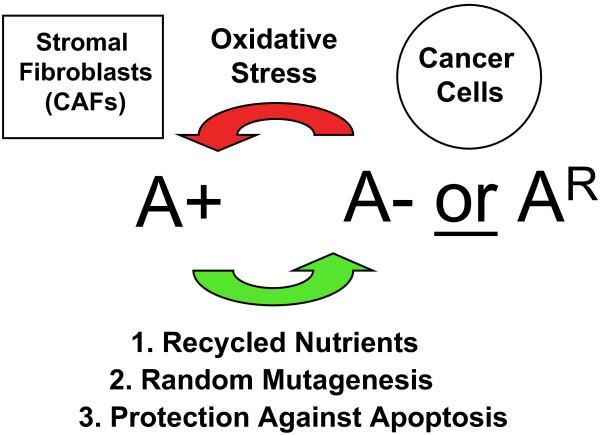
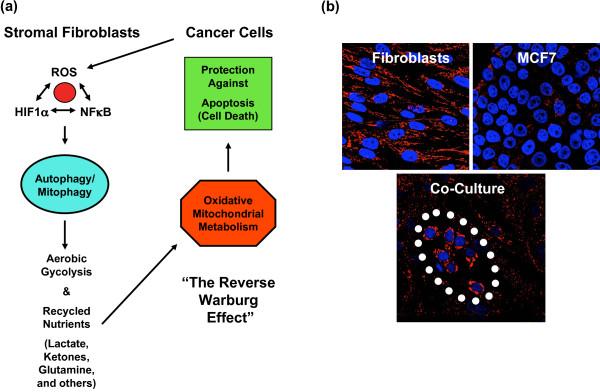
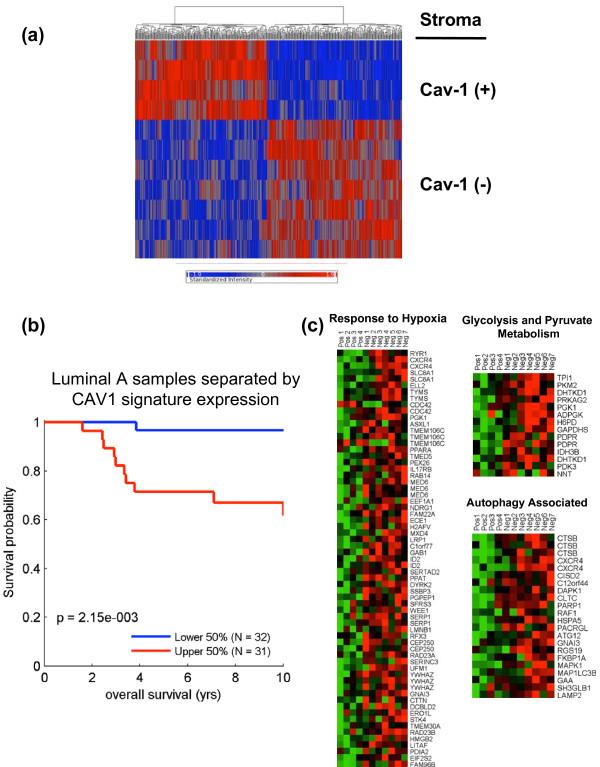
Cancer cells show a broad spectrum of bioenergetic states, with some cells using aerobic glycolysis while others rely on oxidative phosphorylation as their main source of energy. In addition, there is mounting evidence that metabolic coupling occurs in aggressive tumors, between epithelial cancer cells and the stromal compartment, and between well-oxygenated and hypoxic compartments. We recently showed that oxidative stress in the tumor stroma, due to aerobic glycolysis and mitochondrial dysfunction, is important for cancer cell mutagenesis and tumor progression. More specifically , increased autophagy/mitophagy in the tumor stroma drives a form of parasitic epithelial-stromal metabolic coupling. These findings explain why it is effective to treat tumors with either inducers or inhibitors of autophagy, as both would disrupt this energetic coupling. We also discuss evidence that glutamine addiction in cancer cells produces ammonia via oxidative mitochondrial metabolism. Ammonia production in cancer cells, in turn, could then help maintain autophagy in the tumor stromal compartment. In this vicious cycle, the initial glutamine provided to cancer cells would be produced by autophagy in the tumor stroma. Thus, we believe that parasitic epithelial-stromal metabolic coupling has important implications for cancer diagnosis and therapy, for example, in designing novel metabolic imaging techniques and establishing new targeted therapies. In direct support of this notion, we identified a loss of stromal caveolin-1 as a marker of oxidative stress, hypoxia, and autophagy in the tumor microenvironment, explaining its powerful predictive value. Loss of stromal caveolin-1 in breast cancers is associated with early tumor recurrence, metastasis, and drug resistance, leading to poor clinical outcome.
癌细胞表现出广泛的生物能量状态,一些细胞进行有氧糖酵解,而另一些则依赖氧化磷酸化为主要能量来源。此外,越来越多的证据表明代谢偶联发生在侵袭性肿瘤中,上皮癌细胞和基质部分之间,以及氧合良好和缺氧部分之间。我们最近表明,由于有氧糖酵解和线粒体功能障碍导致的肿瘤基质中的氧化应激,对于癌细胞突变和肿瘤进展是重要的。更具体地说,肿瘤基质中自噬/线粒体自噬的增加驱动了一种寄生性上皮-基质代谢偶联。这些发现解释了为什么用自噬的诱导剂或抑制剂治疗肿瘤是有效的,因为这两者都会破坏这种能量偶联。我们还讨论了证据表明,癌细胞中的谷氨酰胺成瘾通过氧化线粒体代谢产生氨。癌细胞中的氨产生反过来又可以帮助维持肿瘤基质中的自噬。在这个恶性循环中,最初提供给癌细胞的谷氨酰胺将由肿瘤基质中的自噬产生。因此,我们认为寄生性上皮-基质代谢偶联对癌症的诊断和治疗具有重要意义,例如,在设计新的代谢成像技术和建立新的靶向治疗方面。为了直接支持这一观点,我们发现肿瘤微环境中基质窖蛋白-1的缺失是氧化应激、缺氧和自噬的标志物,解释了其强大的预测价值。乳腺癌中基质窖蛋白-1的缺失与早期肿瘤复发、转移和耐药性相关,导致临床预后不良。

 Zotero 插件